

Editor’s Note
Fifty Years of Strategic Enrollment Management: A Field That Refuses to Rest
In 1976, Jack Maguire sat down at Boston College with a demographic forecast that should have alarmed everyone who read it: the pool of eighteen-year-olds was about to shrink by nearly a third. Fourteen of the fifteen colleagues who received the resulting memo dismissed it. Only one, a former physics professor turned admissions dean, saw what Maguire saw. Fifty years later, we can say with confidence that the skeptics were wrong and the physics professor was right, because the field born from that single memo has become one of the defining infrastructures of American higher education.
This 50th anniversary collection of fourteen manuscripts is not a victory lap. It is something better: a field mature enough to interrogate itself. Read together, these articles trace strategic enrollment management’s journey from a scrappy administrative fix into an enterprise-wide discipline, and then, refreshingly, they turn around and ask whether that discipline still serves the people it was built for.
From Gatekeeping to Architecture
The collection’s first great argument is structural. Brian Gann dismantles the old funnel metaphor, arguing that students no longer move through college in straight lines; they swirl, stop out, and juggle jobs and families along the way. Joseph Paris extends that systems thinking into graduate education, reimagining the enrollment leader as a “Strategic Architect” who must weigh tuition adaptability, modality mutations, and institutional financial resilience in the same breath. Rebecca Hapes reminds us, through a career spanning admissions, advising, and the registrar’s office, that this architecture was often being built quietly and informally long before anyone called it SEM. Her title says it best: it was SEM all along. Tom Green charts how that architecture was assembled piece by piece, tracing a 50-year evolution of data from green-bar paper reports and zip-code lists to econometric aid optimization and predictive modeling, reminding us that empirical rigor is what first put the “strategic” into the discipline.
Yet architecture without accountability has limits. Dan Predoehl’s study of the California Community Colleges, 116 institutions serving 2.2 million students, finds a system where presidents insist enrollment is “everybody’s job” while simultaneously admitting they cannot hold anyone accountable for it. Set beside Jones et al.’s article on Harrisburg Area Community College’s success in making shared ownership actually work through disciplined data literacy, the tension is unmistakable: does enrollment strategy live in a person, or in a culture? This volume does not resolve that question. It may be the field’s next 50-year argument.
From Transaction to Relationship
The second great current running through this collection insists that no amount of predictive modeling substitutes for being known. Kayla Boyd Caron and colleagues show that training front-line staff in authentic conversation lifted fall-to-spring retention well above campus averages, proof that belonging is not a soft add-on but a measurable lever. Aditya Pathak’s research on admitted graduate students makes the same point from a different angle: a deposited student is not necessarily a ready student, and yield is often lost not to competitors but to unresolved housing, visa, and funding anxieties that marketing brochures never address.
Nowhere is this relational reframing more powerful than in Lisa Silverstein, Delphina Thomas, and Cedric Howard’s examination of Tribal Colleges and Universities. Where mainstream SEM optimizes for yield and headcount, the TCU model, grounded in the Indigenous principles of relationships, reciprocity, respect, and responsibility, treats enrollment as an intergenerational responsibility to community. The retention gains documented at Aaniiih Nakoda College and Navajo Technical University are not incidental; they are the result of treating institutional data sovereignty and cultural identity as a strategy, not sentiment. This is, quite simply, a landmark contribution in the collection, and it deserves to move from the margins of the field’s literature to its center.
From the 20 Percent to the 80
Perhaps the sharpest self-critique here is Stanley Henderson and Christopher Tremblay’s observation that SEM’s doctrine was written largely by and for elite private colleges and flagship publics, institutions serving only a fifth of American students. Clayton Smith and colleagues widen that critical lens beyond U.S. borders, demonstrating through research across Canada, Egypt, and beyond that SEM cannot simply be exported as a monolithic American template; its survival and utility depend on adapting whole-lifecycle principles to regional governance structures and distinct cultural environments. Antona Curry, Keiron Green, and Marcella Elliott-Ferguson’s analysis of the Bahamas Government Tertiary Grant offers a similarly bracing corrective: near-universal tuition support produced retention gains of roughly 50 percentage points, even as a rigid full-time credit requirement quietly excluded working adults who needed the aid most. The lesson is not that access alone is insufficient; it is that access designed around one kind of student will always fail another.
What Comes Next
Mayra Olivares-Urueta and colleagues push the field’s timeline outward in both directions, arguing that enrollment must reach upstream into K-12 pathways and downstream into economic mobility if it hopes to matter beyond a single admissions cycle. And Kimberley Buster-Williams, drawing on an interview with Old Dominion University’s president, closes the collection with a portrait of leadership equal to this moment: centralizing data, embracing artificial intelligence with clear eyes on its risks and opportunities, and insisting that enrollment officers act as institutional truth-tellers.
That last phrase feels like the right note to end on. What unites these fourteen articles—written by architects and advisors, presidents and practitioners, land-grant registrars and tribal college leaders—is a shared refusal to let comfortable narratives stand unexamined. Fifty years ago, the problem was that colleges could not see a demographic cliff coming. Today, the infrastructure to see almost everything about our students exists. What this collection asks, with real urgency, is whether we have built the will to listen to what that infrastructure still cannot tell us: how it actually feels to be a student moving through the systems we have so carefully designed.
That is the work of the next 50 years. We are honored to have helped open the conversation.
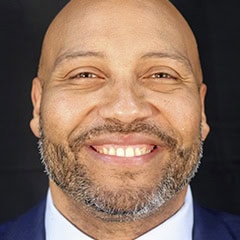
Jairo McMican, Ed.D. (Guest Editor)

Filters
Search
Department
share