Balabdaoui, F., N. Dittmann-Domenichini, H. Grosse, C. Schlienger, and G. Kortemeyer. 2024. A survey on students’ use of AI at a technical university. Discover Education. 3(51): 1–24.
Blain, F., A. Lebel, C. Proulx, and T. Si Yuan Cheng. 2026. Feasibility Study: Estimating the International Student Population in Canada Using Administrative Data. Education, Learning and Training Research Paper Series. Ottawa, Ontario, Canada: Statistics Canada.
Bontrager, B., and D. Kerlin. 2012. Strategic Enrollment Management: Transforming Higher Education. Washington, D.C.: American Association of Collegiate Registrars and Admissions Officers.
Chakrabarti, R., V. Fos, A. Liberman, and C. Yannelis. 2022 February. Tuition, Debt, and Human Capital. New York: Federal Reserve Bank of New York.
Complete College America. 2019. Why momentum pathways? In the News. January 24.
Council of Graduate Schools. 2025a. Controlling Costs and Optimizing the Value of Graduate Degrees. Washington, D.C.: Author.
Council of Graduate Schools. 2025b. Graduate Enrollment and Degrees 2025: Findings from the 2024 Survey and Insights on the Evolving Graduate Education Landscape. Washington, D.C.: Author.
Ecton, W., C. Heinrich, and C. Carruthers. 2023. Earning to learn: Working while enrolled in Tennessee colleges and universities. AERA Open. 9(1).
Eddy, P. L., J. S. Davis, A. L. DeSantis, and K. J. Haley. 2023. A call for action to strengthen the commitment to equitable student success: A case study of North Carolina community college strategic plans. Community College Journal of Research and Practice. 47(4): 254–272.
EDUCAUSE. 2025. 2025 EDUCAUSE Horizon Report: Teaching and Learning Edition. Louisville, CO: Author.
Hallam, I. 2023. College higher education commuter students’ experiences of belonging, mattering and persisting with their studies. Research in Post-Compulsory Education 28(3): 373–389.
Jenkins, D., T. Myers, and F. Matin. 2023. Whole-College Guided Pathways Reform Practices: Scale of Adoption by Community Colleges in Three States. New York: Community College Research Center, Teachers College, Columbia University.
Karp, M.M. 2025. Institutional Transformation over the Long Term: Lessons from the HSS Implementation Network. Denver, CO: Phase Two Advisory.
Labadze, L., M. Grigolia, and L. Machaidze. 2023. Role of AI chatbots in education: Systematic literature review. International Journal of Educational Technology in Higher Education. 20(56): 1–17.
Lane, P., C. Falkenstern, and P. Bransberger. 2024. Knocking at the College Door: Projections of High School Graduates, 11th Edition. Boulder, CO: Western Interstate Commission for Higher Education.
McCarron, G. P. 2026. What is working for first-generation college transfer students: The importance of mattering. Journal of Student Affairs Research and Practice. 63(3): 261–275.
Miller, J. M., and C. Harrington. 2023. Challenges in implementing and sustaining community college organizational change for student success. Journal of Postsecondary Student Success. 2(2): 28–56.
NACUBO. See National Association of College and University Business Officers.
National Association of College and University Business Officers. 2026. 2025 NACUBO Tuition Discounting Study. Washington, D.C.: Author.
National Student Clearinghouse Research Center. 2025. Some College, No Credential: A 2025 Snapshot for the Nation and the States. Herndon, VA: Author.
National Student Clearinghouse Research Center. 2026. Fall undergraduate enrollment shows overall growth despite decline at private colleges. Herndon, VA: Author.
Odle, T. K., and P. Magouirk. 2023. ‘Non-submitters’: Evidence on students who start but don’t complete a college application. Providence, RI: Annenberg Institute at Brown University. Retrieved from: <luminafoundation.org/wp-content/uploads/2023/09/Non-Submitters.pdf>.
OECD. See Organisation for Economic Co-operation and Development.
Organisation for Economic Co-operation and Development. 2025. Education at a Glance 2025: OECD Indicators. Paris: Author.
Omland, M., M. Hontvedt, F. Siddiq, A. Amundrud, H. Hermansen, M. A. S. Mathisen, G. Rudningen, and F. Reiersen. 2025. Co-creation in higher education: A conceptual systematic review. Higher Education. 90(4): 1017–1047.
Page, L. C., B. L. Castleman, and K. Meyer. 2020. Customized nudging to improve FAFSA completion and income verification. Educational Evaluation and Policy Analysis. 42(1): 3–21.
Page, L.C., and H. Gehlbach. 2017. How an artificially intelligent virtual assistant helps students navigate the road to college. AERA Open. 3(4): 1–12.
State Higher Education Executive Officers Association. 2026. State Higher Education Finance: FY 2025. Boulder, CO: Author.
Schneider, J., and J. Bichsel. 2025. The CUPA-HR 2025 Higher Education Employee Retention Survey. Knoxville, TN: College and University Professional Association for Human Resources.
Taylor, Z.W. 2024. Readability and higher education access: Exploring community college admissions information on websites. Community College Journal of Research and Practice. 48(12): 806–812.
UNESCO. 2026. Global Convention on the Recognition of Qualifications concerning Higher Education. Paris: Author.
Velasco, T., J. Fink, M. Bedoya-Guevara, D. Jenkins, and T. LaViolet. 2024. Tracking Transfer: Community College and Four-Year Institutional Effectiveness in Broadening Bachelor’s Degree Attainment. New York and Washington, D.C.: Community College Research Center and Aspen Institute College Excellence Program.
Weiss, M. J., H. S. Bloom, and K. Singh. 2023. What 20 years of MDRC RCTs suggest about predictive relationships between intervention features and intervention impacts for community college students. Educational Evaluation and Policy Analysis. 45(4): 569–597.


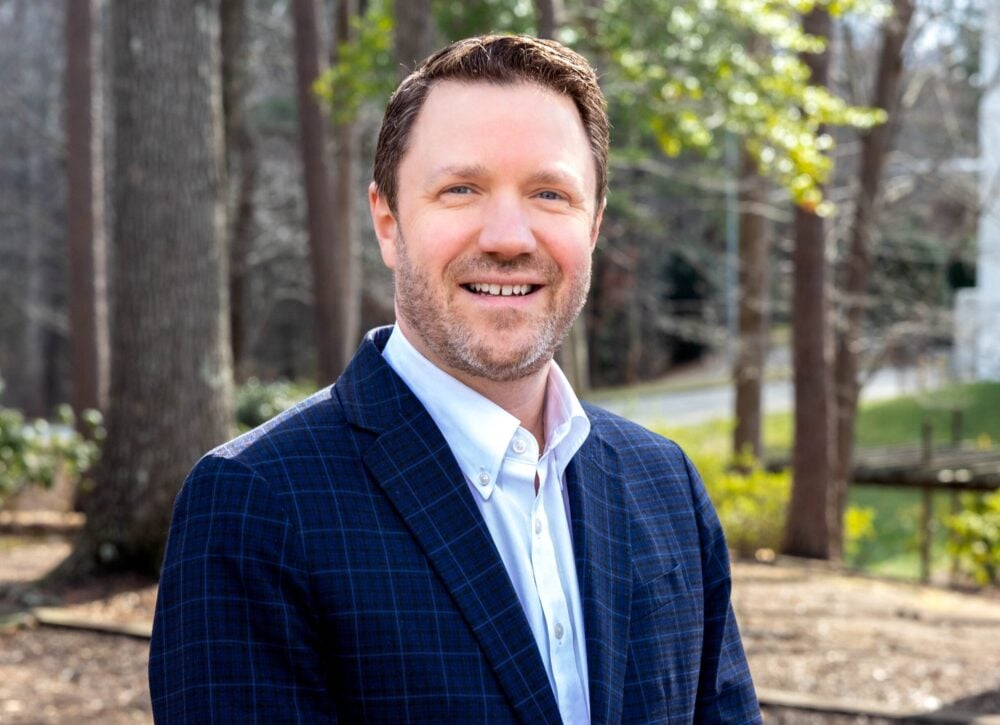
 Brian Gann serves as Vice President of Enrollment and Student Services and Chief Campus Officer of Southern Wake Campus at Wake Technical Community College in Raleigh, North Carolina. Gann is the incoming Director of the AACRAO SEM Annual Conference. A first-generation college student and proud community college graduate, he has dedicated the past 24 years of his career to advancing student access, success, and support in the community college sector. Gann earned an Associate of Arts in Liberal Arts from Bevill State Community College and later completed his Bachelor of Arts in Communication and Master of Arts in Higher Education Administration from The University of Alabama.

share