AACRAO. See American Association of Collegiate Registrars and Admissions Officers.
American Association of Collegiate Registrars and Admissions Officers. 2019. The subtle art of graduate enrollment management. AACRAO Connect. March 4.
Balayan, A., C. Connor, and J. LaFave. 2022. The evolution of graduate enrollment management. Strategic Enrollment Management Quarterly. 9(4).
Blake, J. 2023. American confidence in higher education hits historic low. Inside Higher Ed. July 11.
Blinder, A. 2025. New international student enrollments plummeted this fall, survey finds. The New York Times. November 17.
Bontrager, B. 2004. Strategic enrollment management: Core strategies and best practices. College and University. 79(4): 9–15.
Bontrager, B., and T. Green. 2015. Strategic enrollment planning. In Handbook of Strategic Enrollment Management, edited by D. Hossler and B. Bontrager. San Francisco: Jossey-Bass.
Bontrager, B., and T. Green. 2012. A structure for SEM planning. In Strategic Enrollment Management: Transforming Higher Education. Washington, D.C.: American Association of Collegiate Registrars and Admissions Officers.
Braxton, J. M., and D. Hossler. 2019. Developing the two-way practitioner-researcher loop for enrollment management. Strategic Enrollment Management Quarterly. 7(2).
Brenan, M. 2023. Americans’ confidence in higher education down sharply. Gallup. July 11.
Clark, C., M. Cluver, T. Fishaman, and H. Glatter. 2026 Higher Education Trends. Washington, D.C.: Deloitte Center for Government Insights.
Connor, C., J. LaFave, and A. Balayan. 2014. Integrated Interdependence: The Emergence of Graduate Enrollment Management (white paper). Lenexa, KS: NAGAP, The Association for Graduate Enrollment Management.
Custer, S., and C. Flaherty. 2025 Survey of College and University President Survey of College and University Presidents. Washington, D.C.: Inside Higher Ed.
Dolence, M.G. 2005. Personal communication with S. E. Henderson.
Dolence, M.G. 1996. Cases from the Field. Washington, D.C.: American Association of Collegiate Registrars and Admissions Officers.
Dolence, M.G. 1993. Strategic Enrollment Management: A Primer for Campus Administrators. Washington, D.C.: American Association of Collegiate Registrars and Admissions Officers.
Dolence, M.G. 1989. Evaluation criteria for an enrollment management program. Planning for Higher Education: 18(1): 1–14.
Dolence, M.G., Miyahara, D.H., Grajeda, J., and Rapp, C. 1988. Strategic enrollment management and planning. Planning for Higher Education. 16(3): 55–74.
Epstein, J. P. 2008. The Creation of Enrollment Management at Boston College.
Fretwell, G. 2012. Data-informed versus data-driven planning. In Strategic Enrollment Planning: A Dynamic Collaboration, edited by J. Hundrieser. Coralville, IA: Noel-Levitz, Inc.
Gardner, J. N., and G. Van Der Veer. 1997. The Senior Year Experience: Facilitating Integration, Reflection, Closure, and Transition. San Francisco: Jossey-Bass.
Gordon, J., and L. Wankel. 2023. SEM in Action: Implementing and Sustaining Your Plan. Washington, D.C.: American Association of Collegiate Registrars and Admissions Officers.
Gordon, J., and S. E. Henderson. 2024. Core Concepts of SEM: Leading Toward Learner Success and Campus Enrollment Health. Washington, D.C.: American Association of Collegiate Registrars and Admissions Officers.
Gottheil, S. 2021. Personal communication to S. Henderson, September 3.
Harper, S. 2010. An anti-deficit achievement framework for research on students of color in STEM. New Directions for Educational Research. 2010(148): 63–74.
Harper, S., and C. B. Newman. 2016. Surprise, sensemaking, and success in the First college year: Black undergraduate men’s academic adjustment experiences. Teachers College Record. 118(060308).
Henderson, S. E. 2012. Integrating evolving perspectives: The roots and wings of strategic enrollment management. In Strategic Enrollment Management: Transforming Higher Education, edited by B. Bontrager, R. Ingersoll, and D. Ingersoll. Washington, D.C.: American Association of Collegiate Registrars and Admissions Officers.
Henderson, S. E. 2005. Refocusing enrollment management: Losing structure and finding the academic context. College and University. 80(3): 3–8.
Henderson, S. E. 2005b. Retention: What’s an Institution to Do? Practical Thoughts on the Retention Agenda. SEM XV Conference, Orlando, FL.
Henderson, S. E. 2001. On the brink of a profession. In The Strategic Enrollment Management Revolution, edited by J. Black. Washington, D.C.: American Association of Collegiate Registrars and Admissions Officers.
Henderson, S. E. n.d. Unpublished report prepared at Western Michigan University.
Henderson, S. E., and K. Pollock. 2021. SEM as a Connector: Principles of Practice. Washington, D.C.: American Association of Collegiate Registrars and Admissions Officers.
Henderson, S. E., and A. Yale. 2008. Enrollment Management 101. Preconference Workshop, AACRAO XVIII, Anaheim, CA.
Hintz, J. 1987. Before trying enrollment-management techniques, colleges should assess their own academic quality. The Chronicle of Higher Education. May 13.
Hossler, D. 1984. Enrollment Management: An Integrated Approach. New York: College Entrance Examination Board.
Hossler, D. 1986. Creating Effective Enrollment Management. New York: College Entrance Examination Board.
Hossler, D., and B. Bontrager and Associates. 2015. Handbook of Strategic Enrollment Management. San Francisco: Jossey-Bass.
Huddleston, T. 1999. Phone Interview with S. E. Henderson.
Hutton, A. 2021. Building connections from prospect to alumnus: Intentionality, sticky ideas, and strategic development. In SEM as a Connector: Principles of Practice, edited by S. E. Henderson and K. Pollock. Washington, D.C.: AACRAO.
Johnson, D. 1991. Unpublished notes on SEM Conference Planning Committee.
Kallio, R. E. 1995. Factors influencing the college choice decisions of graduate students. Research in Higher Education. 36(1): 109–124.
Kalsbeek, D. 2006. Some reflections on SEM structures and strategies (part 1). College and University. 83(3): 3–10.
Kalsbeek, D. 2006b. Some reflections on SEM structures and strategies (part 2). College and University. 83 (4): 3–10.
Kalsbeek, D. 2007. Some reflections on SEM structures and strategies (part 3). College and University. 84(4): 3–12.
Kemerer, F. J., V. Baldridge, and K. Green. 1982. Strategies for Effective Enrollment. Washington, D.C.: American Association of State Colleges and Universities.
Kerlin, C. 2026. Course Commentary, Core Concepts of SEM. Essentials of SEM (online course). Washington, D.C.: American Association of Collegiate Registrars and Admissions Officers.
Kerlin, C. 2021. Developing an Effective Environmental Scan. PowerPoint in Essentials of SEM Online Course. Washington, D.C.: American Association of Collegiate Registrars and Admissions Officers.
Kerlin, C. 2008. A Community college roadmap for the enrollment management journey. College and University. 83(4): 11.
Kilgore, W. 2023. Chief Enrollment Management (CEMO) 2023 U.S. Survey Summary (AACRAO Career Profiles Series). Washington, D.C.: American Association of Collegiate Registrars and Admissions Officers.
Kornowa, A. 2025. A Multiple Case Study of Four-year Public, Non-flagship Universities: Meeting Common Institutional Goals of Increased Enrollment and Academic Profile (doctoral dissertation). Western Michigan University.
Lane, P., and C. Falkenstern. 2024. Knocking at the College Door: Projections of High School Graduates. Boulder, CO: Western Interstate Commission for Higher Education.
LeGrande, T. P., and S. E. Henderson. 2021. H-TAP Strategic Planning, Report for Community College in Southeastern U.S. Washington, D.C.: AACRAO Consulting.
Lei, S. A., and N. Chuang. 2010. Demographic factors influencing selection of an ideal graduate institution: A literature review with recommendations for implementation. College Student Journal. 44(1): 84–96.
Livesay, D., and W. Cantrell. 2021. Graduate enrollment management: A framework for making connections. In SEM as a Connector: Principles of Practice, edited by S. E. Henderson and K. Pollock. Washington, D.C.: American Association of Collegiate Registrars and Admissions Officers.
Marcus, J. 2026. More than a quarter of private colleges are at risk of closing, a new projection shows. NPR. April 13.
Mager, J. 1995. Personal communication to S. E. Henderson.
Maguire, J. 1976. To the organized go the students. Bridge Magazine. XXXIX(I): 16–20.
Massa, R. 2001. Developing a SEM Plan. In The Strategic Enrollment Management Revolution, edited by J. Black. Washington, D.C.: American Association of Collegiate Registrars and Admissions Officers.
Moor, A. and Hayes, T. 2021. Finding your institutional voice: The key to creating powerful student connections. In SEM as a Connector: Principles of Practice, edited by S. E. Henderson and K. Pollock. Washington, D.C.: American Association of Collegiate Registrars and Admissions Officers.
Morris, K. 2021. Building relationships: Diversity, equity, and inclusion in SEM. In SEM as a Connector: Principles of Practice, edited by S. E. Henderson and K. Pollock. Washington, D.C.: American Association of Collegiate Registrars and Admissions Officers.
Murthy, V. H. 2020. Together: The Healing Power of Human Connection in a Sometimes Lonely World. New York: HarperCollins.
Muston, R. 1985. Marketing and Enrollment Management in State Universities. Iowa City: ACT.
NAGAP: The Leader in Graduate Enrollment Management. 2014. What is GEM? Wilmington, DE: Author.
NORC. 2022. Survey: Americans See Cost as the Biggest Barrier to Higher Education (press release). Chicago: Author.
Nowicki, S. 2011. The value of failure. Duke Today: Campus and Community. August 24.
Riccardi, R. L. 2018. If data is the answer in higher ed, what is the question? University Business. June 26.
Sanchez, D. B. 2018. Things an HSI enrollment manager must know. The EduLedger. July 31.
Shirley, R. 1983. Identifying the levels of strategy for a college or university. Long Range Planning. 16(3): 92–98.
Smith, C. 2007. Finding the Academic Context: The SEM Role for Faculty (white paper). Washington, D.C.: AACRAO Consulting Services.
Smith, C., and L. Harris. 2021. Faculty involvement in strategic enrollment management at North American postsecondary institutions. Strategic Enrollment Management Quarterly. 8(4).
Smith, C., and S. Gottheil. 2021. SEM from the Canadian perspective: Developing relationships that enhance belonging, student persistence, and student success. In SEM as a Connector: Principles of Practice, edited by S. E. Henderson and K. Pollock. Washington, D.C.: American Association of Collegiate Registrars and Admissions Officers.
Smith, C., and W. Kilgore. 2006. Enrollment Planning: A Workshop on the Development of a SEM Plan. Washington, D.C.: AACRAO Consulting Services.
Taylor, A., C. Hayes, and R. Parks. 2021. The comprehensive learner profile: Student-centered technology to ignite the student-faculty relationship. In SEM as a Connector: Principles of Practice, edited by S. E. Henderson and K. Pollock. Washington, D.C.: American Association of Collegiate Registrars and Admissions Officers.
Thurmer, A. 2021. Creating Connection: Driving transformation through critical analysis. In SEM as a Connector: Principles of Practice, edited by S. E. Henderson and K. Pollock. Washington, D.C.: American Association of Collegiate Registrars and Admissions Officers.
Tinto, V. 1987. Leaving College: Rethinking the Causes and Cures of Student Attrition. Chicago: University of Chicago Press.
Tinto, V. 1993. Leaving College: Rethinking the Causes and Cures of Student Attrition (2nd edition). Chicago: University of Chicago Press.
Tinto, V. 2012. Completing College: Rethinking Institutional Action. Chicago: University of Chicago Press.
UNCF. See United Negro College Fund.
United Negro College Fund. 2022. Enrollment Management Practices at Private HBCUs: A Model for Success. Atlanta, GA: Author.
Upcraft, M.L., and J.N. Gardner. 1989. The Freshman Year Experience: Helping Students Survive and Succeed in College. San Francisco: Jossey-Bass.
Wankel, L. 2020. The Future of Higher Education (keynote address). AACRAO 30th Annual SEM Conference, October 29, Washington, D.C.
Ward, J. 2006. Data-driven decisions: Using data to inform and influence decisionmakers. College and University. 81(3): 51–54.
Zimar, H. 2002. University of Cincinnati to open one stop student services center in new university pavilion. SEM Monthly. Preview Issue.



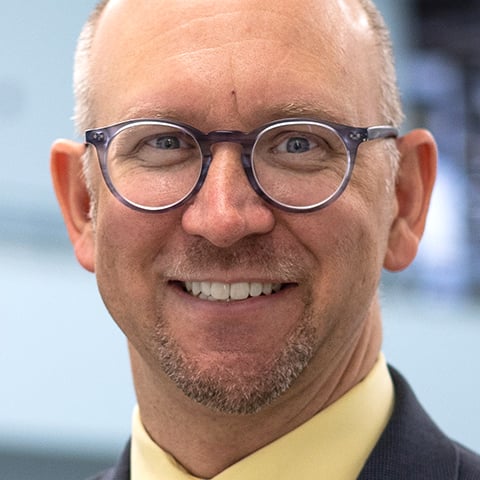
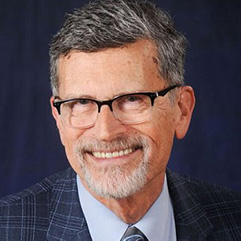 Stanley E. Henderson retired from the University of Michigan-Dearborn where he served as Vice Chancellor for Enrollment Management and Student Life from 2005–2015. In that role, he provided leadership to campus enrollment efforts that resulted in nearly a 30 percent increase in freshman enrollment as well as record growth of students of color and international students while increasing quality indices. He was also instrumental in developing a public-private partnership for student housing. He previously served in senior enrollment management positions at the University of Illinois-Urbana-Champaign, the University of Cincinnati, Western Michigan University, and Wichita State University. His roots in enrollment began as an admissions counselor at Michigan State University in 1970.
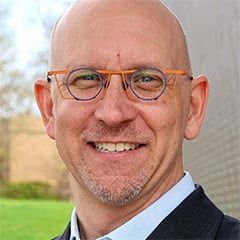 Christopher W. Tremblay, Ed.D., is a nationally recognized leader in enrollment management with more than three decades of experience shaping enrollment strategy, student access, and institutional vitality across a range of higher education settings. He currently serves as Executive Director of Enrollment Management at the University of Michigan’s Taubman College of Architecture and Urban Planning and as Director of AACRAO’s Strategic Enrollment Management (SEM) Endorsement Program—a role in which he has helped shape the professional development and credentialing of enrollment leaders around the world. Tremblay originated the concept of the “Pioneers and Pacesetters” list in November 2023. Over his 33-year career, Tremblay has held senior enrollment leadership roles at multiple institutions, including vice chancellor for enrollment management at the University of Wisconsin-Superior, associate provost for erollment management at Western Michigan University, and assistant vice chancellor for enrollment management at the University of Michigan-Dearborn. His work spans admissions, new student orientation, financial aid and scholarships, college access and enrollment management. A committed scholar-practitioner, Tremblay earned both his bachelor’s and master’s degrees from Western Michigan University, a post-master’s certificate in enrollment management from Capella University, and a doctorate in educational leadership from the University of Michigan-Dearborn. He has served as Editor-in-Chief of College and University journal since 2020 and is the co-founder and co-editor of the Journal of College Access (launched in 2015)—reflecting a deep and sustained commitment to advancing knowledge and equity in higher education.

share