You must be logged in to view this content. Please login or learn more about joining AACRAO. If you have any questions or experience any issues logging in, please reach out to us at membership@aacrao.org.
Posted on
By
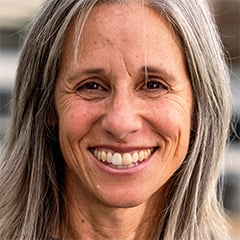
Lisa Silverstein, Delphina Thomas, and Cedric Howard
Related Issue:
Tribal Colleges and Universities (TCUs) are redefining strategic enrollment management. Through the Cultivating Native Student Success initiative, TCUs focus on capacity building using an Indigenous approach to strategic enrollment management centered on the unique cultural values inherent at each TCU to increase American Indian and Alaska Natives (AIAN) visibility, representation, and degree attainment in higher education. These culturally based practices inform a re-visioned SEM framework with an approach where campus and community-wide cultural belongingness is at the core.
You must be logged in to view this content. Please login or learn more about joining AACRAO. If you have any questions or experience any issues logging in, please reach out to us at membership@aacrao.org.

Director for TCU Capacity for Student Success at the American Indian College Fund

Program Officer for TCU Capacity for Student Success at the American Indian College Fund

Vice Chancellor of Strategic Enrollment Management (Seattle Colleges District)
Article Type
Competency
American Indian College Fund. 2026. Tribal Colleges and Universities. Denver, CO: Author.
American Indian Higher Education Consortium. 2025. TCU Locations. Alexandria, VA: Author.
Bontrager, B., and T. Green. 2015. Strategic enrollment planning. In Handbook of Strategic Enrollment Management, edited by D. Hossler and B. Bontrager and Associates. San Francisco: Jossey-Bass.
Boyer, P. 2015. Capturing Education. Pablo, MT: Salish Kootenai College Press.
Brayboy, B. M. J., A. J. Fann, A. E. Castagno, and J. A. Solyom. 2012. Postsecondary Education for American Indian and Alaska Natives: Higher Education for Nation Building and Self-Determination. San Francisco: John Wiley and Sons.
Bull, C. 2020. Tribal colleges and universities. In The SAGE Encyclopedia of Higher Education (volume 4), edited by M. E. David and M. J. Amey. Thousand Oaks, CA: SAGE Publications.
Cajete, G. 2014. Foreword to Diné Perspectives: Revitalizing and Reclaiming Navajo Thought. Tucson: University of Arizona Press.
Carroll, S. R., D. Rodriguez-Lonebear, and A. Martinez. 2019. Indigenous data governance: Strategies from United States Native Nations. Data Science Journal. 18: 31.
Friskics, S. 2025. Cultivating Native student success at Aaniiih Nakoda College. AACRAO Connect. November 25.
Hanson, J. M., E. J. Moore, A. Morseau, and D. D. Taylor. 2023. Measuring for success: AIHEC’s efforts to improve data collection and reporting. Tribal College Journal of American Indian Higher Education 34(3): 3.
Hossler, D. 2015. Origins of strategic enrollment management. In Handbook of Strategic Enrollment Management, edited by D. Hossler and B. Bontrager. San Francisco: John Wiley & Sons.
Hossler, D. and B. Bontrager 2014. Handbook of Strategic Enrollment Management. San Francisco: John Wiley & Sons.
Howard, C. B. 2025. Distinguishing strategic enrollment management and annual recruitment plans. AACRAO Connect. January 6.
Jones, T. 2025. NTU’s free food distribution with La Planta Organization (news release). March 5.
Jorgensen, M. 2007. Rebuilding Native Nations: Strategies for Governance and Development. Tucson: University of Arizona Press.
Kirkness V. J., and Barnhardt, R. 1991. First Nations and higher education: The four R’s — Respect, relevance, reciprocity, responsibility. Journal of American Indian Education. 30(3): 1–15.
LaFrance, J., and R. Nichols. 2009. Indigenous Evaluation Framework: Telling Our Story in Our Place and Time. Alexandria, VA: American Indian Higher Education Consortium (AIHEC).
Rodriguez-Lonebear, D. 2016. Building a data revolution in Indian country. In Indigenous Data Sovereignty: Toward an Agenda, edited by T. Kukutai and J. Taylor. Canberra, Australia: Australian National University Press
Lopez, J. D. 2021. Examining construct validity of the scale of Native Americans giving back. Journal of Diversity in Higher Education. 14(4): 519.
Lopez, J. D. 2022. For the Tribal Nations: Practices and Policies to Increase Completion at Tribal Colleges and Universities. New York: MDRC.
Nelson, C. A. 2017. Moving away from data invisibility at Tribal Colleges and Universities. Higher Education Today (blog). November 20.
Perez, S. 2025. Tracking the Reach of Emergency Relief Funds During the Pandemic. Washington, D.C.: EdTrust.
Rubeck, D., and A. White Eyes. 2025. Cultivating Native student success convening. Tribal College: Journal of American Indian Higher Education. July 11.
Santos, J., and A. R. Tachine. 2024. Layers of Identity: Rethinking American Indian and Alaska Native Data Collection in Higher Education. Washington, D.C.: Institute for Higher Education Policy.
Sherlock, R. 2021. A Quantitative Analysis of Emergency Grant Persistence Rates. Ph.D. dissertation, St. Cloud State University, St. Cloud, MN.
Shotton, H.J., S.C. Lowe, and S.J. Waterman. 2023. Beyond the Asterisk: Understanding Native Students in Higher Education. Abingdon Oxfordshire, U.K.: Taylor & Francis.
Silverstein, L., T. Gusbeth, and J. Breaker. 2023. An Indigenous approach to strategic enrollment management: The Native student journey at Tribal colleges and universities. Strategic Enrollment Management Quarterly. 2023(SEM & Equity Special Issue): 43–55.
U.S. Department of Education, National Center for Education Statistics, Integrated Postsecondary Education Data System (IPEDS), [2024], [12-Month Enrollment]. Retrieved [March 2026].
Walter, M. 2016. Data politics and Indigenous representation in Australian statistics. In Indigenous Data Sovereignty: Toward an Agenda, edited by T. Kukutai and J. Taylor. Canberra, Australia: Australian National University Press.
Wilson, S. 2008. Research Is Ceremony: Indigenous Research Methods. Halifax, Nova Scotia, Canada: Fernwood Publishing.
Youngbull, N. R., and D. Sanders. 2024. TCU leadership and student success. The Rural Educator. 45(1): 21–32.
Lisa Silverstein, Ph.D., is Director for TCU Capacity for Student Success at the American Indian College Fund. She leads initiatives that strengthen Tribal Colleges and Universities’ capacity to support Native student access, persistence, completion, and thriving. She guides strategic enrollment management, student success, and transfer and employment pathways in partnership with TCUs, grounding efforts in their missions, institutional priorities, and systems-level change. With more than 25 years of experience across experiential, K–12, community college, undergraduate, and graduate education, Dr. Silverstein’s work and research focus on student and faculty voice, sense of belonging, college access, retention, enrollment management, developmental education, and adult learner supports. She has led Minority Serving Institution grant initiatives, directed learning community and faculty development programs, contributed to Colorado and national developmental education reform, and continues to advocate for equitable access to higher education.
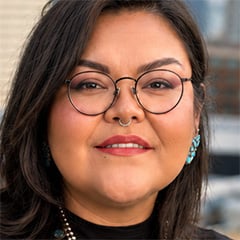
Delphina Thomas (Diné/Navajo), M.S., is from Indian Wells, Arizona. She is Tábąąhá’ (Near Water Clan), born to Totsohnii (Big Water Clan), with maternal grandparents from the Honágháahnii (One Who Walks Around) Clan and paternal grandparents from the Kinyaa’áanii (Towering House) Clan. She received her bachelor’s degree in American Studies with a focus on Native American Studies from Brown University and is currently pursuing a Ph.D. in Justice Studies at Arizona State University’s School of Social Transformation. Dr. Thomas works as a Program Officer for TCU Capacity for Student Success at the American Indian College Fund in the Student Success Services Department. In this role, she collaborates with tribal colleges and universities to develop strategic enrollment management plans aimed at increasing student retention, persistence, enrollment, and graduation rates.
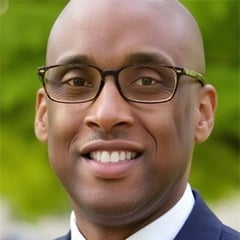
Cedric B. Howard, Ed.D., is Vice Chancellor for Student Enrollment and Effectiveness at Seattle Colleges and a nationally recognized leader in strategic enrollment management (SEM), student affairs, and student success. With more than 30 years of higher education leadership experience, he has served in senior administrative roles including vice chancellor, vice president, and dean at public and private institutions across the United States. Dr. Howard is known for leading transformational enrollment and student success initiatives, including significant enrollment growth at the University of Washington Tacoma, SUNY Fredonia, and the University of Northern Colorado. A respected consultant, peer evaluator, and faculty member for AACRAO’s Essentials of SEM course, he has supported institutions, higher education systems, and Tribal Colleges and Universities in advancing SEM and student success strategies. His contributions have earned national recognition, including the NASPA Pillar of the Profession Award and the Scott Goodnight Award.

share