

Reflecting on SEM’s 50-Year Impact
In 2026, higher education marks the 50th anniversary of SEM, a framework that has fundamentally reshaped how colleges and universities approach student recruitment, retention, and success. Originating at Boston College in the 1970s through Jack Maguire’s pioneering work, SEM soon became a central component of institutional planning (Swidey 2024). A confluence of forces beginning in the 1980s put unprecedented strain on colleges, and those challenges increased the interest in the emerging world of SEM (Swidey 2024).
Over the past five decades, offices of enrollment management have evolved from an innovative administrative model adopted by a small number of private colleges into a common organizational structure across most nonprofit colleges and universities, including public institutions (Hossler 2024). At its core, enrollment management draws upon a broad range of applied social science research methods, strategic planning models, and analytical frameworks to achieve institutional enrollment goals (Hossler and Kalsbeek 2013). This work includes assessing an institution’s competitive market position, examining how prospective students perceive the campus, exploring the factors that influence student matriculation decisions, and analyzing the conditions that contribute to student persistence, transfer, or attrition (Hossler and Kalsbeek 2013).
Additionally, as shared in the article Strategic Enrollment Management: Core Strategies and Best Practices, the enrollment management pyramid includes “active alumni” as a SEM phase (Bontrager 2004). Bontrager noted that “graduation is generally thought of as an ending, when in reality an institution’s potential relationship with students extends far longer after they graduate” (12).
As the higher education community celebrates the remarkable growth and maturation of SEM, it is an apt moment to consider the higher education landscape through the lens of those at the helm of institutions: the college and university presidents charged with navigating the rapidly evolving landscape.
The Evolving Profile of the Modern University President
University presidents hold one of the most influential positions on campus, serving as the pinnacle of leadership in the academic community (Briscoe and Freeman 2019). While in office, university presidents are expected to simultaneously serve as the chief administrator of a large and complex bureaucracy, the convening colleague of a professional academic community, a symbolic leader within a campus culture grounded in shared values and traditions, and, at some institutions, a public official accountable to governing boards and responsive to the demands of government agencies (Birnbaum and Eckel 2005). As the role of the president has evolved from stewardship to visionary, SEM has evolved from a tactical function to a strategic enterprise. This parallel evolution is illustrated in Table 1, which presents a conceptual framework showing how changes in presidential leadership have coincided with the maturation of SEM over the past five decades.
| Evolution of… | Era | ||||
|---|---|---|---|---|---|
| 1970s–1980s | 1990s | 2000s | 2010s | 2020s and Beyond | |
| The University Presidency | Mission Steward | Manager and Navigator | Strategic Leader | Chief Integration Officer | Adaptive Visionary |
|
Academic Leadership and Institutional Builder
Presidents focused on access, affordability, and the expansion of higher education |
Manager of Complexity and Change
Presidents navigated declining public support, rising costs, and calls for accountability |
Strategist and Performance-Oriented Leader
Presidents emphasized enrollment growth, tuition dependence, and measurable outcomes |
Integrator of Resources, People, and Purpose
Presidents led holistic institutional transformation, focusing on student success, diversity, and innovation |
Visionary and Change Agent in Complex World
Presidents lead in an era of disruption—demographic shifts, AI, polarization, and heightened public scrutiny |
|
| Strategic Enrollment Management | Recruitement Focused | Process Driven | Strategic and Accountability Focused | Integrated and Holistic | Agile and Future-Oriented |
| SEM emerged as a function focused on attracting students and filling seats | Growth of data use, marketing, yield management, and cross-department coordination | SEM aligned with institutional priorities, retention, and performance metrics | SEM expanded across the student lifecycle and aligned with academic, financial, and student success goals | SEM leverages analytics, AI, and scenario planning to drive agility, access, and long-term sustainability | |
| Throughline: As the role of the president has evotved from steward to visionary, SEM has evolved from a tactical function to a strategic enterprise-critical to institutional resilience, relevance, and student success. | |||||
|
|||||
Today, the pipeline to the university presidency is changing as more institutions begin to turn to individuals from unconventional professional backgrounds to lead instead of the traditional faculty-to-provost route (Harper, et al. 2017). More than 1,000 college and university presidents participated in the 2022 American College President Survey, revealing a growing diversity of leadership backgrounds for presidents, with a majority having a traditional academic background and a growing number having a professional background outside of the academic world (Melidona, et al. 2023).
Harper, et al. (2017) list some examples of these “nontraditional” presidents, such as Margaret Spellings (University of North Carolina System), Mitch Daniels (Purdue University), and Jim Tressel (Youngstown State University). These post-Great Recession leaders did not follow the traditional pathway through faculty or academic administration. Rather, they ascended to the presidency from careers in government, public policy, athletics, communications, and executive leadership. Their appointments reflected a growing trend among governing boards to appoint individuals with the skills to lead institutional change, navigate political and financial challenges, and drive organizational transformation (Harper, et al. 2017). These are summarized and expanded in Table 2.
| President (Years Served as) |
Professional Background | Institution | Leadership Competencies | Role Immediately Before Presidency | Traditional Academic Experience | Leadership Priorities | Selected Institutional Outcomes |
|---|---|---|---|---|---|---|---|
|
Margaret Spellings
(2016–2019) |
|
University of North Carolina System |
|
Former education secretary to President George W. Bush | No traditional faculty tenure or academic rank |
|
Expanded focus on:
|
|
Mitch Daniels
(2013–2022; Interim 2026–present) |
|
Purdue University |
|
Governor of Indiana | No traditional faculty tenure or academic rank |
|
|
|
Jim Tressel
(2014–2023) |
College football coach and administrator | Youngstown State University |
|
Vice President of Student Success at the University of Akron | Limited traditional academic experience; served in athletics administration |
|
Increased:
|
| Takeaway: These examples Illustrate how presidents from diverse professional backgrounds have leveraged distinct competencies to advance institutional goals. expand access, and strengthen student success. | |||||||
|
|||||||
A more recent trend, emerging amid heightened political engagement in higher education governance, is the appointment of presidents with extensive political and public policy backgrounds. Florida A&M’s appointment of Marva Johnson, a lobbyist for Charter Communications, exemplifies this trend. Her selection faced sharp opposition from students and alumni, who dubbed her “MAGA Marva” (Moody 2025).
Before assuming the presidency, Johnson had no prior professional experience in higher education and was known for her ties to Florida Governor Ron DeSantis. Jamal Brown, the Faculty Senate president, who sits on the board, argued that FAMU needed a president who has “access and political connections” to ensure the university’s financial success (Moody 2025).
In voting for Johnson, he argued that “this moment calls for someone who understands the systems that fund and govern us, because right now our survival depends on how we navigate those systems” (Moody 2025).
These leadership examples illuminate the range of backgrounds represented among university presidents, the factors governing boards consider when selecting institutional leaders, and the ways in which the competencies required for effective presidential leadership continue to evolve (Burmicky, McClure, and Ryu 2024). As noted in the literature, presidential competencies are not a fixed checklist but a dynamic constellation of skills whose relative importance shifts as the challenges and opportunities facing colleges and universities evolve (Burmicky, McClure, and Ryu 2024).
From an SEM perspective, these leaders illustrate an important evolution in how presidential competencies and roles are understood (see Appendix A). Historically, competencies such as financial management, public engagement, political navigation, and organizational strategy were presumed to be developed through traditional academic and administrative pathways to the presidency (Selingo and Clark 2017).
Today, however, higher education increasingly values competencies such as emotional intelligence, data storytelling, and—for women of color—the ability to navigate the additional expectations often described as an “invisible checklist” (Selingo and Clark 2017). Unlike the traditional competency profile, these capabilities may be cultivated through a broad range of leadership experiences beyond academia, reinforcing the growing viability of nontraditional pathways to the presidency (Burmicky, McClure, and Ryu 2024).
Whether the president comes from traditional or nontraditional paths, as the chief executive officer of an institution of higher education, their success is measured largely by their capacity for institutional leadership (AAUP 2015).
University Presidents as Thought Leaders in Strategic Enrollment Management
Given the many vulnerabilities facing higher education today, a president’s capacity to create an ecosystem that fosters transformational growth and social consciousness, while keeping budgets balanced and stakeholders engaged, is paramount (Wepner, Henk, and Broege 2023). Consistent with Katz’s (1955) Three-Skill Model, effective university presidents rely on conceptual skills to navigate complex institutional challenges, communicate a clear strategic vision, and align decisions with long-term institutional priorities.
Presidents, as thought leaders, play a key role in the evolution of SEM by envisioning and proposing a more effective way for institutions to support students and society, whether by creating innovative student success programming, promoting access and equity, reshaping financial and enrollment strategies, or succession planning for an evolving world (Horowitch 2025). As Horowitch (2025) argues, the leaders of America’s elite universities occupy an exceptionally demanding role that requires them to master the art of performative comity along with other tasks.
As discussed in the article The Tensions of Defining and Developing Thought Leadership within Knowledge-Intensive Firms “the term thought leadership became popularized after Joel Kurtzman (1998) published his influential book, Thought Leaders: Insights on the Future of Business, which included contributions from twelve practitioners and academic gurus aiming to make a revolutionary contribution to management philosophy” (Harvey, et al. 2021).
Thought leaders are not only responsible for day-to-day operations and organizational advancement, they are also genuine, empowered, and insightful (Harvey, et al. 2021). These leaders present new concepts and ideas that disrupt the “norm” (Gross 2023). Strong presidential leadership often fosters innovation, evidence-based institutional decision-making, and strategic planning for student success and institutional resilience—all characteristics commonly associated with thought leaders (Emery 2020).
Despite their role as thought leaders, recent challenges facing higher education have underscored the agility and adaptability required of today’s university presidents. Indeed, some higher education leaders contend that the COVID-19 pandemic introduced few fundamentally new challenges but instead accelerated changes that were already reshaping higher education (Yee, et al.l 2021). Many other demographic, financial, and technological factors were exacerbated during the pandemic, and the pandemic led colleges and universities to raise doubts about some of their long-held assumptions regarding enrollment, engagement, and institutional sustainability (Yee, et al. 2021). Before the pandemic, as Grawe (2021) describes, colleges and universities were already expecting a big drop in traditional-age students, which they coined the “great enrollment crash” (para. 1). Schools in areas where the greatest loss in enrollment was expected had already started to find ways to counteract the demographic loss.
Today, other challenges have emerged including visa restrictions for international students and new federal loan limits. Beginning July 1, 2026, Federal Direct Unsubsidized Loans will be capped at $50,000 annually and $200,000 total, and the Federal Grad PLUS Program will no longer be available (AAMC n.d.).
In the face of these challenges, there is considerable evidence that strategic planning, long the cornerstone of SEM’s mission, has been expanded to encompass data-driven recruitment, student retention and success, and the identification of new markets and educational modalities. One indicator of this evolution is the rapid growth of the SEM professional development ecosystem.
As we look to the next 50 years in higher education, college presidents can support their enrollment leaders by providing resources for SEM-related professional development. Practitioners can choose from more than a dozen conferences, executive education programs, certification and endorsement pathways, microcredentials, online courses, consulting services, and an extensive body of SEM publications. Organizations such as AACRAO, EAB, NAGAP, UPCEA, Ruffalo Noel Levitz, the Institute for Higher Education, and leading universities now offer specialized programming focused on developing strategic enrollment leaders.
The breadth of these opportunities reflects the growing demand for sophisticated SEM expertise and reinforces the expanding strategic role of enrollment management within higher education.
Leadership at the Forefront: President Brian O. Hemphill
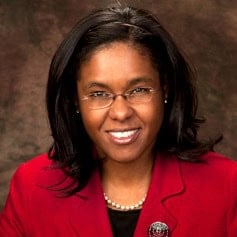
Consider the example of President Brian O. Hemphill, whose pathway to the presidency reflects the evolving nature of higher education leadership. As the ninth president of Old Dominion University, Dr. Hemphill leads a Carnegie R1 research university of more than 30,000 students known for its commitment to student access, innovation, and workforce development. His career of academic leadership and institutional transformation exemplifies the evolving roles and expectations of university presidents in a changing demographic, technological, and financial landscape (ODU n.d.).
Before assuming the presidency at ODU in 2021, Dr. Hemphill served as president of West Virginia State University and Radford University, where he led initiatives to improve enrollment, expand academic programs, strengthen infrastructure, and increase philanthropic support. (ODU n.d.). Since becoming president, he has guided ODU through a period of significant change and disruption while advancing an institutional vision grounded in data-informed decision-making, innovation, and student success.
Despite these challenges, ODU has demonstrated notable resilience under Dr. Hemphill’s leadership. Enrollment in ODU Global (online programs) more than doubled between 2014 and 2025, and first-time, full-time student retention increased from 72 percent to 79 percent by late 2025 (Payne 2026; Heeter 2025). His leadership illustrates how SEM can serve as a framework for strengthening institutional resilience by aligning strategic planning, enrollment management, and student success. The following interview explores his perspectives on the future of SEM and the leadership competencies needed to navigate higher education’s evolving landscape.
Interview Excerpts with Dr. Brian Hemphill
The following excerpts are derived from the author’s personal interview with Dr. Brian Hemphill via Zoom on March 2, 2026.
- When you think about demographic shifts, the enrollment cliff, and the projected growth of online learning, how do you use both national trends and your own institutional data to guide strategic decisions rather than simply reacting to change?
I will tell you that you’re only as strong as the data that you have access to as it relates to informing your decisions.
To me, there’s an important component of the national data sets out there that should drive any vice president for strategic enrollment management’s thinking.
That means looking at what’s going on nationally, what’s going on within your region, what’s going to happen over the next five to ten years, and asking how that should position the institution for the future.
Otherwise, if you aren’t doing that, then you’re continually fighting from behind and just reacting.
He points to online learning as one example:
We have to pay attention to the fact that the e-learning/online market is right now valued at about $400 billion, with projections that by 2030 or 2031, it’s going to top $800 billion.
But that’s the adult learner. That’s the growth in that market.
- How has centralizing data functions across campus changed the way your institution makes decisions, and what impact has the Office of Data Intelligence had on reducing conflicting reports or competing interpretations of institutional data?
What we did as a campus, we created the Office of Data Intelligence.
Before that, HR had data people, Academic Affairs had data people. IT had a number of people, and Finance also had data staff. The institution pulled all of them together and created what the Office of Data Intelligence is.
The result was one central data hub where anything we want to know about the institution or any requests that people are having, there’s one office, one location, and you have key experts.
That structure reduced conflicting reports: We don’t have competing data where the provost office will give me something and the enrollment office will give me something else and ask the same question.
He summarized the larger point this way:
Data is just central to the work that we do. But you have to do something with it once you have it.
- You’ve described several major strategic changes, from data centralization to digital transformation and new investments in student-facing infrastructure. From a leadership and change-management perspective, what practices have been most effective in moving this work forward, especially in a time of disruption and competing priorities?
I think, first and foremost, it’s making the case. And you do allow the data to help drive making the case in these situations.
People are smart, but they have to understand the why behind the work that we’re doing and the changes that we’re making.
After that, you have to communicate early and often, and you have to be very, very thoughtful and concise about the execution.
He was direct about where change efforts fail:
Where I see things break down significantly is really the communication and the execution.
He also emphasized courage:
You just have to be in a position where you can weather the storm of whatever change you’re making for the benefit of the institution.
Ultimately, from a leadership standpoint, are we going to be courageous enough to make the decisions for the benefit of our institutions?
And when priorities compete, he tied alignment back to vision:
If you have clarity around the vision within the organization, people will align and understand how they’re contributing to that.
- Looking ahead over the next five to ten years, what do you see as the biggest opportunity or threat facing strategic enrollment management?
I think the biggest opportunity for me, the biggest opportunity and the biggest threat are the same. And it’s AI.
AI provides a significant opportunity for us in terms of revolutionizing our work processes, our flows, and creating broader opportunities for our staff to be able to focus on other tasks that can really benefit enrollment management.
At the same time, it’s also the biggest threat because if you don’t understand it, if you don’t embrace it, you’re going to find yourself wondering exactly what happened to us.
For him, the question is, “Who leans into it and who embraces it.”
He connected that point to online education, noting that institutions that moved early are now leading the market:
You look at Arizona State, along with University of Maryland Global and Purdue. These institutions leaned into the opportunities they have, not only with technology, but also in ways that allowed them to control a market that is really, really large and growing.
That market, he said, is the adult learner market:
I think the big opportunity out there is definitely the adult market.
But he cautioned that many institutions are not truly prepared to serve adult learners:
People can say every day, “‘Oh, yeah, I’m going to get into the adult market.” People aren’t willing to do what it takes to get into the adult market.
The key is understanding what adult students actually need: How are we providing flexible learning pathways that align with opportunities for this fast-growing population to be able to meet their needs?
He added, “They need flexibility.”
For him, this is another place where data must guide leadership decisions:
This is where data informs and drives—has to drive—many of the decisions that you make.
And, as with other forms of strategic change, leaders must be ready for resistance: You have to be prepared for the backlash that comes with that because everybody’s not going to be happy with that particular work.
- As we conclude, what guidance would you offer enrollment leaders as higher education faces increasing scrutiny, disruption, and pressure to change?
The times have changed.
He closed by emphasizing that higher education is facing serious external pressure, including challenges around accreditation, public confidence, financial stability, and institutional viability.
Higher education is dealing with unprecedented challenges and headwinds like we have never faced.
He argued that some of these challenges were self-created:
We created a lot of these challenges for ourselves.
For him, the leadership response must be grounded in courage and honesty:
How do we lead in ways that are authentic, that are courageous? How do we encourage those around us to be truth tellers?
He connected that directly to enrollment management:
When you think about the lifeblood of an institution, it’s enrollment.
Because of that, enrollment leaders have a responsibility to bring forward difficult truths: You have to have an enrollment management team that can be those truth tellers to the administration, to the faculty when appropriate.
He emphasized that enrollment leaders are often closest to what prospective students need:
Those that are so close to what the prospective student needs, who’s going to do that? Who’s going to provide that guidance and that insight if not you?
He ended with a call for enrollment leaders to step fully into their strategic role:
How are you stepping to the table as a vice president that’s responsible for enrollment management to really bring the decision points to the leadership and challenge them to make decisions that are going to help the institution’s future viability?
Conclusion
As illustrated in the conceptual framework presented in Table 1, the evolution of the university presidency has paralleled the evolution of SEM. As presidential leadership has progressed from institutional stewardship to adaptive, visionary leadership, SEM has likewise evolved from a tactical enrollment function into a strategic enterprise that advances student success, institutional resilience, and long-term sustainability. At the same time, the growing privatization of higher education and increasing competitive market pressures continue to introduce new challenges while intensifying longstanding dilemmas for university presidents (Birnbaum and Eckel 2005).
President Brian O. Hemphill’s reflections illustrate what this evolution looks like in practice. As he observed, “The times have changed.” Throughout the interview, he emphasized the importance of using data to anticipate change, communicating a clear institutional vision, embracing emerging technologies such as artificial intelligence, and having the courage to make difficult decisions for the long-term benefit of the institution. His perspective exemplifies the competencies increasingly required of university presidents leading through uncertainty.
As in the past, the future of SEM will be defined by presidents who lead with vision, ask different questions, and build the environment for campus innovation (see Table 3). Successful presidents, as Birnbaum and Eckel (2005) argue, are often “realists rather than idealists” (356). As artificial intelligence reshapes how, where, and by whom work is done, college presidents and their leadership teams are uniquely positioned to guide society through this transition (Clark, et al. 2026). In an era defined by demographic shifts, technological disruption, political polarization, and growing public skepticism toward higher education, SEM will increasingly serve not only as a framework for enrollment strategy but also as a mechanism for institutional adaptation, resilience, and long-term sustainability.
| Period | Role | What’s Happening |
|---|---|---|
| 1800s | The Faculty Member | College presidents are mostly clergy who split their time between running the institution and teaching. They are seen as the common man around campus, like Webster Merrifield at the University of North Dakota, who often uses his own bank account as an interest-free student load fund. |
| 1900–1944 | The Administrator | As colleges turn into more complex institutions, boards begin to search for managers to run the campuses. As Rutherford B. Hayes, a member of the Ohio State University board, puts it, “we are looking for a man of business training, a man of affairs, and a great administrator.” Presidents begin to see their role more as a profession and adopt an informal presidents’ club among their counterparts. |
| 1945–1975 | The Builder | After World War II and the passage of the GI Bill, a surge in student enrollment requires presidents to build bigger and more formal administrative structures. An influx of new dollars through federal science research and student aid allows presidents to expand both the physical plant and academic offerings of their institutions to unprecedented levels. |
| 1976–2008 | The Accountant | Federal and state financing of higher education begins a slow shift from student grants to loans on the federal level and smaller direct appropriations on the state level. So presidents become fiscal agents of their institutions, focusing much more on fundraising, building new revenue streams, and searching for partnerships to share increasing costs. |
| 2009–Present | The Multidisciplinarian | Higher education faces a multitude of challenges—growing inequality among students and institutions, technology changing the world of learning and work, and fiscal constraints from governments—requiring multidimensional leaders who can build and navigate academic disciplines, institutions, and outside partnerships. |
|
Source: Selingo and Clark 2017
|
||

share