

Author’s Note: This manuscript summarizes the key findings of the doctoral dissertation A Need to Know: An Examination of the Intersection Between Social Cognitive Neuroscience and Motivation in College Admissions Counseling and has been modified and streamlined for submission as a journal article.
College admissions counseling is under sustained strain in contemporary higher education (Hoover 2023). While the field has traditionally been described as relational and student-centered — supporting prospective students and families through exploration, decision-making, and transition — it is increasingly experienced by practitioners as operationally overwhelming, externally pressured, and professionally undervalued. College admissions counselors often report expanded responsibilities, rising performance expectations tied to enrollment outcomes, and intense exposure to public scrutiny and institutional anxiety about tuition revenue and market competition (EAB 2023). These pressures are compounded by high turnover and short tenure norms that destabilize offices, diminish institutional memory, and intensify workloads for those who remain (Hoover 2023).
Professionals typically enter admissions counseling with a mission-driven orientation. Many are motivated by helping students imagine new possibilities, removing barriers to access, and translating complex institutional systems into clear pathways (Jump 2020). Yet the work has become increasingly shaped by corporate logics of recruitment and conversion, where goals and dashboards can overshadow the counseling elements of the profession (Chimes and Gordon 2008). In this environment, admissions counselors may experience a widening gap between what they value (relationship-building, advocacy, service) and what is most rewarded (numbers, speed, efficiency, yield). This gap is not merely philosophical; it can reshape motivation, identity, and well-being (Hoover 2023).
Despite admissions counselors’ critical role in institutional sustainability and student access, research has historically focused on outcomes rather than on the experiences of the professionals tasked with delivering them. Studies of enrollment management often prioritize strategy, market positioning, communication tactics, and institutional metrics (NACAC 2019). When counselors themselves appear in research, they are frequently treated as operational actors rather than as individuals whose motivation, social experience, and professional meaning-making influence performance and persistence. Traditional organizational interventions — salary adjustments, new incentive structures, wellness initiatives, or workload redistribution — may help, but evidence from the field suggests these approaches alone have not resolved dissatisfaction or turnover patterns (Hossler 2004; Pantazes 2021).
This study approaches the problem from a different angle: the social brain. Social cognitive neuroscience (SCN) provides a framework for understanding how workplace environments — especially interpersonal dynamics — activate neural threat and reward systems that influence motivation, cognition, and behavior (Rock 2013). In this view, motivation is not only an individual trait or a response to incentives; it is shaped by social experience, perceived safety, identity, fairness, and belonging. To operationalize SCN in workplace terms, this study applies David Rock’s SCARF® model (Status, Certainty, Autonomy, Relatedness, and Fairness), a well-established NeuroLeadership framework describing the social domains most likely to trigger threat or reward responses (Rock 2009).
Using a mixed-methods design, the study examined the relationship between admissions counselors’ social cognitive needs (as measured through SCARF® domains) and their situational motivation (as measured through the Situational Motivation Scale [SIMS]). SIMS is a validated questionnaire that measures a person’s motivation toward a specific task or activity (F. Guay, et al. 2000). The scale captures four types of motivation—intrinsic motivation, identified regulation, external regulation, and amotivation—to describe why an individual engages in the activity. In addition to examining relationships, the study also explores how admissions professionals describe social threats and rewards in the lived realities of enrollment work.
Two research questions guided the study:
- What is the relationship between social cognitive needs and motivation among college admissions counselors?
- How do college admissions counselors experience social threats and rewards at work?
By connecting neuroscience-informed theory to professional experience of admissions counseling, the study aims to clarify what sustains motivation and what erodes it in a profession facing instability (Hoover 2023). Ultimately, the goal is not simply descriptive. Understanding how social threat and reward dynamics function in admissions workplaces may inform more human-centered leadership practices and organizational designs that support engagement, staff retention, and professional well-being.
Literature Review
Organizational Neuroscience, Social Cognitive Neuroscience, and Workplace Motivation
Organizational neuroscience has emerged as an interdisciplinary field that integrates neuroscience with organizational psychology, behavioral economics, and management studies to better understand human behavior in work settings (Beugre 2009). This literature argues that workplace behavior cannot be fully explained by rational choice, incentives, or policy design alone. Instead, cognition, emotion, and social processing play decisive roles in attention, decision-making, collaboration, and performance (Forbes-Zeller 2020; Butler 2014; Beugre 2010).
Social cognitive neuroscience (SCN) sits within this broader space and focuses specifically on how neural systems shape social behavior and interpersonal experience (Rock 2009). SCN builds on social cognitive theory by emphasizing how people interpret social cues, anticipate outcomes, regulate emotion, and respond to perceived inclusion or exclusion. Research in this area suggests that social conditions — such as being respected or dismissed, included or ignored, treated fairly or unfairly — are processed by the brain as consequential signals (Gordon 2008). These signals can activate threat responses that narrow cognition and increase stress, or reward responses that support creativity, engagement, and approach behavior (Rock 2013).
A foundational insight of SCN is that social threats can mimic physical threats in their neural impact (Eisenberger and Lieberman 2004; Panskepp 1998). Studies have demonstrated overlap between brain regions activated by physical pain and those activated by social rejection or exclusion (Rock 2008). In workplace contexts, this means that experiences such as public criticism, unclear expectations, unfair treatment, or loss of autonomy can produce threat responses that reduce cognitive flexibility, impair problem-solving, and weaken motivation (Rock 2009). Conversely, experiences of trust, recognition, and belonging can activate reward circuitry associated with positive effect and sustained effort.
NeuroLeadership and the SCARF® Model
NeuroLeadership translates neuroscience insights into practical frameworks for leadership and organizational design (Ringleb and Rock 2008). A central proposition is that many workplace challenges — resistance to change, interpersonal conflict, disengagement — are rooted in unrecognized threat responses activated by social conditions. Rather than relying only on policies or incentives, NeuroLeadership emphasizes shaping environments that reduce social threat and increase reward (Rock and Cox 2012).
David Rock’s SCARF® model provides a widely used structure for understanding these social drivers (Rock, Davis, and Jones 2014). SCARF® identifies five domains that strongly influence the brain’s threat-reward system:
- Status: relative importance, respect, recognition, and perceived competence
- Certainty: clarity, predictability, and reduced ambiguity
- Autonomy: sense of control, choice, and agency
- Relatedness: belonging, trust, and social connection
- Fairness: equitable treatment and consistent processes
The model posits that each domain can function as either a reward or a threat depending on context. For example, increased status through recognition can motivate engagement, whereas perceived status loss through dismissal or invisibility can trigger a sense of threat. Certainty rewards the brain’s preference for predictability, while ambiguity can heighten threat responses. Autonomy supports agency; lack of control can produce stress responses. Relatedness is grounded in social safety; exclusion activates a sense of threat. Fairness is especially potent — perceived unfairness can provoke strong emotional reactions and reduce trust even when outcomes are otherwise favorable.
Because SCARF® provides accessible language for complex social processes, it has been adopted across organizational training and leadership development (Rock and Cox 2012). It also offers a useful lens for professions where work is inherently interpersonal and identity-driven — conditions that describe college admissions counseling.
Enrollment Management and the Admissions Counseling Profession
Enrollment management developed as a strategic response to demographic, economic, and competitive pressures in higher education (Hossler 1990). Over time, recruitment and retention have become integrated into institutional planning and increasingly reliant on analytics, marketing, and revenue forecasting. In this context, admissions offices serve as frontline units that translate institutional priorities into student-facing engagement and decision support (Hoover 2023).
The role of admissions counselor has expanded beyond application evaluation to include territory management, outreach strategy, event programming, communication campaigns, relationship building with schools and communities, and cross-campus coordination with financial aid, registrar functions, academic departments, athletics, and student success offices (Rapelye 1999; NACAC 2014). Admissions counselors often operate as advisors, marketers, data users, troubleshooters, and institutional ambassadors simultaneously. Research has consistently documented turnover patterns in admissions work, often reflecting short tenure norms (EAB 2022). Several factors arise in the literature: high travel and seasonal intensity, limited advancement pathways, emotional labor, and role ambiguity (McDonough and Robertson 2012). Counselors have also highlighted professional identity strain resulting from admissions work being positioned as sales rather than counseling, particularly when enrollment pressure overrides student-centered values (Chimes and Gordon 2008; Jump 2004). This tension can increase burnout and reduce alignment between personal motivations and institutional structures.
However, much of the scholarship remains oriented toward outcomes and operational strategy (Minton and Gibson 2012). Less attention has been given to the social experience of admissions professionals themselves: how they interpret their workplace environment, how social dynamics shape meaning and identity, and how threat and reward signals influence motivation. This gap is particularly important because admissions work is inherently relational and may therefore be strongly shaped by social cognitive factors.
Research Gap and Rationale
This study responds to a clear gap in the literature: the lack of application of social cognitive neuroscience frameworks, especially SCARF®, to the profession of college admissions counseling. By studying motivation through SCN, the research shifts the focus from traditional explanations (pay, workload, incentives) to deeper social mechanisms that influence how admissions counselors experience work. In a profession often described as “maxed out,” understanding these mechanisms may be essential for designing environments that sustain the people doing the work (Hoover 2023).
Methodology
Design Overview
This study used a mixed-methods design to examine the relationship between social cognitive needs and motivation among college admissions counseling professionals. Quantitative survey methods assessed correlational relationships between SCARF® domains and motivation, as measured by SIMS. Qualitative focus groups explored lived experiences of social threats and rewards and served as a structured reflective intervention.
Participants and Recruitment
Participants were full-time admissions counselors and related undergraduate admissions professionals recruited primarily through the Indiana Association for College Admissions Counseling (INACAC), as well as additional professionals identified via publicly accessible institutional contact information. Following IRB approval in summer 2024, an email invitation was distributed to approximately 1,700 admissions professionals. The invitation included informed consent and a Qualtrics link to a short survey (5–10 minutes).
A total of 133 respondents completed the pre-survey. Respondents represented 60 cities across 29 states, with higher concentrations in Indiana and several neighboring or high-population states. Participants came from both private (55 percent) and public (45 percent) institutions and represented a range of titles (Admissions Counselor through Director). The sample reflected a range of experience levels, averaging approximately eight years in admissions and six years at their current institution.
Instruments
The survey combined two established measures:
- SCARF® Domain Assessment: Measures respondents’ experiences or preferences related to Status, Certainty, Autonomy, Relatedness, and Fairness.
- Situational Motivation Scale (SIMS): Measures four motivation types aligned with self-determination theory:
- Intrinsic Motivation: Refers to engaging in an activity for inherent enjoyment, interest, or satisfaction derived from the activity itself.
- Identified Regulation: Refers to engaging in an activity because it is personally valued or seen as important, even if the activity itself is not inherently enjoyable.
- External Regulation: Refers to engaging in an activity primarily to obtain external rewards or to avoid negative consequences such as pressure, evaluation, or punishment.
- Amotivation: Refers to a lack of intention or motivation to engage in an activity, characterized by feelings of indifference, incompetence, or lack of perceived value.
SCARF® domains served as independent variables and SIMS motivation scales as dependent variables.
Procedure
After the pre-survey window closed (two weeks, with a reminder email five days prior to closing), initial SCARF® and SIMS profiles were generated. Spearman’s rank correlations were conducted using JASP software (Version 0.18.1; JASP Team 2024) to assess relationships between SCARF® domains and SIMS motivation scales. Spearman’s correlation is used to determine if a relationship exists between two ordinal, monotonic variables, in this case, social cognitive needs and motivation (Spearman 1904). Participants were invited to opt into focus groups. Twenty opted in and participated across three focus groups: one internal group (in-person) and two external groups (virtual). Sessions were 90–120 minutes and were facilitated by an external moderator to reduce researcher bias. Discussions were semi-structured and aligned with SCARF® domains, exploring social threats and rewards in admissions work. Following each focus group, participants completed the post-survey within 24 hours. The post-survey was also distributed to non-focus group participants to establish a control group. Transcripts were professionally produced, de-identified, and shared with participants prior to coding for accuracy.
Data Analysis
Quantitative analysis included:
- Descriptive statistics for SCARF® and SIMS scales
- Spearman’s correlations between SCARF® domains and motivation scales
- Welch’s independent t-tests comparing post-survey motivation scores between experimental (focus group) and control groups.
- Exploratory subgroup comparisons (e.g., gender, alumni status, professional membership)
Qualitative analysis used inductive coding to identify recurring patterns and themes. Codes were then clustered into broader thematic categories that described how social threats and rewards were experienced across admissions work.
Findings
Overview
This study examined college admissions counselors’ motivation through both measurement and narrative. Quantitative analyses revealed statistically significant relationships between several SCARF® domains and motivational orientation. Qualitative themes reinforced and contextualized these statistical results, showing how social rewards and threats appear in daily work life and influence engagement.
Research Question 1 (Quantitative):
What is the relationship between social cognitive needs and motivation among college admissions counselors?
Sample Description
The 133 pre-survey respondents represented admissions professionals across multiple institutional types, regions, and roles. The majority of respondents were between 25 and 34 years old. The group was predominantly female (96), with male (34), non-binary (3), and one “prefer not to say.” Half of the respondents were alumni of their employing institution.
Motivation Profiles (SIMS)
Pre-survey SIMS results (on a scale of 0–28) indicated that admissions professionals reported comparatively strong internal motivation:
- Intrinsic Motivation: mean 21.18
- Identified Regulation: mean 19.87
- External Regulation: mean 10.97
- Amotivation: mean 8.15
These results suggest participants are generally driven by internal satisfaction and alignment with personal values rather than by external incentives or indifference.
SCARF® Domain Profiles
Pre-survey SCARF® domain averages (on a scale of 0 — 7) showed:
- Status: mean 6.04
- Relatedness: mean 5.82
- Certainty: mean 5.53
- Fairness: mean 5.33
- Autonomy: mean 4.91
Status and Relatedness emerged as especially salient social domains for this group.
Correlational Findings
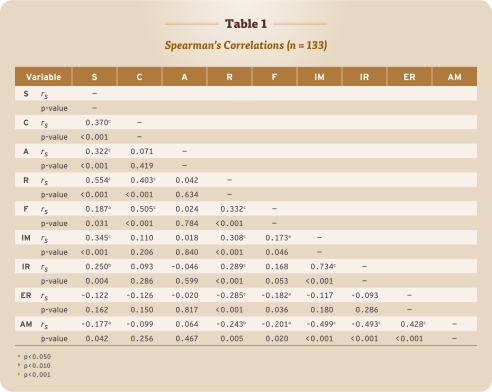
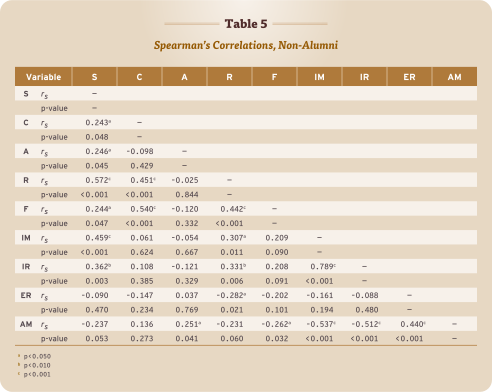
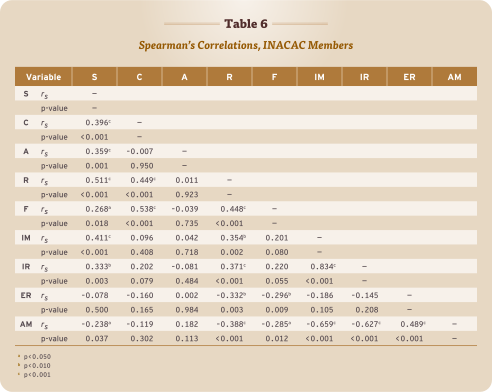
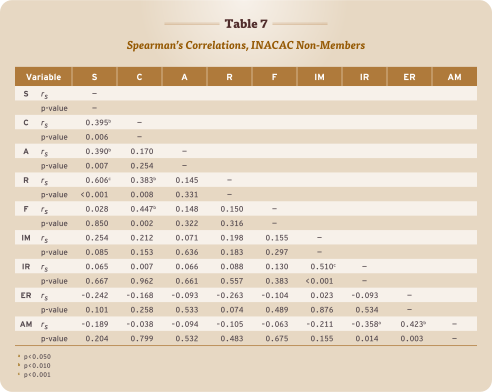
Spearman’s correlation analyses identified statistically significant relationships between three SCARF® domains and motivational outcomes.
- Status
- Positive correlation with Intrinsic Motivation (r = 0.345, p < 0.001)
- Positive correlation with Identified Regulation (r = 0.240, p = 0.004)
- Negative correlation with Amotivation (r = –0.177, p = 0.042)
Interpretation: higher perceived status aligns with stronger internal motivation and lower indifference.
- Relatedness
- Positive correlation with Intrinsic Motivation (r = 0.308, p < 0.001)
- Positive correlation with Identified Regulation (r = 0.289, p < 0.001)
- Negative correlation with External Regulation (r = –0.285, p < 0.001)
- Negative correlation with Amotivation (r = –0.243, p = 0.005)
Interpretation: connection and belonging relate to healthier motivation profiles across all motivation types.
- Fairness
- Positive correlation with Intrinsic Motivation (r = 0.173, p = 0.046)
- Negative correlation with External Regulation (r = –0.182, p = 0.036)
- Negative correlation with Amotivation (r = –0.201, p = 0.020)
Interpretation: perceptions of equity align with internal motivation and reduce externally driven or disengaged motivation.
- Certainty and Autonomy were not statistically correlated with motivation scales in the pre-survey data.
Subgroup Patterns
Exploratory analyses suggested nuance by demographic and professional identity:
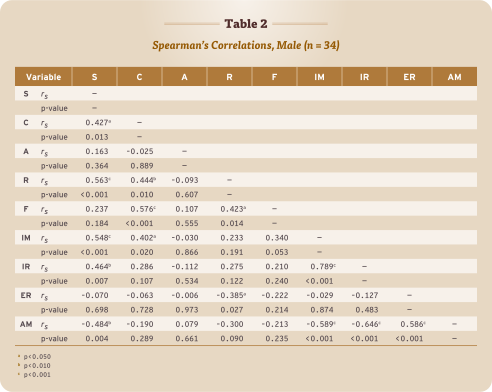
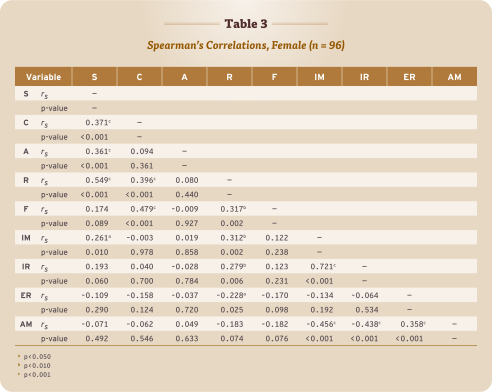
- Females showed stronger relationships between Relatedness and motivation measures.
- Males showed clearer relationships between Status and motivation.
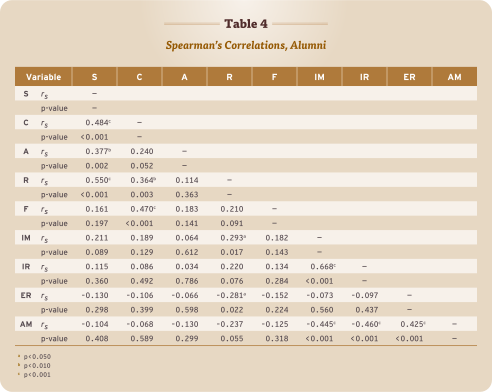
- Non-alumni demonstrated stronger Status and Relatedness relationships than alumni, while alumni still showed Relatedness effects.
- INACAC members showed stronger correlations than non-members, suggesting that the professional community may relate to social cognitive experience.
Intervention Effect
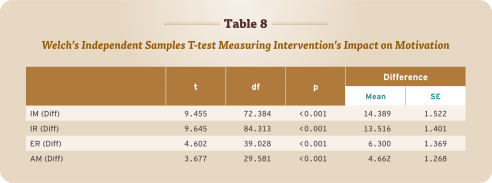
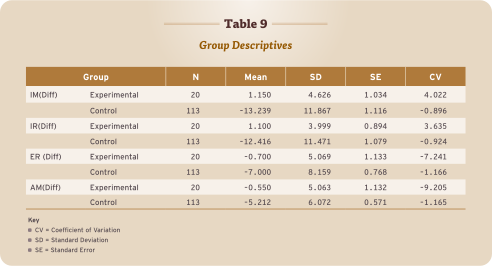
Welch’s t-tests comparing post-survey motivation scores between focus group participants and control participants indicated statistically significant differences (p < 0.001) across all four motivation scales. While not causal proof, this finding suggests reflective discussion about social experience may influence motivational orientation, potentially by increasing awareness, validation, and meaning-making.
Summary
Taken together, these findings suggest that the motivation of college admissions counselors is shaped not only by internal values but also by the social conditions of their workplace. Participants reported high levels of intrinsic motivation and identified regulation, indicating that many are driven by personal meaning and commitment to student success rather than external incentives alone. At the same time, the SCARF® domain results and correlational analyses demonstrate that social experiences—particularly Status, Relatedness, and Fairness—are closely linked to these internal motivation patterns. Furthermore, when college admissions professionals feel respected, connected to colleagues, and treated equitably, these conditions appear to reinforce intrinsic motivation and reduce disengagement. Conversely, when these social needs are threatened, motivation may weaken even when individuals remain personally committed to the work.
Research Question 2 (Qualitative):
How do college admissions counselors experience social threats and rewards at work?
Inductive coding of focus group transcripts produced five major themes aligned with SCARF® domains and organizational realities.
Theme 1: Collaborative Culture and Interpersonal Bonds (Relatedness)
Participants consistently described relational connection as a primary motivator. Supportive team culture — where colleagues listen, share burdens, and recognize one another — was experienced as a social reward that sustained engagement. Informal connection mattered alongside formal collaboration; participants emphasized that being treated as a whole person increased their sense of belonging and motivation.
Conversely, strained dynamics, isolation, or exclusion reduced motivation and increased emotional fatigue. Many participants noted that being included in relationships beyond their immediate office (e.g., cross-campus partners, peer institutions, student interactions) also reinforced a sense of belonging.
Theme 2: Self-Determination, Recognition, and Value (Status)
Recognition functioned as both a motivational driver and a symbolic signal of respect. Participants frequently clarified that pay was not their primary motivator, yet compensation and title structures communicated institutional value. When salaries did not reflect workload or impact, participants interpreted the gap as diminished status. Similarly, when prior experience or expertise was dismissed, counselors experienced status threat.
Recognition also included being trusted with judgment, being asked for input, and being acknowledged as a professional. Counselors described feeling re-energized when students expressed gratitude or when campus partners affirmed their impact.
Theme 3: Fairness and Consistency in Policy and Practice (Fairness)
Fairness concerns extended beyond equal outcomes to equitable processes. Counselors were particularly sensitive to inconsistent expectations across departments or exceptions that benefited some groups but not others. When policies were applied unevenly or changed without transparency, participants reported frustration, disengagement, and reduced trust.
Fairness was strongly connected to credibility: when counselors were expected to enforce standards but watched those standards bend under pressure, they experienced both moral distress and diminished motivation.
Theme 4: External Pressures and Metric Dominance (Certainty/Status)
Participants described enrollment goals as an omnipresent context shaping daily experience. While many accepted goals as necessary, the intensity of numeric pressure, especially when paired with limited resources, was experienced as a threat that narrowed the meaning of the work. Counselors felt tension between counseling students toward the best fit and being evaluated through outcomes partly outside their control.
Interdependence with other departments also created stress, particularly when delays or communication gaps affected students and counselors bore the relational consequences. In these moments, uncertainty became a social burden, not just an operational challenge.
Theme 5: Communication, Trust, and Voice (Autonomy/Relatedness)
Communication emerged as a central mechanism through which trust and autonomy were experienced. Transparent leadership communication increased psychological safety, supported autonomy, and improved motivation. When decisions were made without counselor input or when micromanagement limited autonomy, counselors experienced threat and disengagement.
Counselors frequently linked autonomy to trust: being given control and voice signaled respect and belonging, while exclusion signaled devaluation. Communication breakdowns across departments reduced confidence in the institution’s ability to support students and weakened counselors’ sense of purpose.
Summary
Together, these five themes suggest that the motivation of college admissions counselors is deeply shaped by social conditions in the workplace, not simply by individual drive or compensation. Through the lens of the SCARF® model, participants’ experiences reflect how motivation is influenced by whether key social needs are supported or threatened in everyday work interactions. When college admissions counselors experienced strong relationships, recognition of their expertise, transparent policies, predictable expectations, and meaningful voice in decisions, these conditions functioned as social rewards that reinforced engagement and purpose. Conversely, experiences such as exclusion, inconsistent policies, lack of recognition, or heavy metric pressure triggered social threat responses, which participants described as reducing motivation, increasing emotional fatigue, and narrowing the meaning of their work. Because the brain interprets these social experiences as signals of reward or threat, they can significantly shape the engagement, collaboration, and performance of college admissions counselors and their work.
Conclusion
This study examined the relationship between social cognitive neuroscience and motivation among college admissions counseling professionals through a mixed-methods design grounded in the SCARF® model. Quantitative analyses revealed that three SCARF® domains — Status, Relatedness, and Fairness — were significantly associated with motivational orientation. Higher perceived Status and Relatedness aligned with stronger intrinsic motivation and identified regulation, while higher Relatedness and Fairness aligned with lower external regulation and amotivation. These findings support the proposition that social experiences in the workplace are not peripheral; they are directly connected to how professionals engage and sustain motivation in their work.
Qualitative findings reinforced and deepened these conclusions. Admissions counselors described motivation as deeply relational and meaning-driven. When counselors experienced supportive bonds, recognition, fairness, and trust, they described social reward experiences that strengthened engagement and purpose. When they experienced inconsistency, exclusion, lack of voice, and metric dominance without accompanying validation, they described social threat experiences that diminished motivation and strained professional identity.
The intervention finding — that focus group participants differed significantly from controls across motivation scales in post-survey results — suggests that structured space to articulate and validate social experience may meaningfully influence motivational states. Even if not causal, the pattern indicates that reflection and shared meaning-making may be valuable organizational practices for admissions offices experiencing strain.
Although Certainty and Autonomy did not show direct statistical correlations with motivation, qualitative data suggest these domains function as contextual conditions that shape trust and perceived safety. Clear expectations and meaningful voice may not always register as primary correlations in survey analysis, yet they appear to influence how counselors interpret status, fairness, and belonging in daily work.
Intersection with Strategic Enrollment Management
The findings highlight the dual responsibility at the heart of strategic enrollment leadership: shaping institutional enrollment outcomes while sustaining the people who carry out that work. Strategic enrollment management is designed to coordinate recruitment, retention, and student success efforts to achieve an institution’s mission and long-term sustainability (Johnson 2000). However, this study suggests that the effectiveness of these strategies depends not only on analytics, market positioning, and operational execution, but also on the social environments in which college admissions professionals operate. When enrollment leaders intentionally cultivate conditions that reinforce social needs, they can strengthen the motivation that drives counselors’ engagement with students and institutions. As higher education navigates demographic change, competitive pressure, and workforce instability, the future of strategic enrollment management may depend as much on how leaders design human environments as they design enrollment strategies.
Implications for Practice
For enrollment leadership and institutions, the study suggests that supporting college admissions counselor motivation requires attention to social environment design, not only operational strategy.
Approaches aligned with SCARF® could include:
- Strengthening recognition practices that signal respect and reinforce counselors’ professional identity (Status)
- Creating intentional structures that foster team cohesion, mentoring, and peer community (Relatedness)
- Ensuring consistency and transparency in policy application and institutional decision-making (Fairness)
- Strengthening transparent communication and shared decision-making to reduce uncertainty and support counselor autonomy (Certainty/Autonomy)
These strategies may be especially critical in professions like college admissions counseling where relational work and identity alignment are central to sustained engagement.
Recommendations for Future Research
Future studies should test SCARF®-based interventions longitudinally, such as structured recognition practices, onboarding programs that build relatedness, and process audits that increase fairness and consistency. Research should also examine variation across institutional contexts (public/private, selective/open access), role types, and career stages. Additional inquiry could integrate SCARF® measures into exit interviews to explore how social threat and reward experiences relate to turnover decisions.
Final Synthesis
In a time when higher education faces demographic shifts, rising competition, and increasing pressure on enrollment outcomes, the sustainability of college admissions counseling depends on understanding and supporting the people who do the work. This study provides evidence that college admissions counselors’ motivation is meaningfully tied to social cognitive needs — especially relatedness, status, and fairness — and that the lived experience of social threat and reward shapes how counselors sustain engagement. By applying social cognitive neuroscience to college admissions counseling, this research contributes to a new lens for understanding staff retention, well-being, and motivation in a profession essential to higher education’s future.

share