Welcome to the new AACRAO website. While the site is live, development is ongoing, visitors can expect updates and new features in the weeks ahead.

Mobile Nav
Mobile Nav

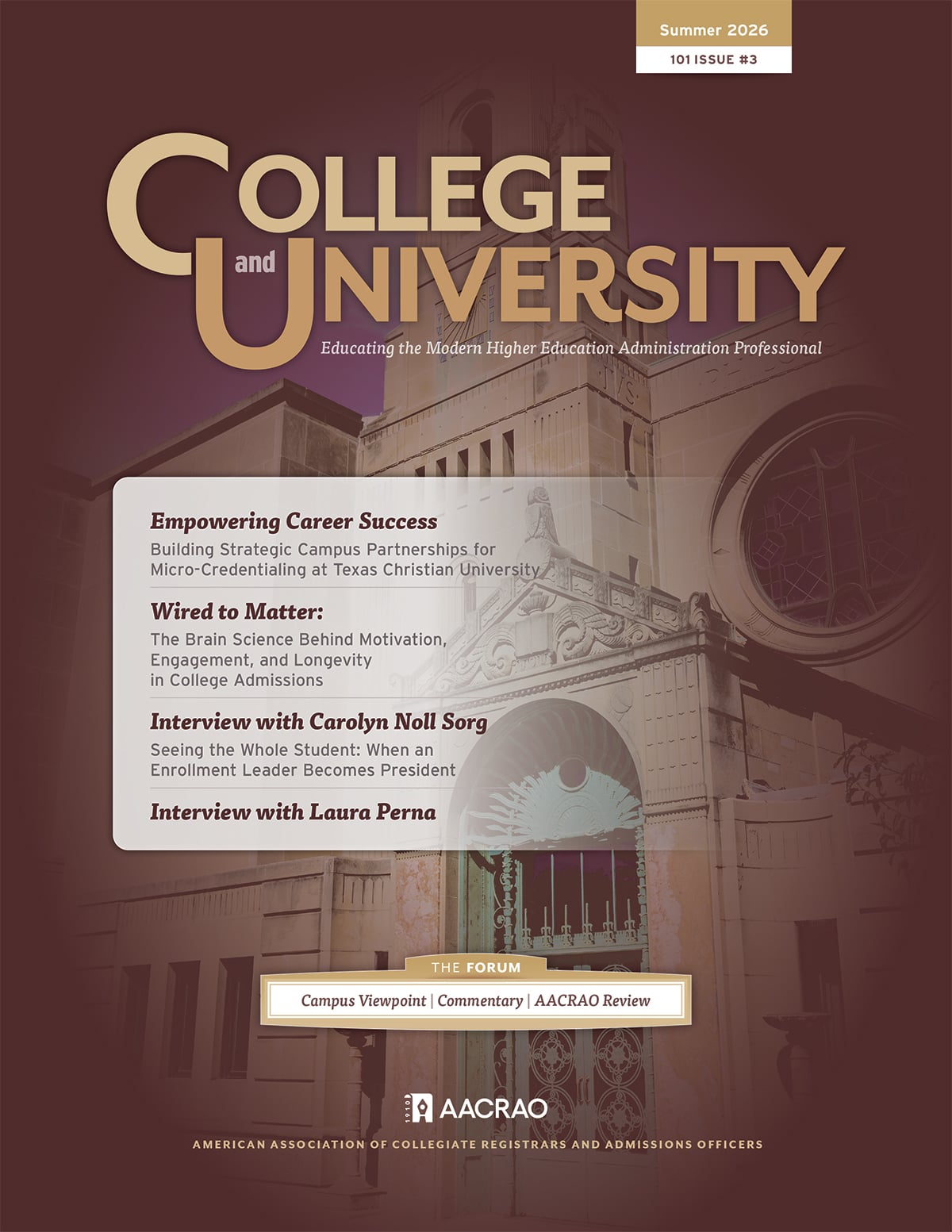
Editor’s Note
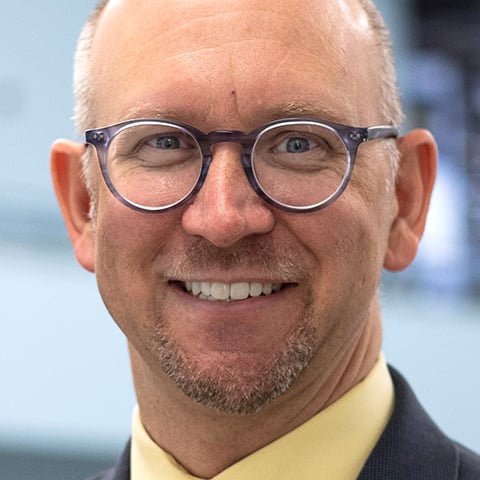
This issue features four C&U 100 Authors (including one new C&U Editorial Board member!) who are contributing to our growing body of knowledge and research!
Across this issue, a clear theme emerges: higher education is being called to become more intentional, human-centered, and equity-minded in how it supports students, staff, and institutional change. The pieces examine workforce readiness, leadership, retention, enrollment strategy, student mobility, process improvement, and the thoughtful use of data and AI—not as isolated challenges, but as interconnected opportunities to better align institutional practices with student success and organizational sustainability. Whether exploring micro-credentialing, staff motivation, registrar innovation, skills-based hiring, curriculum workflows, or college choice, the contributions collectively emphasize purposeful design, inclusive practice, and evidence-informed decision-making as essential to the future of higher education.
Features
We kick off our featured articles with an article by Regina Middleton, who examines how Texas Christian University’s Excellence in Career Skills Micro-Credentialing Program leverages campus student employment as a structured, coalition-supported pathway for developing and digitally documenting the eight NACE career readiness competencies—transforming campus jobs into intentional career preparation experiences for a workforce-ready Generation Z.
Drawing on a mixed-methods study of 133 college admissions counseling professionals, Jessica Morales Maust applies social cognitive neuroscience—specifically David Rock’s SCARF® model and the Situational Motivation Scale—to examine how workplace social dynamics drive unprecedented turnover in the field and to propose more human-centered approaches to sustaining staff motivation and retention.
Together, these articles advance a more intentional, human-centered understanding of workforce development.
We are then treated to two interviews. First, Ken Anselment’s interview profiles Carolyn Noll Sorg as she stood on the threshold of becoming John Carroll University’s 27th—and first female—president, exploring how her unconventional background in enrollment management shaped not just her preparation for institutional leadership but her whole philosophy of accompanying students and mission-driven decision-making.
Then, Lesa Beals speaks with University of Pennsylvania scholar and vice provost Laura Perna about the intersections between registrar practice and broader higher education challenges—including change management, college promise programs, student equity, and the role of data and AI in supporting institutional improvement. A preeminent scholar on college access, affordability, and success, Dr. Laura Perna has built a distinguished career advancing equity in higher education through pioneering research, policy testimony before Congress, and influential scholarship. I know I have cited her many times in my research and writings!
Forum: Campus Viewpoints
This issue offers four Campus Viewpoint articles. In our first one, Terrah Foster Akard and colleagues at Vanderbilt University describes how the graduate school partnered with the Registrar’s Office to replace a high-volume, error-prone PDF form system with automated electronic workflows using Kuali Build—ultimately converting sixteen types of academic requests across all 106 graduate programs and achieving significant gains in efficiency, transparency, and accountability. This is a great example of process improvement and leveraging technology.
That is followed by a practitioner commentary by Erin Collins, who draws on personal career experience and leadership frameworks to argue for shifting higher education hiring toward skills-based, structured, and bias-aware practices that expand access and equity for candidates from non-traditional backgrounds.
In their piece, Jen Platania and Rodney Parks argue that replacing traditional sequential curriculum approval processes with AI-enabled parallel workflows—where multiple departments review proposals simultaneously—can significantly accelerate interdisciplinary course and program approvals while preserving the shared governance principles central to higher education.
Parks has a second piece in this issue in which he argues that higher education can improve student retention by using “radical incrementalism”—especially early, visible recognition of completed certificates and minors—to strengthen students’ belonging, motivation, academic identity, and persistence.
Forum: Commentary
These perspective pieces begin with Obianuju Juliet Bushi arguing that student mobility opportunities should be treated as inclusive, equity-centered retention strategies—not luxury add-ons—because they can improve student engagement, academic success, global competence, and graduation outcomes, especially for marginalized and first-generation students.
Inspired by Steve McKellip’s concept of “forensic enrollment management” (FEM), Brandon Taga reinforces that FEM helps institutions move beyond traditional headcount-based strategies by using measures like NetFTE, cost of delivery, student aid elasticity, and cohort revenue patterns to make more precise decisions that align enrollment, student success, and long-term financial sustainability.
Finally, in a multi-authored, perspective piece, AACRAO’s ASCEND Leadership Development Program and SEM Endorsement Program help higher education professionals grow as values-driven, data-informed, and collaborative leaders who advance student-centered institutional change.
AACRAO Review
In this issue, we are treated to two book reviews. Kimberley Buster-Williams’ reflective review of argues that students’ success depends less on choosing the “right” major and more on intentionally connecting coursework, experiences, mentorship, and personal purpose into a meaningful educational pathway. Then Crystal Marie Hotchkiss’ review presents Jeffrey Selingo’s as a practical, student-centered guide that encourages families to move beyond prestige-driven college searches and instead prioritize fit, affordability, support, outcomes, and belonging.
Concluding Thoughts
I hope this issue encourages you to see innovation not simply as the adoption of new tools or processes, but as a deeper commitment to designing systems that better serve students, staff, and colleges alike. Taken together, these pieces invite reflection, dialogue, and action around how higher education can become more intentional, inclusive, and responsive in a rapidly changing landscape. May they offer both practical ideas and renewed inspiration for advancing student-centered, equity-minded change on your own campuses.
Filters
Search
Department

share