
Member Institutions by Country
Membership is available to institutions outside the U.S. that are recognized by their Ministry of Education or an equivalent governing body in their country. AACRAO engages internationally to remain informed and responsive to emerging trends and developments in higher education worldwide. Many higher education issues have a global impact. When members from all over contribute their unique insights and experiences, engage in discussions, and share knowledge across borders, they can better align standards and implement effective change.
The Gloria R. Nathanson Research Grant financially supports the work of AACRAO members to expand the scope of knowledge in comparative international education.
Hover over or zoom in on the interactive map below to see individual countries.
Member Institutions by U.S. State
Number of U.S. member institutions by state listed in alphabetical order. Alaska, American Samoa, Delaware, Guam, Hawaii, Nevada, and Wyoming all have fewer than 10 institutions as members.
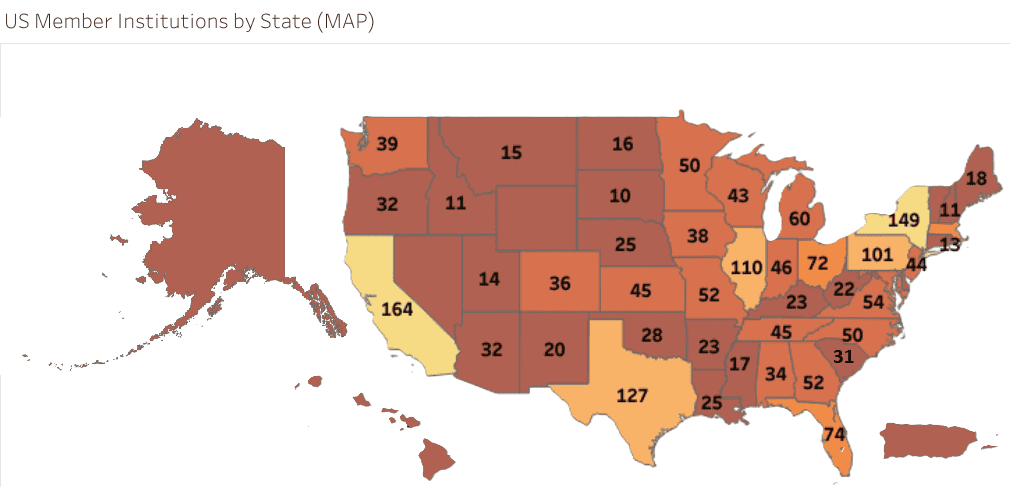
Members by State
Since the membership structure change, institutional rosters have increased but remain steady. Flat dues rates were implemented for the 2024-2025 membership term, allowing an unlimited number of people to be added to their institution’s roster at no additional cost. After hearing feedback and questions directly from members, a Small College category was created for institutions that meet specific criteria. By creating access for all types of institutions, we create a culture and environment that is equitable for all members to thrive within the Association.
New individuals at current AACRAO member institutions can join here for free.
These numbers fluctuate throughout the year as people move in, out, and around higher education positions, so we encourage primary contacts to keep their roster as up-to-date as possible to ensure our data remains accurate and reliable.
18,000 members | 2,300 institutions | 40 countries | One association
Total number of people on membership rosters in the United States and its territories in April 2025. Membership Types Include: Affiliate, Institutional, International, Individual, Organizational, Reciprocal Partner, and System Office
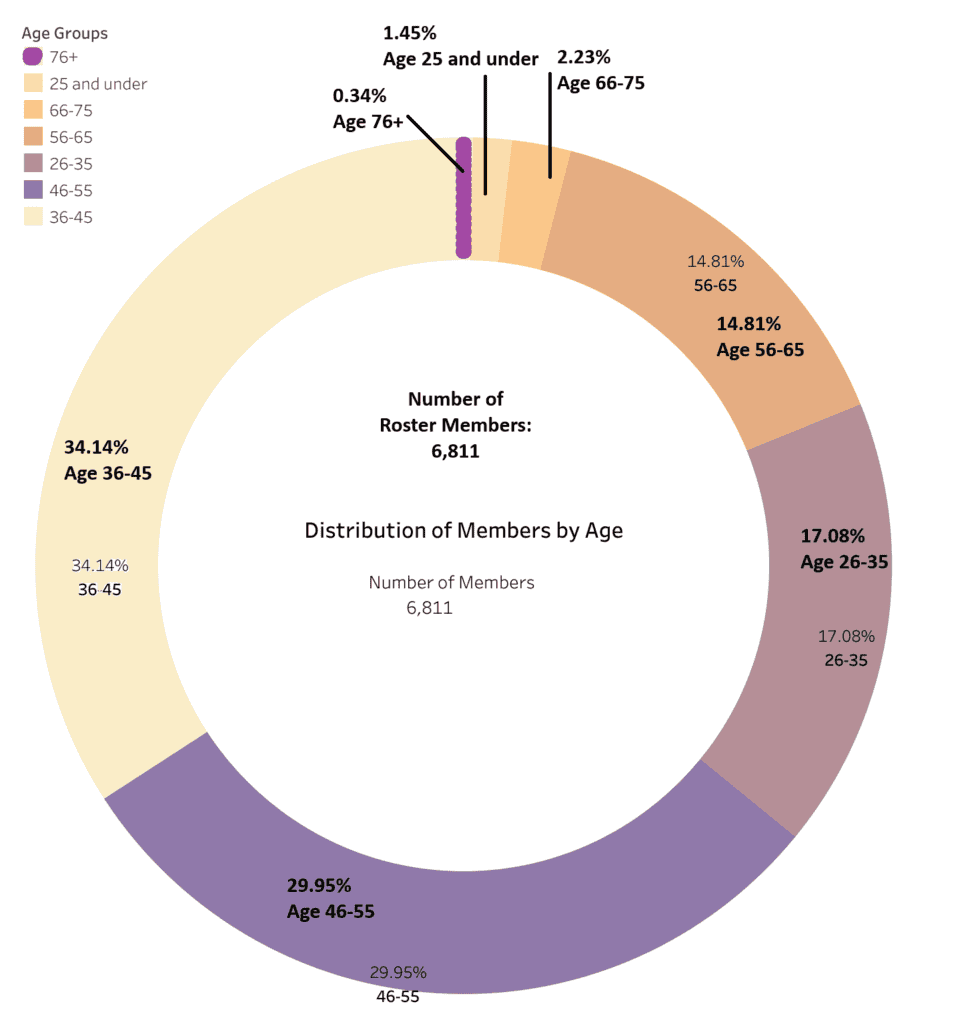
Distribution of Members by Age
| Age 25 & Under | Age 26-35 | Age 36-45 | Age 46-55 | Age 56-65 | Age 66-75 | Age 76+ |
|---|---|---|---|---|---|---|
| 1.45% | 17.08% | 34.14% | 29.95% | 14.81% | 2.23% | 0.34% |
**Not Reporting/Prefer Not to Say not included*
AACRAO awards Honorary membership to our long-term, most active members, and offers Retired membership to those no longer employed full-time in an AACRAO profession.
For those new to the profession or at the beginning of their career journey, AACRAO webinars offer a convenient and cost-effective way to obtain information and receive continuing education on the topics relevant to your profession.
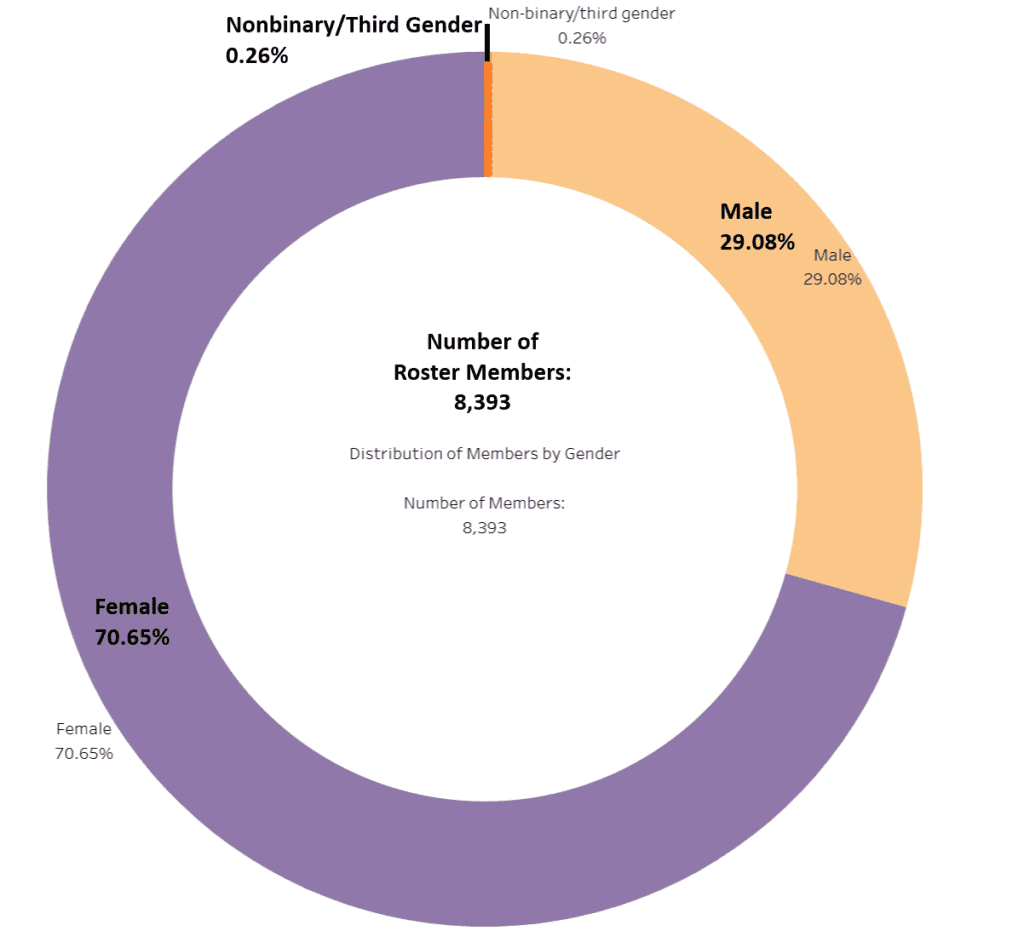
Distribution of Members by Gender
| Male Members | Female Members | Nonbinary/Third Gender Members |
|---|---|---|
| 29.08% | 70.65% | 0.26% |
**Not Reporting/Prefer Not to Say not included*
AACRAO is committed to inclusivity, where all are valued and heard, and respect is expected and achieved. AACRAO realizes this through creating and sustaining relationships based on equity, respect, collaboration, and community where all can thrive. Learn more about AACRAO’s Vision, Mission, and Goals. Keep up with the latest issues affecting higher education and how AACRAO is advocating for its members.
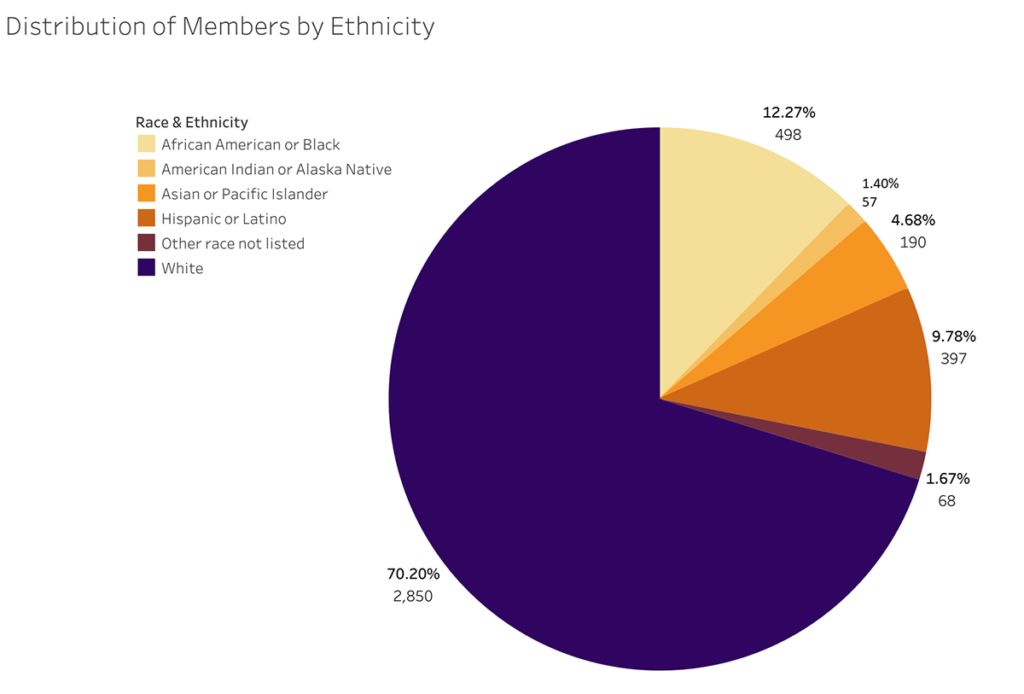
Distribution of Members by Ethnicity
| African American or Black | American Indian or Alaska Native | Asian or Pacific Islander | Hispanic or Latino | White | Another Race Not Listed |
|---|---|---|---|---|---|
| 498 Members; 12.27% | <60 Members; 1.40% | 190 Members; 4.68% | 397 Members; 9.78% | 2,850 Members; 70.20% | <70 Members; 1.67% |
**Not Reporting/Prefer Not to Say not included*
Almost 80% of AACRAO members did not report on ethnicity or race, but the data from those who do report shows that AACRAO members are a diverse group. The importance of staff and faculty diversity has been the subject of many trend reports because it not only benefits students, but also the institution and community as a whole.
AACRAO Caucuses are national networking and identity-based affinity groups intended to promote belonging and visibility in the professional field of Higher Education. Members can join more than one Caucus and meet with their peers monthly during Caucus Gatherings and stay connected in the Exchange online community forum.
Areas of Member Responsibility
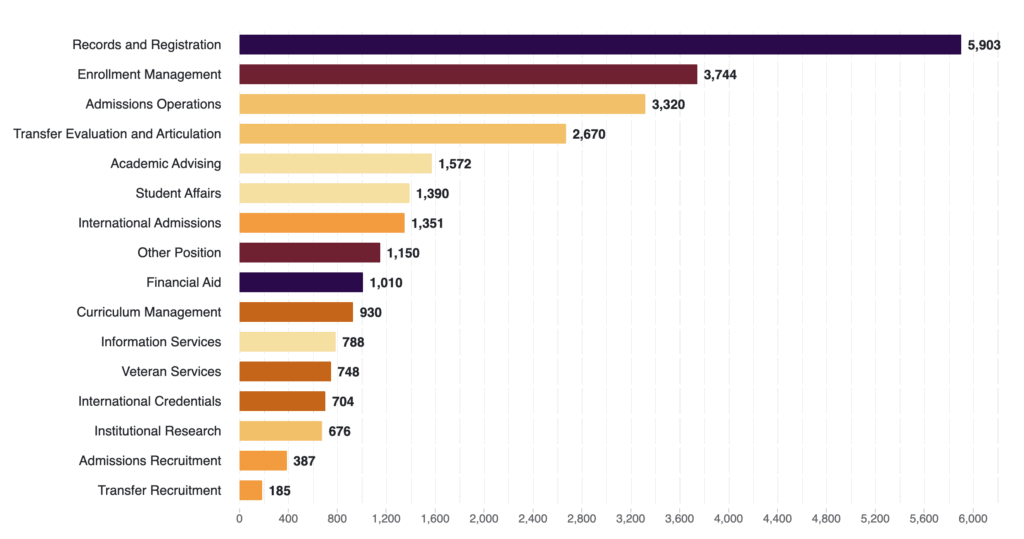
| Records & Reg | Enroll MGMT | Admissions | Transfer | Advising | Student Affairs | Int’l Admissions |
|---|---|---|---|---|---|---|
| 5,903 Members | 3,744 Members | 3,320 Members | 2,670 Members | 1,572 Members | 1,390 Members | 1,351 Members |
Number of Areas Assigned
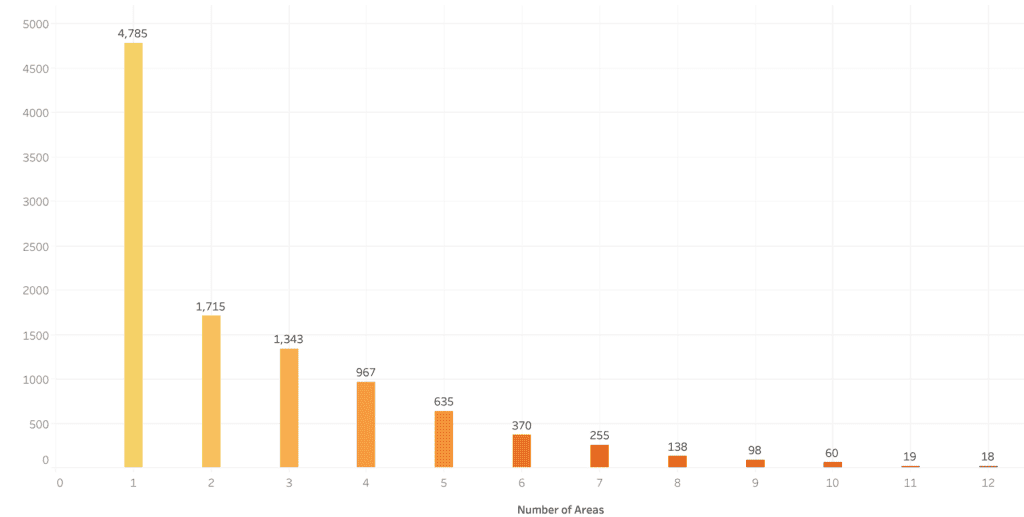
| 1 Area | 2 Areas | 3 Areas | 4 Areas | 5 Areas | 7 Areas | 8 Areas | 9+ Areas |
|---|---|---|---|---|---|---|---|
| 4,785 Members | 1,715 Members | 1,343 Members | 967 Members | 635 Members | 255 Members | 138 Members | 195 Members |
In the 2023 CUPA-HR Employee Retention Survey, it was found that a significant amount of employee dissatisfaction revolves around their institution’s lack of support for their professional growth, relative to the amount of overwork hours and decreased performance recognition. Employees are absorbing the responsibilities of staff who have left (most likely younger employees, men, and people of color), reporting working more than full-time hours with little to no extra support from supervisors. Despite these concerning trends, very few employees are looking to leave higher education entirely, preferring to seek opportunities at their own or other institutions.
AACRAO offers professional development resources for all of these areas as part of its mission to advance and support critical professions integral to institutional and learner success.
Find other opportunities in the field and search for qualified candidates with AACRAO Jobs, and recognize those who go above and beyond for the institution by nominating them for an AACRAO Award.
Distribution of Member Institutions by Size
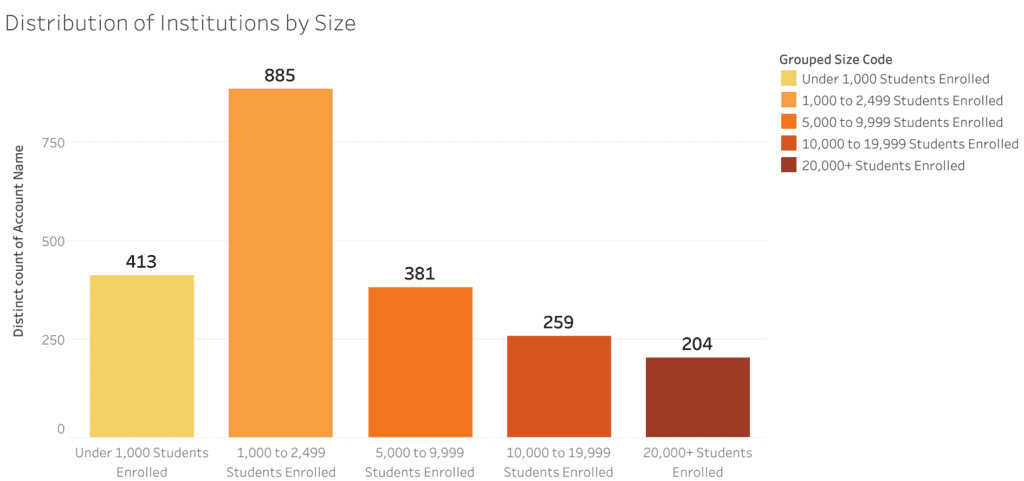
| Under 1,000 | 1,000-2,499 | 5,000-9,999 | 10,000-19,999 | 20,000+ |
|---|---|---|---|---|
| 413 Institutions | 885 Institutions | 381 Institutions | 259 Institutions | 204 Institutions |
Distribution of Roster Members by Institution Size
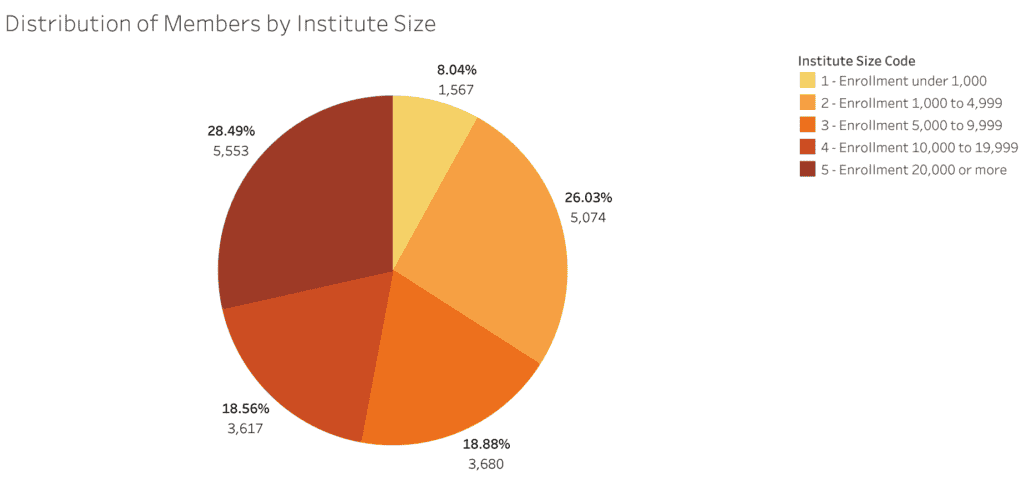
| Under 1,000 | 1,000-4,999 | 5,000-9,999 | 10,000-19,999 | 20,000+ |
|---|---|---|---|---|
| 1,567 Members; 8.04% | 5,074 Members; 26.03% | 3,680 Members; 18.88% | 3,617 Members; 18.56% | 5,553 Members; 28.49% |
The data captured from members over the years contributed to the decision to calculate member dues based on total institutional expenditure, rather than enrollment size, to ensure unlimited and equitable access relative to an institution’s reported expenses.
Regardless of the size of your institution, AACRAO gives all members opportunities to vote on association affairs and make their voices heard. Learn more about AACRAO’s other membership types and their benefits.
Distribution of Institutions by Control
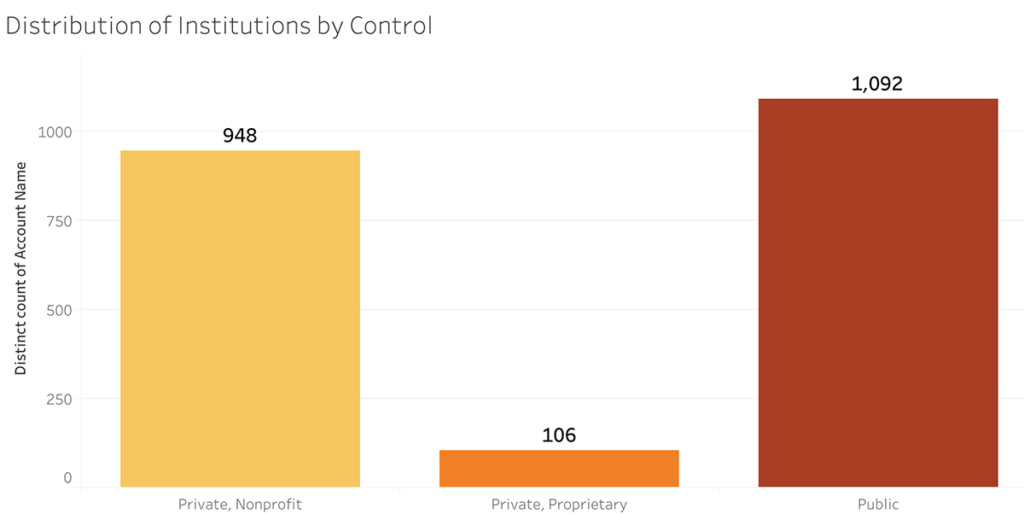
| Private, Nonprofit | Private, Proprietary | Public |
|---|---|---|
| 948 Institutions | 106 Institutions | 1,092 Institutions |
**Membership types included: Affiliate, Institutional, International Institution*
Distribution of Institutions by Control Percentage
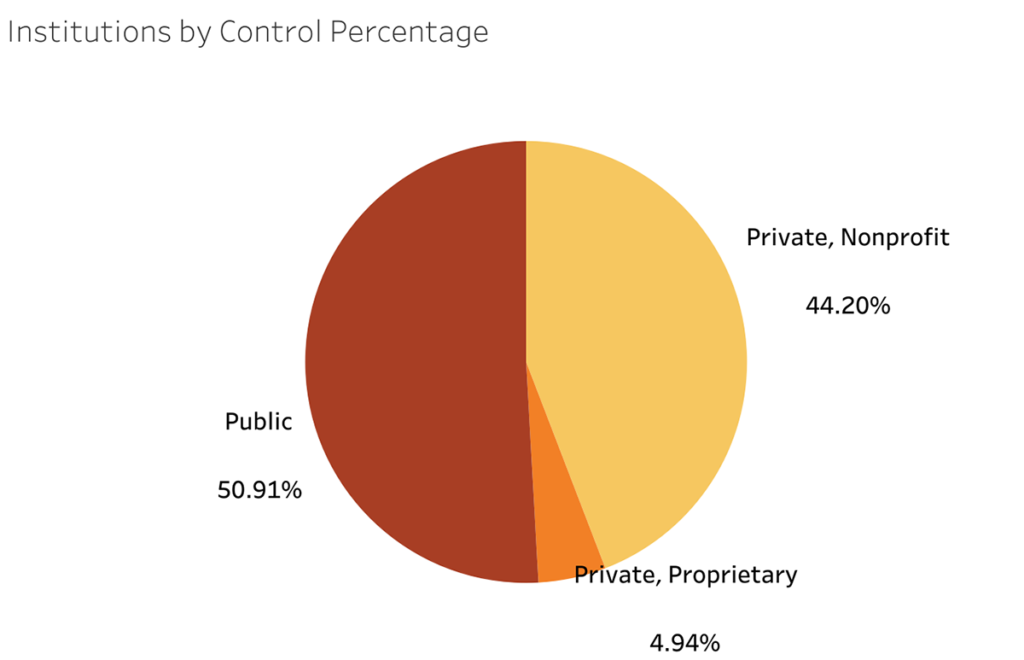
| Private, Nonprofit | Private, Proprietary | Public |
|---|---|---|
| 44.20% | 4.94% | 50.91% |
Control refers to whether an institution is operated by publicly elected or appointed officials or by privately elected or appointed officials and derives its major source of funds from private sources. *AACRAO Transcript* provides members with timely court, industry, and international news as well as the latest developments in the areas of federal relations and compliance.
Distribution of Institutions by Classification
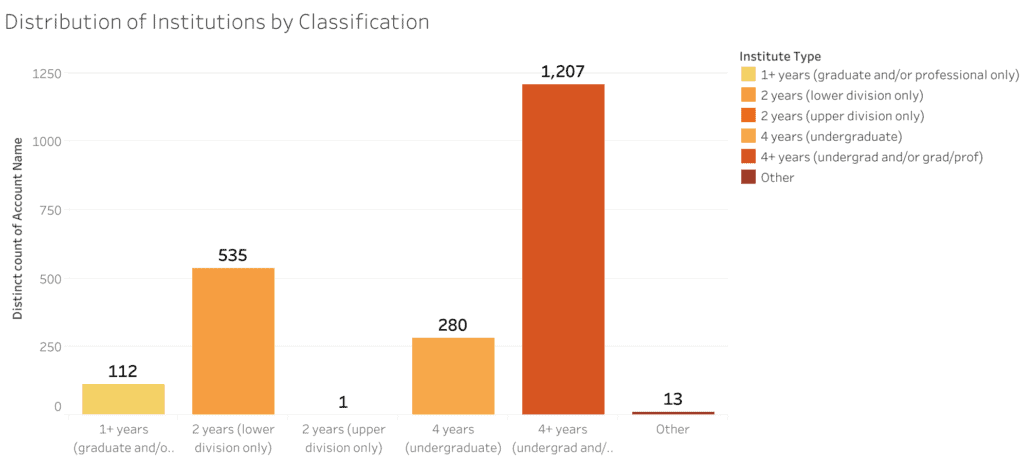
| 1+ Years (Grad/Prof) | 2 Years (Lower Only) | 2 Years (Upper Only) | 4 Years (Undergrad) | 4+ Years (Under/Grad/Prof) | Other |
|---|---|---|---|---|---|
| 112 Institutions | 535 Institutions | <10 Institutions | 280 Institutions | 1,207 Institutions | <20 Institutions |
The Institutional Classification is a descriptive tool that organizes the landscape of American colleges and universities into groupings of similar types of institutions. Historically, the Basic Classification organized most institutions primarily by academic program concentration or the highest degree awarded.
Have Questions?
Email membership@aacrao.org or communications@aacrao.org.
Review our Privacy Policy to see how our organization collects and uses data.