

By Michelle Mott, Consultant, Innovative Credentials Project Manager, AACRAO
At the AACRAO Assembly in July, Senior Consultant Mark McConahay presented “Bridging Legacy Systems: Building Interoperable Data Infrastructure for Learning Mobility,” a working session that shared early output from the LER Accelerator: a national coalition of higher education associations, ed tech organizations, and institutions. It was framed not as a finished product but as an invitation: here’s where the work stands, and we want your feedback.
The problem it tackles will be familiar to anyone who has waited on a transcript evaluation. A transfer student waiting four weeks for a credit evaluation and missing a registration window, an adult learner’s certificate that’s unreadable to the next employer, registrars keying data by hand from PDFs, and vendors quoting six-figure integrations.
Why? A learner’s record (courses, grades, hours, credentials, skills, etc.) doesn’t move cleanly between the systems that need it, and every attempt to fix that hits the same wall. Every campus’s technology is customized differently, so no two systems look alike from the outside. Nobody is doing anything wrong; the plumbing just isn’t there.
And it isn’t just one plumbing problem; it’s actually two.
- One is moving records between organizations (credential and record interoperability): getting a transcript, badge, or verified credential from one institution to another, or to an employer.
- The other is getting an institution’s own systems, i.e., the SIS, LMS, case management, CRM, credentialing platform, reporting tools, and identity management, to talk to each other without a custom bridge for every pair (operational interoperability).
They look different, but they share one root cause, and the coalition believes the same approach solves both.
The Idea, in One Analogy
A potential solution to the interoperability problem resembles the solution to shipping: a commonly agreed-upon unit like a shipping container. Nobody standardized the cargo, the ship, or the port; they standardized the box. That one agreement is what lets a sofa from Ohio and grain from Kansas ride the same rail car and cross oceans on any ship, arriving intact. The coalition’s proposed Normative Data Structure does the same for learner records: institutions keep their own systems, field names, and local conventions, and everyone agrees only on the shape of the record when it crosses a boundary. Interoperability happens at the edge, whether the edge is between systems or between institutions.
What It Means for Your Campus
For an institutional leader, the reassurances matter as much as the architecture. The NDS is not a new data standard; it uses open standards that already exist. It is not a system replacement or data migration; your SIS and its customizations stay exactly as they are. And it is not a central warehouse of student records; your data stays in your systems, in its native form. In plain terms: records stay where they are; small translators (drivers) convert them only when data crosses a boundary; and a neutral steward keeps the shared pieces working. Your institution maintains only its own local piece, reusing the community’s work for everything else.
Is AI Part of the Solution?
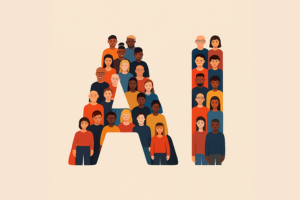
Artificial intelligence has a role, but a disciplined one. Without structured data, AI must work very hard to build the boundary bridges with greater use of iteration and guesswork. However, if the boundary-standard data is normalized and scalable, then proposed field map matches can be augmented with confidence scores, flagged data quality issues, and routing of uncertain cases to a person. AI proposes, the registrar decides, and consent and FERPA enforcement live at the hub, not as an afterthought in a workflow.
Where to Begin
The recommended entry point is automated transfer credit evaluation: the highest-friction, highest-cost process on most campuses, with a waiting learner on the other end every time. Where digital ingestion and automated articulation are in place, evaluation time drops an estimated 60% to 80% for known-institution transcripts, and a four-week wait can become hours. From that same foundation, the ecosystem can unlock operational interoperability, portable digital credentials, a shared skills layer, workforce alignment, and simpler reporting, in that order, because each depends on the one before it.
The single highest-impact action highlighted by the coalition to raise awareness and potential action by our solution partners is the procurement lever: embed interoperability requirements in your next RFP, so they become a contractual obligation, not a marketing claim. A suite of resources is in development to support this: ROI narratives for campus leadership, readiness and vendor scorecards, a buyer’s guide with sample RFP language, and institutional workflow case studies.
This is active, open work, and the coalition genuinely wants the field’s input.
Which interoperability problem bites your campus hardest, and which would you tackle first? AACRAO invites members to join the conversation as these resources take shape.


share