Altheide, D. L. 1987. Reflections: Ethnographic content analysis. Qualitative Sociology. 10(1): 65-77.
Anderson, N. 2013. Five
colleges misreported data to U.S. News, raising concerns about rankings,
reputation. The Washington Post. February 6.
Arnold, K. D., A. Chewning, B. Castleman, and L. Page. 2015. Advisor and student experiences of summer support
for college-intending, low-income high school graduates. Journal of College Access. 1(1): 6–28.
Baker, V. L. 2020. The professoriate in liberal arts colleges: Early career faculty socialization and learning.
In Socialization in Higher Education and the Early Career, edited by J. C. Weidman and L. T. DeAngelo,
93-112. New York: Springer.
Barge, J. K., and D. W. Schlueter. 2004. Memorable messages and newcomer socialization. Western Journal of
Communication. 68(3): 233–256.
Bensimon, E. M. 2007. The underestimated significance of practitioner knowledge in the scholarship on student
success. Review of Higher Education. 30(4): 441–469.
Berger, J. B. 2000. Optimizing capital, social reproduction, and undergraduate persistence: A sociological
perspective. In Reworking the Student Departure Puzzle, edited by J. B. Berger and J. M. Braxton,
95-124. Nashville, TN: Vanderbilt University Press.
Berger, J. B. 2001. Understanding the organizational nature of student persistence: Empirically-based
recommendations for
practice. Journal of College Student Retention: Research, Theory & Practice. 3(1): 3–21.
Bergquist, W. H., and K. Pawlak. 2008. Engaging the Six Cultures of the Academy: The Four Cultures of the
Academy, 2nd ed. San Francisco: Jossey-Bass.
Coen, S. 2015. Eight
steps for creating a college marketing and communication plan. Education Insights
Blog. October 27.
Duncheon, J. C. 2020. ‘We are exposed to that college environment’: Exploring the socialization of early college
high school students. Community College Review. 48(2): 173–194.
Fleming, S. S., A. W. Goldman, S. J. Correll, and C. J. Taylor. 2016. Settling in: The role of individual and
departmental tactics in the development of new faculty networks. The Journal of Higher Education.
87(4): 544–572.
Gundry, L. K., and D. M. Rousseau. 1994. Critical incidents in communicating culture to newcomers: The meaning is
the message. Human Relations. 47(9): 1063–1088.
Harper, S. R., and C. B. Newman. 2016. Surprise, sensemaking, and success in the first college year: Black
undergraduate men’s academic adjustment experiences. Teachers College Record. 118(6): 1-30.
Hartley, M., and C. C. Morphew. 2008. What’s seing sold and to what end? A content analysis of college viewbooks.
The Journal of Higher Education. 79(6): 671–691.
Hite, R. E., and A. Yearwood. 2001. A content analysis of college and university viewbooks (brochures).
College and University. 76(3): 17.
Hossler, D. 2014. Origins of strategic enrollment management. In Handbook of Strategic Enrollment
Management, edited by D. Hossler, B. Bontrager, and L. Tom. San Francisco: Jossey-Bass.
Jara-Pazmino, E. S., B. Heere, T. H. Regan, C. E. Blake, and R. Southall. 2017. Coaches’ perception of
organizational socialization process of international student-athletes and the effect of cultural distance:
An
exploratory study. International Journal of Exercise Science. 10(6): 875–889.
Karp, M. M. 2012. ‘I don’t know, I’ve never been to college!’ Dual enrollment as a college readiness strategy.
New Directions for Higher Education. 2012(158): 21–28.
Kim, J. 2018. Prestige, rankings, and competition for status. In Controversies on Campus: Debating the Issues
Confronting American Universities in the 21st Century, edited by J. Blanchard. Santa Barbara, CA:
Praeger.
Knapp, M. L., C. Stohl, and K. K. Reardon. 1981. ‘Memorable’ messages. Journal of Communication. 31:
27-41.
Komives, S. R., D. B. Woodard Jr., and Associates. 2003. Student Services: A Handbook
for the Profession (4th edition). San Francisco: Jossey-Bass.
Kuh, G. D. 2001. Organizational culture and student persistence: Prospects and puzzles. Journal of College
Student Retention: Research, Theory & Practice. 3(1): 23–39.
Kuh, G. D., and E. J. Whitt. 1988. The Invisible Tapestry: Culture in American Colleges and
Universities. Washington, D.C: Clearinghouse on Higher Education, George Washington University.
Kuh, G. D., J. Kinzie, J. H. Schuh, and E. J. Whitt. 2005. Student Success in College: Creating Conditions
That Matter. San Francisco: Jossey-Bass.
Mack, C. E. 2010. A brief overview of the orientation, transition, and retention field. In Designing
Successful Transitions: A Guide for Orienting Students to College (Monograph No. 13), 3rd ed.,
edited by J. A. Ward-Roof. Columbia, SC: National Resource Center for The First-Year Experience and Students in
Transition.
Masland, A. T. 1985. Organization culture in the study
of higher education. The Review of Higher
Education. 8(2): 157-168.
Miars, L., and A. Yi. 2020. Optimizing your
student communications strategy. In Student Communications
Toolkit. Washington, D.C.: EAB.
Museus, S. D. 2014. The culturally engaging campus environment (CECE) model: A new theory of success among
racially diverse college student populations. In Higher Education: Handbook of Theory and Research
(Volume 29), edited by M. B. Paulsen. New York: Springer.
Museus, S. D., V. Yi, and N. Saelua. 2017. The impact of culturally engaging campus environments on sense of
belonging.The Review of Higher Education. 40(2): 187-215.
National Research Center for College and University Admissions. 2019. Annual Eduventures® student sentiment
research report examines the communication preferences of college-bound high school students (press
release).
October 29.
Orrego, V. D., and Q. Yang. 2015. Memorable messages and newcomer socialization on campus: Messages about body
image among student athletes, sorority members, and freshmen. Communication Research Reports. 32(3):
225–238.
O’Shea, S., and M. Vincent. 2011. Uni-start: A peer-led orientation activity designed for the early and timely
engagement of commencing university Students. The Journal of Continuing Higher Education. 59(3):
152-160.
Peterson, M. W., and M. G. Spencer. 1990. Understanding academic culture and climate. New Directions for
Institutional Research. 1990(68): 3-18.
Shapiro, D., and A, Dundar. 2014. New context for retention and persistence. In Handbook of Strategic
Enrollment Management, edited by D. Hossler, B. Bontrager, and L. Tom. San Francisco: Jossey-Bass.
Schein, E. H. 2010. Organizational Culture and Leadership, 4th ed. San Francisco: Jossey-Bass.
Secore, S. 2018. The significance of campus visitations to college choice and strategic enrollment management.
Strategic Enrollment Management Quarterly. 5(4): 150-158.
Tierney, W. 1988. Organizational culture in higher education: Defining the essentials. The Journal of Higher
Education. 59(1): 2–21.
Tierney, W., and M. Lanford. 2018. Institutional culture in higher education. In Encyclopedia of
International Higher Education Systems and Institutions, edited by P. N. Teixeira and J. Shin.
Dordecht, Netherlands: Springer.
van der Westhuizen, P. C., M. J. Mosoge, L. H. Swanepoel, and L. D. Coetsee. 2005. Organizational Culture and
Academic Achievement in Secondary Schools. Education and Urban Society. 38(1): 89-109.
Wang, T. R. 2012. Understanding the mnemorable messages first-generation college students receive from on-campus
mentors. Communication Education. 61(4): 335–357.


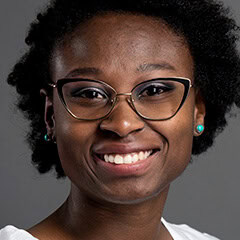 Candice Wilson-Stykes, Ph.D., engages in independent research projects to support institutions of higher education
share