

By Autumn Walden, Editor, AACRAO Connect, Content Strategy Manager, AACRAO
Enrollment management began as a practical response to institutional pressure—a way to coordinate the people, policies, data, and decisions that shape whether learners enroll and persist. Fifty years later, that same need for coordinated strategy is only more urgent. According to the National Student Clearinghouse Research Center’s Final Spring Enrollment Trends report, spring 2026 postsecondary enrollment rose 1% to 18.6 million students, with undergraduate enrollment increasing 1.3% to 15.5 million, and undergraduate enrollment continues to demand attention as learners seek flexible, career-focused pathways.
This November 1-4, the 36th Annual AACRAO Conference on Strategic Enrollment Management in Baltimore will bring the field together to celebrate 50 years of enrollment management and look ahead to what the next era requires: stronger systems, sharper data use, and more holistic approaches to learner support.
In this #SEM2026 preview, you’ll hear from presenters leading sessions on structured operations, career outcomes, and scholarship funding—topics that connect directly to the new AACRAO Competency Set.
These presenters and sessions offer practical insight for the work ahead. Register by the September 21 early-bird deadline and reserve your hotel by October 7.
Structured Operations
In the breakout session, “Forming an Enrollment Operations Group: Bringing in campus partners to lower barriers,” learn how Radford University created an Enrollment Operations Group that brings together admissions, financial aid, registrar, student affairs, IT, and academic partners to identify and remove obstacles throughout the student lifecycle.

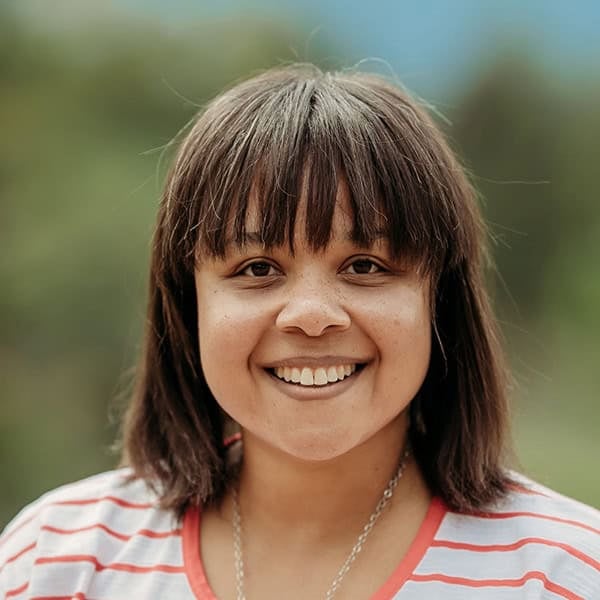
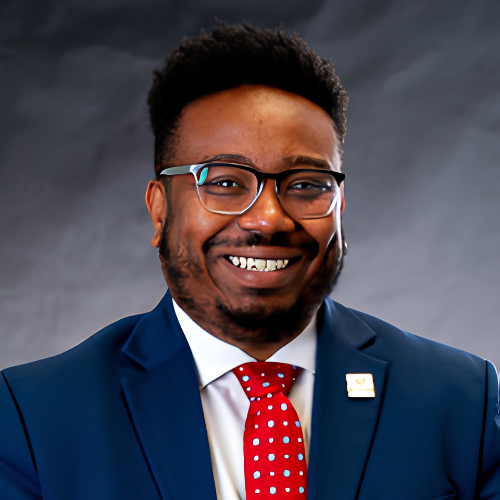
“We chose to present on this topic because many of the barriers affecting enrollment and student success do not belong to a single office. Students experience the institution as one university, even when their challenges cross admissions, financial aid, registration, technology, academic affairs, and student affairs. Radford’s Enrollment Operations Group provides a structure for bringing those perspectives together, identifying where students encounter friction, and coordinating solutions,” said Jerel Benton, Ed.D., Assistant Provost, Student Success, Radford University. “This collaborative approach has contributed to record student retention at Radford University. By bringing together the people who understand different parts of the student experience, we have been able to identify barriers earlier, respond more quickly, and improve the processes that influence whether students remain enrolled and progress toward their degrees.”
What insights do you hope attendees gain?
- Practical ideas for creating a cross-campus team that moves beyond simply discussing barriers to taking collective action.
- An effective Enrollment Operations Group and not just another committee.
- Shared ownership, improved communication across organizational boundaries that helps your institution respond more quickly to issues affecting the student lifecycle.
“The AACRAO SEM Conference is especially valuable because it brings together professionals who understand that enrollment management is both strategic and operational,” added Dr. Benton. “It creates an opportunity to learn from institutions facing similar challenges while exchanging approaches that can be adapted to each campus’s culture and context.”
Career Outcomes
The breakout session, “Beyond Graduation: Extending Strategic Enrollment Management to Include Post-Graduation Readiness and Career Outcomes,” offers a look at how post-graduation readiness can be intentionally integrated into Strategic Enrollment Management without replacing traditional SEM models.
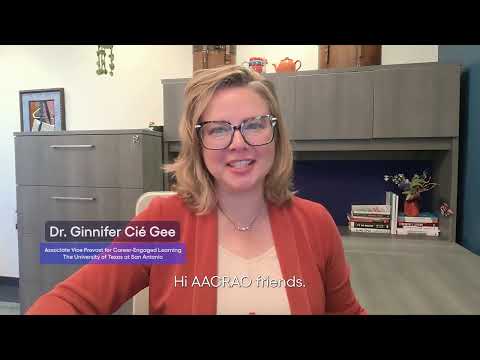
“I ‘grew up’ on the enrollment management side of higher education and was part of the team that developed our institution’s first SEM plan. That work shaped me professionally. When I later moved into career-engaged learning and began building a career ecosystem, I started to see connections between the two that we had never intentionally made before,” said Cié Gee, Associate Vice Provost, Career Engaged Learning, UT San Antonio. “Career outcomes are enrollment outcomes. We just haven’t traditionally measured them that way. Career readiness has historically been viewed as a service provided by a particular office rather than an institutional responsibility. But as the demand to demonstrate the return on investment of a college degree grows, that distinction matters. We spend enormous energy getting students through the front door. Increasingly, they want to know where the other door leads.”
What insights do you hope attendees gain?
I’ve been to AACRAO SEM several times and feel that this is the perfect place to discuss this topic. It’s SEM for the future of higher ed.
- I want my AACRAO friends to leave with the understanding that career readiness (experiential learning, major certainty, marketable skills transformation) can and does impact both retention and recruitment; two things we are all focused on.
Scholarship Funds
In the session “From Unspent to Strategic: Transforming Scholarship Funds into Enrollment Growth,” learn how the University of Wisconsin-Milwaukee has transformed scholarship administration to strategically deploy philanthropic funds in support of enrollment goals.

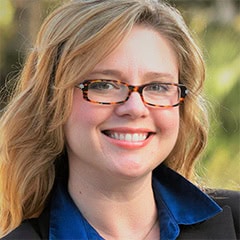
“I chose to present on this topic because scholarship administration touches nearly every campus. Institutions of all sizes manage scholarship funds, and many have seen philanthropic support grow from a modest effort into a transformative resource that plays a critical role in enrollment strategy and institutional financial stability,” said Joel P. Spiess, MS, Chief Enrollment Operations Officer, Executive Director of Student Financial Services, Division of Strategic Enrollment Management & Student Success, University of Wisconsin-Milwaukee. “The practices, partnerships, and coordination required to make these programs successful should be shared broadly across our profession.”
What insights do you hope attendees gain?
- Practical strategies for bringing together the many stakeholders involved in scholarship administration.
- Whether efforts are centralized, decentralized, or somewhere in between, campuses can learn to align colleges, departments, foundations, enrollment management, and financial aid offices around a common vision.
- Find the right balance between central coordination and unit autonomy, which is essential for building trust, securing campus buy-in, and maximizing the impact of scholarship investments.



share