Welcome to the new AACRAO website. While the site is live, development is ongoing, visitors can expect updates and new features in the weeks ahead.

You must be logged in to view this content. Please login or learn more about joining AACRAO. If you have any questions or experience any issues logging in, please reach out to us atmembership@aacrao.org.

Log In Join

What would it look like to create a mentoring program specifically designed for transfer students, supporting them from pre-arrival to their graduation day? Whereas transfer student transition programs are often created with a deficit mindset or modeled after first-time, first-year research, these higher education professionals sought to create a program that focused on engagement in a way that met transfer students’ individualized needs and built their sense of belonging.

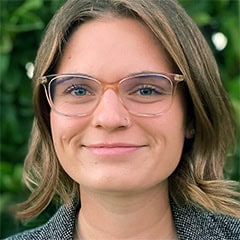
Tessa Benedict-Philipp is committed to reducing educational barriers and
building more equitable, student-centered systems in higher education. Since
beginning her higher education career in 2019, she has worked across a range
of university programs focused on access, equity, and student support.
Benedict-Philipp currently serves as the Assistant Director of UC San Diego’s
Triton Transfer Hub, where she supports more than 8,000 transfer students and
leads efforts to create inclusive, community-driven spaces that empower
student success. Her passion for serving diverse and multicultural student
communities was shaped by her experience as a graduate assistant with San
Diego State University’s EOP SOAR Mentorship Program and the San Diego
Community College District’s PATHS program. Across all her work,
Benedict-Philipp is driven by a deep commitment to equity, community-building,
and student belonging.
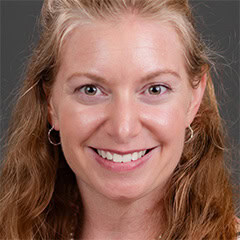
Jaclyn Duerr, Ed.D., impassioned by her own transfer student experience, acts
as an advocate and agent for student success initiatives at the university
level. She has been collaborating and creating retention services and programs
for thirteen years, currently serving as the Director of the IDEA Engineering
Student Center at the University of California, San Diego. Dr. Duerr
specializes in engineering student success, transfer student success, academic
difficulty, and sense of belonging among commuter students. Within our
technology-saturated culture, Dr. Duerr seeks to create accessible,
cutting-edge, student-centered programs and services in efforts to build
students’ connection to the university, other students, and their goals. Dr.
Duerr has her Doctorate in Educational Leadership from California State
University, Fresno, master’s in counseling for higher education from Cal Poly,
San Luis Obispo, bachelor’s in psychology from Cal Poly, San Luis Obispo, and
an associate’s from Santa Barbara City College.

Abrica, E. J. 2018. How to measure student success? Toward consideration of
student resilience as a metric of success in institutional accountability
frameworks. Community College Journal of Research and Practice.
42(7–8): 569–573.

Duggan, M. H., and J. W. Pickering. 2008. Barriers to transfer student
academic success and retention.
Journal of College Student Retention: Research, Theory & Practice. 9(4): 437–459.

Gardner, J. N. 2021. The Transfer Experience (1st edition). New
York: Routledge.

Hansen-Brown, A. A., S. Sullivan, B. Jacobson, B. Holt, and S. Donovan.
2022. College students’ belonging and loneliness in the context of remote
online classes during the COVID-19 pandemic. Online Learning.
26(4): 323–346.

Hayes, S., L. Lindeman, and C. Lukszo. 2020. The role of academic advisors
in the development of transfer student capital. NACADA Journal.
40(1): 49–63.

Herrera, A., and D. Jain. 2013. Building a transfer‐receptive culture at
four‐year institutions. New Directions for Higher Education.
2013(162): 51–59.

Hills, J. R. 1965. Transfer shock: the academic performance of the junior
college transfer. The Journal of Experimental Education. 33(3):
201–215.

Hogg, M. A. 2016. Social Identity Theory. Cham, Switzerland:
Springer International Publishing.

Maliszewski Lukszo, C., and S. Hayes. 2020. Facilitating transfer student
success: Exploring sources of transfer student capital.
Community College Review. 48(1): 31–54.

McFadden, D. L. 2016. Health and academic success: A look at the challenges
of first‐generation community college students.
Journal of the American Association of Nurse Practitioners. 28(4):
227–232.

Moser, K. 2013. Exploring the impact of transfer capital on community
college transfer students.
Journal of the First-Year Experience & Students in Transition.
25(2): 53–76.

Pascarella, E. T., C. T. Pierson, G. C. Wolniak, and P. T. Terenzini. 2004.
First-generation college students: Additional evidence on college
experiences and outcomes
. The Journal of Higher Education. 75(3): 249–284.

Roksa, J., and J. C. Calcagno. 2008.
Making the Transition to Four-Year Institutions: Academic Preparation and
Transfer
. CCRS Working Paper No. 13. New York: Community College Research Center,
Columbia University.

Terenzini, P., L. Springer, P. Yaeger, E. Pascarella, and A. Nora. 1996.
First-generation college students: Characteristics, experiences, and
cognitive development. Research in Higher Education. 37(1): 1–21.

Weiston-Serdan, T. 2017.
Critical Mentoring: A Practical Guide (Volume 1). New York:
Routledge.

Related Posts