

You must be logged in to view this content. Please login or learn more about joining AACRAO. If you have any questions or experience any issues logging in, please reach out to us at membership@aacrao.org.
Machine Learning Methods for Course Enrollment Prediction
Posted on
By
Article Abstract
Related Issue:
Author(s)
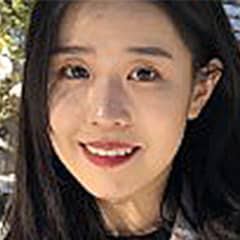
Lucy Shao is a Ph.D. student in Biostatistics at the University of California, San Diego. Previously, she worked at Analytic Studies & Institutional Research at San Diego State University on student learning and
institutional operation. Currently, her research focuses on causal inference and high-dimensional statistics. Lucy received an M.S. in Statistics from UC San Diego and a B.S. in Applied Mathematics from UCLA.
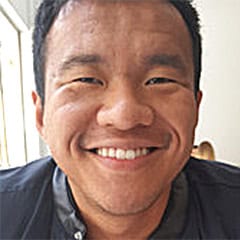
Martin Ieong is a Data Scientist at Revolution Medicines, where he analyzes genomic and bioinformatics data in the field of cancer research. He previously worked in the software development industry, providing
technical assistance and statistical knowledge to create data science solutions. Martin received an M.S. in Statistics from San Diego State University, and a B.A. from UC San Diego in Linguistics.

Richard A. Levine is Professor of Statistics at San Diego State University and Faculty Advisor overseeing the Statistical Modeling Group in SDSU Analytic Studies and Institutional Research. He is
former Chair of the SDSU Department of Mathematics and Statistics and past Editor of the Journal of Computational and Graphical Statistics. He is Associate Editor for Statistics of the Notices of the American Mathematical
Society and is a fellow of the American Statistical Association. Professor Levine received his Ph.D. in Statistics from Cornell University.
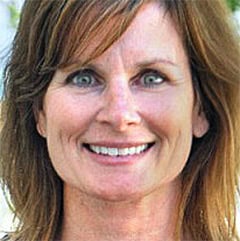
Jeanne Stronach is an experienced and effective higher education leader with 20 years of experience in institutional research. Specializing in successful team-building with internal and external partners, innovative
resource management and effective strategic planning. Achievements include building self-service visualizations to support data-informed decision-making as well as spearheading a cross-divisional Data Champions program to build data community and
boost data literacy. Jeanne earned her B.A. at UC San Diego and her M.A. at DePaul University.
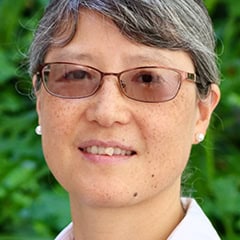 Juanjuan Fan, Ph.D., is a Professor of Statistics and Data Science in the Department of Mathematics and Statistics, and serves as a Faculty Advisor at the Analytic Studies & Institutional Research (ASIR), at San
Diego State University. Her research interests include survival analysis, decision trees and random forests, and observational study data. Working with her students and collaborators, she has published many papers assessing student success
studies and solving various problems in educational data mining. Professor Fan received her Ph.D. in Biostatistics from the University of Washington.

share