Welcome to the new AACRAO website. While the site is live, development is ongoing, visitors can expect updates and new features in the weeks ahead.

You must be logged in to view this content. Please login or learn more about joining AACRAO. If you have any questions or experience any issues logging in, please reach out to us atmembership@aacrao.org.

Log In Join

Enrollment managers face a perfect storm of challenges—demographic shifts, declining student demand, skepticism about higher education’s value, policy changes, and technological disruptions. Layer on global and national uncertainties—climate change, political turmoil, and shifting funding priorities—and the pressure intensifies. How can enrollment leaders foster institutional resilience while sustaining their own professional and personal well-being? This article explores institutional, professional, and personal resilience—the “three-legged stool” concept—and their intersection, offering strategies to navigate an increasingly complex landscape.

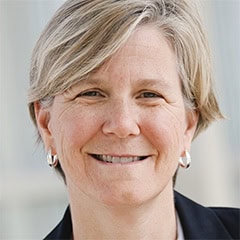
Laurie Koehler, Principal and Founder of Koehler Consulting, LLC, is based in
the Washington, D.C. area, and is an innovative strategist and transformative
leader with more than 25 years of experience in enrollment management,
retention, and marketing. Koehler now uses her expertise as a consultant,
strategist, executive coach, advisor, and facilitator for colleges and
universities, their leaders, and teams.

Koehler previously served as vice president for marketing and enrollment
strategy at Ithaca College, where she was part of the president’s senior team.
She also spent six years at George Washington University, where her success in
delivering positive results and guiding teams led to multiple expansions of
her portfolio. Koehler also held roles at Bryn Mawr College, Miami University,
Cornell University, and the University of Virginia, where she earned her B.A.
and M.Ed. degrees.
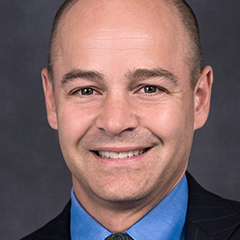
John Haller, Ed.D., is a higher education consultant and professor. Most
recently, he served as the Special Assistant to the President, Strategic
Initiatives at Denison University. For ten years, he served as the vice
president of enrollment management and new student strategies at the
University of Miami. At Miami, he led the shift from a merit-based financial
aid strategy to a hybrid model that meets 100 percent of students’
demonstrated financial need. Also, the institution realized a 30 percent-plus
increase in applications and a 50 percent-plus increase in yield. The
institution realized a decrease in student indebtedness ($10,000) and the
highest freshman retention (94 percent) and six-year graduation rates in the
university’s history (82 percent).

Dr. Haller also served as the associate provost for enrollment management at
Saint Joseph’s University and had roles in student success at Drexel
University, M.B.A. admissions at Vanderbilt University, and undergraduate
admissions at Denison University. He is an honors graduate in economics and
statistics from the University of Michigan, received master’s degrees in
business and higher education, and earned his Ed.D. in higher education from
the University of Pennsylvania.

Achor, S. 2010. The Happiness Advantage: The Seven Principles of Positive Psychology that Fuel Success and Performance at Work. New York: Broadway Books.

American Council on Education. 2025. Effective Practices that Support Transfer Students. New York: Author.

Barlett, P. E. and G. W. Chase. 2013. Sustainability in Higher Education: Stories and Strategies for Transformation. Cambridge, MA: MIT Press.

Basko. 2022. Why good enrollment managers are so hard to find. The Chronicle of Higher Education. January 10.

Bhandari, R. 2024. A Lack of Diversity Spells Adversity: Why U. S. Institutions Need to Attract Diverse International Students. Greenwich, London: Oxford International Education Group.

Bichsel, J, M. Fuesting, D. Tubbs, and J. Schneider. 2023. The CUPA-HR 2023 Higher Education Employee Retention Survey. Knoxville, TN: CUPA-HR.

Birnbaum, R. 1991. Faculty in Governance: The Role of Senates and Joint Committees in Academic Decision Making. San Francisco: Jossey-Bass.

Boere, K., K. Lloyd, G. Binsted, O. Krigolson 2023. Exercising is good for the brain but exercising outside is potentially better. Scientific Reports. 13(1140).

Bolman, L. G., and T. E. Deal. 1991. Reframing Organizations: Artistry, Choice, and Leadership, 1st ed. San Francisco: Jossey-Bass.

Center for Human Capital Innovation. n.d. Maintaining office morale during Covid-19. CHCI Blog. November 24. Alexandria, VA: Author.

Chickering, A. W., and L. Reisser. 1993. Education and Identity (2nd edition). San Francisco:Jossey-Bass.

Coffey, L. 2023. OPMs on ‘life support’ in changing online marketplace. Inside Higher Ed. October 11.

Cuseo, J. 2010. Fiscal Benefits of Student Retention and First-Year Retention Initiatives.

Ewell, P. T. 1989. Institutional characteristics and faculty/administrator perceptions of outcomes: An exploratory analysis. Research in Higher Education. 30(2): 113–136.

Feeney, M. K., H. Jung, T. P. Johnson, E. W. Welch. 2023. U. S. visa and immigration policy challenges: Explanations for faculty perceptions and intent to leave. Research in Higher Education. 64: 1031–1057.

Goleman, D. 1996. Emotional intelligence. Why it can matter more than IQ. Learning. 24(6): 49–50.

Goleman, D. 2004. What makes a leader? IQ and technical skills are important, but emotional intelligence is the sine qua non of leadership. Harvard Business Review Blog.

Hanson. 2025. Average cost of college by country. Education Data Initiative.

Hoover. 2014. The hottest seat on campus. The Chronicle of Higher Education. September 15.

Hwang, T. J., K. Rabheru, C. Peisah, W. Reichman, and M. Ikeda. 2020. Loneliness and social isolation during the COVID-19 pandemic. International Psychogeriatrics. 32(10): 1217–1220.

Irwin-Hunt. 2024. The great competition for international students. FDI Intelligence. March 27.

Kezar, A., and J. Kinzie. 2006. Examining the ways institutions create student engagement: The role of mission. Journal of College Student Development. 47(2): 149–172.

Lanier, L., E. Zhou, A. Reggio, and T. Hardy. 2023. Graduate Enrollment and Degrees: 2013 to 2023. Wahsingon, D. C.: Council on Graduate Schools.

Loehr, J., and T. Schwartz. 2003. The Power of Full Engagement: Managing Energy, Not Time, Is the Key to High Performance and Personal Renewal. New York: Free Press.

Moody’s Investor Services. 2021. Higher Education Methodology. New York: Author.

Morse, R., and E. Brooks. 2025. How U.S. News calculated the 2025 best colleges rankings. U.S. News & World Report.

National Center for Educational Statistics. 2023. Table 503.40. In Digest of Education Statistics. Washington, D. C.: Author.

NCES. See National Center for Educational Statistics.

Nicolau, A., O. S. Candel, T. Constantin, A. Kleingeld. 2023. The effects of executive coaching on behaviors, attitudes, and personal characteristics: A meta-analysis of randomized control trial studies. Frontiers in Psychology. 14(2003).

O2 Employment Services. n.d. Educational Blog.

Palmer, K. 2025. Fewer colleges sharing profits with OPMs. Inside Higher Ed. February 19.

Quality Matters and Eduventures Research. 2023. CHLOE 8: Student Demand Moves Higher Ed Toward a Multi-Modal Future. Annapolis, MD: Author.

Schwartz, N. 2024. Just 16% of community college students transfer and earn a bachelor’s degree. Higher Ed Dive. February 7.

Related Posts