

Community colleges in the United States have faced a persistent 26 percent decline in enrollment over the past decade, dropping from 7.5 million in 2009 to 5.6 million in 2019 (AACC 2019; Irwin, et al. 2021). This decline has been attributed to various factors, including economic recovery reducing demand for retraining, increased competition from four-year institutions, and declining birth rates leading to smaller college-age cohorts (Burnett 2021; Romano and Palmer 2016). While the current study focuses on a more recent window, including the COVID-19 pandemic, understanding these long-term patterns provides valuable context for interpreting recent fluctuations in enrollment and persistence. This downward trend threatens institutional funding, workforce readiness, and regional economies. Community colleges, reliant on state funding, tuition revenue, and local taxes, are particularly vulnerable to enrollment shifts and economic instability (Romano and Palmer 2016). Furthermore, declining retention rates hinder labor market alignment and the ability of states and regions to attract employers (Burnett 2021). Despite these challenges, community colleges remain essential to promoting social mobility and equitable access to education through open-admissions policies (Ortagus, et al. 2021).
However, systemic challenges remain. Enrollment declines disproportionately affect historically excluded groups, including Black, Hispanic, and Indigenous students, widening socioeconomic inequities (Brock and Diwa 2021; Gándara and Li 2020). Fraysier, Reschly, and Appleton (2020) highlighted that students from low socioeconomic backgrounds and males face higher dropout rates. Addressing these disparities is crucial to advancing social justice and economic mobility, as education remains a key determinant of opportunity (Kolbe and Baker 2019).
The COVID-19 pandemic exacerbated these challenges, disrupting enrollment strategies and intensifying pressures on higher education institutions (Sprehe 2021; Naidoo, Naranjee, and Sibiya 2021). Students with prior academic struggles faced increased vulnerability to disruptions (Lackner 2023), while many experienced isolation and difficulty forming connections (Cleofas 2021). This crisis underscored the need for institutions to adopt resilient strategic enrollment management plans (SEMPs) to attract and retain students (Naidoo, Naranjee, and Sibiya 2021). Beyond the pandemic, competition among higher education institutions reinforces the importance of proactive SEMPs that align student success with institutional and economic goals (Burnett 2021).
Examining Declining Enrollment and Retention
Declining enrollment affects more than just institutional revenue; it impacts regional economies and workforce readiness (Burnett 2021). Community colleges, which play a pivotal role in workforce development, must address these declines strategically. For example, aligning academic programs with local job markets has effectively increased enrollment and retention (Atwell, et al. 2022). Addressing these challenges requires innovative retention strategies and a renewed focus on equity and accessibility to bridge socioeconomic gaps.
This quantitative study aimed to determine whether demographic, environmental, and academic variables influence retention at Texas Community College (TCC) [pseudonym] for the 2018–2019 and 2020–2021 cohorts. The study applied Bean and Metzner’s Nontraditional Undergraduate Student Attrition (NUSA) model (1985) to examine three key retention factors: (a) demographic variables (e.g., age, enrollment status, educational goals, ethnicity, gender), (b) environmental variables (e.g., financial status), and (c) academic variables (e.g., GPA). These factors persist as barriers to enrollment, retention, and degree completion. The following central research question guided this study: Does a college student’s decision to stay enrolled depend on their (a) demographic characteristics, (b) financial aid status, and (c) academic performance?
Community colleges predominantly serve nontraditional students, characterized by diverse demographics and external commitments. Retention strategies must account for these complexities, especially as low enrollment threatens institutional funding and labor market contributions (Romano and Palmer 2016; Burnett 2021). Bean and Metzner’s (1985) NUSA model provides a lens to examine how demographic, environmental, and academic factors influence retention.
Background
Bean and Metzner’s (1985) Nontraditional Undergraduate Student Attrition (NUSA) model identifies three primary factors influencing student retention: background and defining variables (e.g., age, enrollment status, educational goals, ethnicity, gender), environmental variables (e.g., finances), and academic outcomes (e.g., GPA). These factors guide institutions in addressing barriers to retention and persistence. The NUSA model emerged from research on older, part-time, commuting community college students. Bean and Metzner (1985) highlighted that nontraditional students are less influenced by social integration and more by external environments, contrasting earlier models by Tinto (1975) and Spady (1970).
Age
Nontraditional students bring diverse motivations and challenges to higher education, with age playing a significant role in persistence and degree completion. Research indicates that older students often pursue education to advance their careers or set positive examples for their families, while younger students are more likely to be influenced by employer encouragement (Kimmel, et al. 2016; Luke, Redekop, and Burgin 2015). Nontraditional students over 40 demonstrate higher retention rates than their younger counterparts, with a 70.7 percent probability of persisting compared to eighteen-year-olds, while students aged nineteen to 24 are 25.7 percent less likely to remain enrolled (Windham, et al. 2014). Similarly, students aged 44 and older achieve an 81 percent course completion rate, compared to 51 percent for students aged eighteen to 25, highlighting the connection between age, academic motivation, and course design (Armstrong, Tudor, and Hughes2021). However, nontraditional students are less likely to complete degrees within six years, with each additional year reducing the probability by 1.9 percent (Millea, et al. 2018).
Enrollment Status
Enrollment status significantly impacts retention, with part-time students experiencing higher attrition rates due to external obligations like work and family responsibilities (Chen and Hossler 2017). Research indicates that part-time students often struggle to balance academic and personal demands, contributing to higher dropout rates compared to full-time peers (Chen, Ziskin and Tores2020). Strategies such as “15-to-finish” campaigns have shown limited success for part-time students, as these students often face barriers that make increased course loads unrealistic (Howard and Harrington 2022; McKinney, et al. 2022). Financial incentives, such as tuition waivers, have positively influenced re-enrollment among older part-time students with lower GPAs, but these strategies must be coupled with flexible class schedules and smaller class sizes to foster persistence (Ortagus, et al. 2021; Millea, et al. 2018). These findings emphasize the importance of tailored strategies in community colleges’ strategic enrollment management plans to support persistence across different age groups.
Educational Goals
Educational goals significantly influence student persistence and engagement, shaping students’ academic paths. The impact of residential status on achieving these goals is evident, as commuter students often face challenges in social adjustment and campus integration, which can hinder their progress (Melendez 2019). While commuter students may earn higher GPAs due to regimented schedules and focused study habits, they benefit greatly when institutions provide opportunities for engagement and academic support tailored to their needs (Simpson and Burnett 2019). Students living with parents face higher dropout risks, possibly due to reduced campus involvement and limited engagement in academic and social activities. This highlights the importance of creating inclusive strategies to address such barriers (Ishitani and Reid 2015). Strong faculty-student relationships further enhance persistence, as classroom interactions and accessible support services positively influence students’ ability to remain enrolled and work toward their goals (Dwyer 2017; Simpson and Burnett 2019).
Ethnicity
Ethnicity plays a complex role in student persistence and retention, with community colleges serving a significant proportion of Black and Hispanic students. These groups often face systemic barriers to degree completion. While Hispanic enrollment has grown rapidly, completion rates have stagnated, driven by under-preparedness for college, poverty, and high-minority high school attendance (Flores, Park, and Baker 2017; Tajalli and Ortiz 2018). Black students also face substantial achievement gaps, with completion rates lagging behind their white counterparts by 22 percentage points (Flores, Park, and Baker2017). Social and cultural capital, including familial and community support, is vital for navigating higher education; however, Latino families often lack familiarity with college processes, particularly financial aid (Jabbar, et al. 2021; Marrun 2020). Community colleges have implemented mentoring, tutoring, and advising programs to address these disparities, which have shown promise in improving outcomes for racially minoritized students (Pechac and Slantcheva-Durst 2021). Nevertheless, persistent gaps in retention suggest the need for further targeted interventions, particularly as minority students continue to enroll in community colleges disproportionately (Yu 2017; Armstrong, Tudor, and Hughes 2021).
Gender
Female students consistently demonstrate higher persistence rates and academic success in community colleges than their male counterparts, with 58 percent of undergraduate enrollment in 2020 being female and graduation rates similarly favoring women (NCES 2022; Stokvis, Melara, and De 2021). Female students report greater perceived academic gains and are more likely to take online courses, contributing to their persistence and success (Mu and Fosnacht 2019; Armstrong, Tudor, and Hughes 2021). High self-efficacy, particularly among females, has been linked to stronger academic performance, while males often report declining extrinsic motivation during the semester (D’Lima, Winsler, and Kitsantas 2014). Female students also forge stronger connections in classroom and work environments, although they remain cognizant of systemic barriers, such as the glass ceiling, that may impact their post-graduation opportunities (Luke, Redekop, and Burgin 2015).
Finances
Financial challenges significantly impact students’ ability to persist and complete their degrees, even at community colleges, which typically have lower tuition than universities. Research shows that sufficient financial aid, such as Pell Grants, scholarships, and loans, positively influences college access, persistence, and degree completion, particularly for students with significant financial need (Chen and Hossler 2017; Sublett and Taylor 2021). However, unmet financial needs remain a substantial barrier for low-income students, often leading to attrition or shifts to more affordable academic goals (Broton 2019; Sublett and Taylor 2021). Additional costs beyond tuition—such as books, transportation, and housing—compound financial stress, particularly for those relying solely on grants (Baugus 2020). Financial pressures are consistently cited as a primary factor influencing retention, underscoring the need for better literacy of financial assistance and institutional support to help students navigate aid processes and manage educational costs effectively (Xu and Webber 2018; Carales 2020).
Academic Performance
Grade point average (GPA) remains a powerful predictor of student persistence and retention in higher education. Research highlights that first-semester GPA is a critical metric for monitoring academic progress, with students earning lower GPAs at higher risk of not re-enrolling (Watson and Chen 2019). Additionally, cumulative GPA is a strong indicator of persistence, suggesting that students’ post-enrollment experiences significantly influence their academic trajectory (Nakajima, Dembo, and Mossler 2012). Nontraditional students often outperform their traditional counterparts, earning higher GPAs due to age, completed credits, and career-driven motivations (Hafer, et al. 2021; Capstick, et al. 2019). Furthermore, students with higher GPAs, such as those exceeding 3.0, are more likely to continue their studies than those closer to 2.0 (Flanders 2017). These findings underscore the importance of GPA in shaping retention strategies and guiding interventions to support student success.
Data Source
Archival student data were retrieved from a large (10,000+ students) Texas public community college using the institution’s Datatel software. This platform manages institutional data, including Apply Texas admissions applications and FAFSA submissions. The data spanned two academic years: 2018–2019 (1,242 student records) and 2020–2021 (791 student records). It included records for first-time-in-college (FTIC). Dual-credit or other high school programs were not included.
A chi-square test of independence was employed to determine whether significant associations existed between the variables in the central research question and students’ decisions to enroll in the subsequent spring term for the 2018–2019 and 2020–2021 academic years. For results deemed significant (p < 0.05), Cramer’s V was calculated to evaluate the strength of these associations, providing a nuanced understanding of the degree of dependency among variables.
Spring re-enrollment, referred to as Enrollment Decision, was coded as a binary variable (Yes/No) indicating whether a student re-enrolled in the term following the initial fall enrollment of that academic year. Demographic variables included age (18–23, 24–29, 30–39, 40+), enrollment status (full-time or part-time), educational goal (associate degree, certificate, or transfer intent), ethnicity (per institutional reporting categories), and gender (male or female). The environmental variable, financial aid status, indicated whether the student received any aid (e.g., Pell Grant, scholarship, loan) during the fall term. Cumulative Grand Point Average (GPA) represented academic performance and was categorized into four ranges: < 2.0, 2.0–2.49, 2.5–2.99, and ≥ 3.0. These variables reflect key constructs from Bean and Metzner’s (1985) Nontraditional Undergraduate Student Attrition (NUSA) model and were selected for their relevance to persistence in community college contexts.
Findings and Discussion
In the fall semester of 2018 (pre-COVID), the community college’s student population was predominantly part-time (62 percent), with 57 percent receiving financial aid. Most students (71 percent) were first-time-in-college (FTIC) and aged eighteen to 23 (77 percent), with a majority identifying as Hispanic (74 percent) and female (57 percent). Academically, 50 percent of students had a GPA of 2.0 or lower, and 69 percent were pursuing an associate degree.
By the fall of 2020 (post-COVID), part-time attendance had increased to 73 percent, with a slightly higher percentage of students receiving financial aid (61 percent). FTIC enrollment remained high at 70 percent, as did the proportions of students aged eighteen to 23 (73 percent), those identifying as Hispanic (74 percent), and females (60 percent). Academic challenges persisted, with 51 percent holding a GPA of 2.0 or lower and fewer students (68 percent) seeking an associate degree.
Demographic Characteristics and Persistence
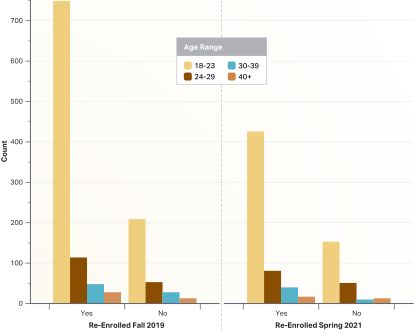
Demographic characteristics included age, enrollment status, educational goals, ethnicity, and gender. The analysis of demographic characteristics revealed significant patterns in student persistence, aligning with national trends regarding community college populations. Age was strongly associated with persistence in 2018–2019 (χ² (3) = 15.9, p < 0.001, V = 0.113) and 2020–2021 (χ² (3) = 12.8, p < 0.01, V = 0.127), with younger students (ages 18–23) having the highest re-enrollment rates (see Figure 1).
Enrollment status was also strongly associated with persistence in 2018–2019 (χ² (1) = 20.6, p < 0.001, V = 0.129) and 2020–2021 (χ² (1) = 10.6, p < 0.001, V = 0.116), with part-time students having higher re-enrollment rates than full-time students (see Figure 2).
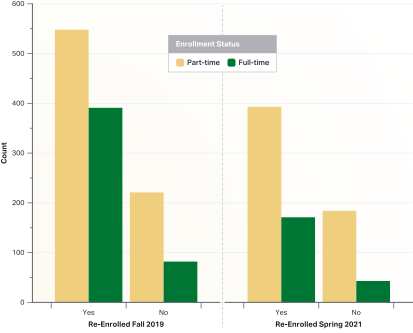
While part-time enrollment provides flexibility for students managing work, family, and other commitments, it is often associated with lower retention rates, as noted in previous research (McKinney, et al. 2022). Strategies that address part-time students’ barriers, such as flexible course scheduling and improved access to advising, are essential for enhancing engagement and retention (Nakajima, Dembo, and Mossler 2012). Surprisingly, ethnicity and gender were not significant predictors of persistence in this study, diverging from research indicating that underrepresented ethnic groups and female students frequently encounter unique challenges or advantages in educational outcomes (Flores, Park, and Baker2017; Tajalli and Ortiz 2018). This finding highlights the importance of developing context-specific strategies tailored to each institution’s demographic composition.
Financial Aid as a Key Driver of Retention
Financial aid was a key determinant of persistence, as students who received financial aid demonstrated higher re-enrollment rates in 2018–2019 (χ² (1) = 23.4, p < 0.001, V = 0.137) and 2020–2021 (χ² (1) = 20.4, p < 0.001, V = 0.161). Students who received financial aid had higher subsequent enrollment than those who did not (see Figure 3). These findings align with previous studies emphasizing the role of financial aid in promoting access, persistence, and degree completion (Chen and Hossler 2017; Sublett and Taylor 2021).
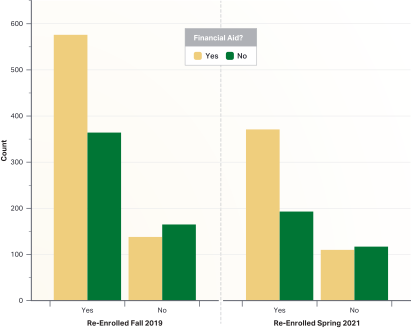
However, unmet financial needs remain a barrier for many students, particularly those from low-income families, even at community colleges with lower tuition rates (Broton 2019). Expanding financial literacy programs, scholarships, and emergency grants could help mitigate these barriers. Additionally, ensuring students understand how financial aid works, especially for developmental courses that may not count toward degree completion, could enhance retention and degree attainment (Carales 2020; Sublett and Taylor 2021).
Academic Performance and Its Implications
As measured by GPA, academic performance was strongly associated with persistence in 2018–2019 (χ² (1) = 20.4, p < 0.001, V = 0.161) and 2020–2021 (χ² (3) = 254.0, p < 0.001, V = 0.452). These results are consistent with prior research (Nakajima, Dembo, and Mossler 2012; Watson and Chen 2019). Students achieving a GPA of 2.0 or higher were more likely to re-enroll (see Figure 4), highlighting the importance of early academic interventions for at-risk students.
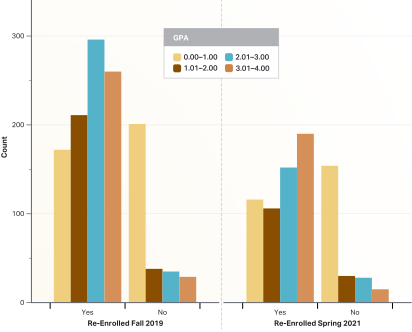
Proactive strategies such as monitoring first-semester GPAs, providing academic mentoring, and offering tutoring have proven effective in enhancing student success (Caviglia-Harris 2022; Hafer, et al. 2021). These initiatives are exceptionally vital for students at risk of falling below the 2.0 GPA threshold, as they are less likely to remain enrolled and may lose eligibility for financial aid (Watson and Chen 2019). Targeted interventions improve individual student outcomes and boost institutional retention rates.
Implications for Strategic Enrollment Management Plans
The findings of this study offer actionable insights for strategic enrollment management plans (SEMPs). By leveraging demographic, financial, and academic data, institutions can design targeted interventions that address the unique needs of community college students. For example, flexible course offerings and enhanced advising programs can support part-time and nontraditional students, while financial aid strategies and emergency grants can alleviate economic pressures (Sublett and Taylor 2021; McKinney, et al. 2022). Similarly, academic support systems such as tutoring and GPA monitoring can address the challenges faced by at-risk students (Caviglia-Harris 2022; Watson and Chen 2019). These initiatives align with the broader mission of community colleges to promote equity, social mobility, and workforce readiness while contributing to regional economic development (Flores, Park, and Baker2017; Tajalli and Ortiz 2018).
Conclusion
This study underscores the critical role of age, enrollment status, financial aid, and GPA in shaping student retention at community colleges. Younger students (18–23) demonstrated the highest persistence rates, while nontraditional students (24+) faced challenges such as balancing work, family responsibilities, and access to flexible course scheduling (Kimmel, et al. 2016; Howard and Harrington 2022). The prevalence of part-time enrollment underscores the need for targeted interventions to support students juggling external commitments, as they often face higher attrition rates (McKinney, et al. 2022). Financial aid emerged as a vital factor in student persistence, with students receiving aid persisting at significantly higher rates, emphasizing the importance of financial resources in facilitating degree completion (Chen and Hossler 2017; Sublett and Taylor 2021). Additionally, GPA proved to be a powerful predictor of persistence: students with GPAs of 2.0 or higher were more likely to continue their educational journey.
These findings suggest actionable strategies for community colleges to improve retention. Institutions should focus on expanding academic support services for students with low GPAs, such as tutoring and academic coaching. Increasing awareness of financial aid options and educating students about maintaining eligibility can help reduce financial barriers and support persistence. Programs like “15-to-finish,” tailored for part-time students, can encourage them to take additional credit hours, accelerating degree completion while promoting engagement (Howard and Harrington 2022). Finally, investing in scholarships and financial support for ancillary costs, such as transportation and course materials, can alleviate the financial stress that often leads to dropout (Baugus 2020; Sublett and Taylor 2021).
While this study provides valuable insights, it is limited by its focus on a narrow set of variables and its exclusion of particular student populations, such as dual credit and continuing education enrollees. Future research should explore additional factors influencing retention, including faculty engagement, career-readiness programs, and institutional culture. By addressing these areas, community colleges can better support their diverse student populations, align with workforce demands, and fulfill their mission of advancing social mobility and educational equity. Implementing these findings and recommendations offers a pathway for community colleges to foster student success and improve retention.
 Patricia Benavides-Dominguez is a Vice President of Student Affairs at Del Mar
 Christopher Benedetti is Associate Dean for Academic and Faculty Affairs and
share