

You must be logged in to view this content. Please login or learn more about joining AACRAO. If you have any questions or experience any issues logging in, please reach out to us at membership@aacrao.org.
Toward an Institutional Databases Audit to Improve College Student Persistence
Posted on
By
Article Abstract
Related Issue:
Topics
Article Type
Professional Proficiency
Author(s)
 Bert Ellison earned a Master of Divinity degree from Duke University and is currently a Sociology doctoral student in Tulane University’s City, Culture, and Community Ph.D. program. He is also a Graduate Assistant in Tulane University’s Office of Retention & Student Success and a Salesforce Certified Administrator specializing in collaborative technology use in higher education. His research interests focus on exploring the factors that impact college student persistence and college students’ sense of belonging, with particular sub-interests in the experiences of students at highly selective residential colleges and universities.
 John M. Braxton is Professor Emeritus of Leadership, Policy and Organizations, Higher Education Leadership and Policy Program, Peabody College of Vanderbilt University; Resident Scholar, Tennessee Independent College and University Association;
and Affiliate Scholar, The USC Center for Enrollment Research, Policy and Practice.
Professor Braxton’s research centers on the college student experience with particular attention focused on college student persistence. He has published in more than 110 publications in the form of articles in referred journals, books, and book
chapters. Braxton is a recipient of the Research Achievement Award bestowed by the Association for the Study of Higher Education and the Contribution to Knowledge Award given by the American College Personnel Association (ACPA)-College Student
Educators International.
Braxton served as the 9th Editor of the Journal of College Student Development for seven years from 2008 to 2015. He currently serves as an Associate Editor for The Journal of College Student Retention: Theory, Research and Practice. He is also a
past President of the Association for the Study of Higher Education.
 As a Data Engineer, previously a data analyst and Associate Director of Retention and Student Success, Melissa Lang combines her passion for information systems, analytics, and higher education. Her team is diving deep into understanding program and student success at the university in order to make strategic decisions to improve academics and the student experience. She earned her M.B.A. at Tulane University.
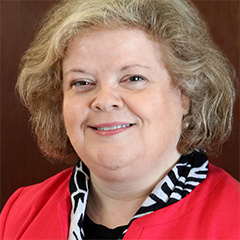 Kelly Grant is the Senior Associate Dean of Retention and Strategic Initiatives at Tulane University, where she is also a Professor Practice in in Tulane’s A.B. Freeman School of Business. In her role as senior associate dean, Kelly serves as the University’s ‘retention czar’ as well as oversees student success initiatives, which include the first-year experience and academic programs, success coaching, and the Academic Learning and Tutoring Center. As a professor, her research focuses on pedagogical practices and cross-cultural communication. She earned her M.A. degree at the University of New Orleans.

share