Welcome to the new AACRAO website. While the site is live, development is ongoing, visitors can expect updates and new features in the weeks ahead.

You must be logged in to view this content. Please login or learn more about joining AACRAO. If you have any questions or experience any issues logging in, please reach out to us atmembership@aacrao.org.

Log In Join

The national conversation on student loan debt has led to questioning the value of American higher education. Students are relying on federal and private student loan products to pay for the cost of attendance at American higher education institutions. To address this challenge, many institutions have launched no-loan initiatives. One such institution is Model College (pseudonym), a highly selective NCAA Division I, private liberal arts college on the east coast that launched a no-loan initiative in 2019. This study shows the differences in student experience and student success by evaluating student life experience, academic experience, and experience with financial aid and work-study between the cohort of students who receive financial aid packages that include loans and work-study and those who do not.

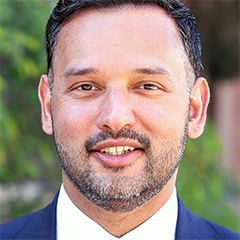
Daniel Saud, Ed.D., serves as the Assistant Dean of International Admissions
and Enrollment at the University of Arizona. Dr. Saud came to the United
States as a F-1 student in the early 2000s. His experience as an F-1 student
along with his time as a DAAD Fellow studying at Technische Universität (TU)
Berlin led him to pursue a career in this field. Having visited 63 countries,
he is always interested in learning a new culture and helping students and
their families understand the value of American higher education. At Arizona,
he leads a team dedicated to helping students and their families navigate the
admissions process for the university and obtaining a world class education.

Dr. Saud is a scholar-practitioner and often teaches graduate-level courses in
education policy, enrollment management, international education, and history
of American higher education. He is an active member of American Association
of College Registrars and Admission Officers (AACRAO) and NAFSA: Association
of International Educators and serves on the U.S. Advisory Board for IDP
Education, and Applyboard Canada. Dr. Saud is also a member of the Western
Higher Education Advisory Committee for the University of Cambridge
International Education. He is fluent in four languages and enjoys reading
post-civil war American history.
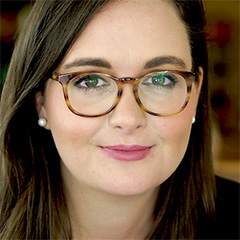
Meghan Grace, Ed.D., is a researcher, consultant, speaker, and podcast host.
As a consultant for Plaid, she oversees research and data strategies and
provides project and program management. Her research interests include
generational studies with a current focus on Generation Z (born 1995–2010),
higher education, student life, and campus and organizational climate. She
also serves as a co-lead for the Institute for Generational Research and
Education with her research partner, Dr. Corey Seemiller. Dr. Grace completed
her undergraduate degree in communication studies with a leadership studies
minor at Chapman University, her master’s degree in higher education at the
University of Arizona, and her doctorate in higher education leadership and
policy at Vanderbilt University. Dr. Grace resides in Nashville, TN.
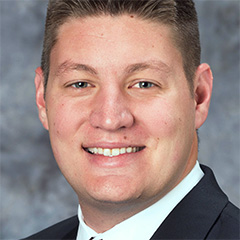
Micah Kamrass, Ed.D., practices higher education law, real estate law, and
election/campaign finance law. In his higher education law practice, Kamrass
serves as general counsel and special counsel to numerous international
fraternities and sororities and their affiliated entities. In his real estate
practice, Kamrass provides counsel on a wide range of real estate matters to
clients ranging from small family-owned businesses to some of the largest
companies in the world. In his election/campaign finance law practice, Kamrass
provides trusted counsel to many of Cincinnati’s elected officials and other
civic leaders.

Kamrass attended The Ohio State University for undergraduate, graduate, and
law school. While there, he served as student body president where he
represented 40,000 students. Kamrass was also President of the Ohio State
University chapter of Alpha Epsilon Pi and served as a member the Alpha
Epsilon Pi international Supreme Board of Governors. In addition to his law
degree, Kamrass has a doctorate in higher education leadership and policy from
Vanderbilt University. He also serves as an adjunct professor of higher
education law at Vanderbilt University.

Astin, A. W. 1984. Student involvement: a developmental theory in higher education. Journal of College Student Personnel. 25(4): 297–309.

Black, S., A. Filipek, J. Furman, L. Giuliano, and A. Narayan. 2016. Student loans and college quality: Effects on borrowers and the economy. VoxEU. August 4.

Boatman, A., and B. T. Long. 2016. Does financial aid impact college student engagement? Research in Higher Education. 57(6): 653–681.

Braxton, J. M. 2000. Introduction. In Reworking the Student Departure Puzzle, edited by J. Braxton. Nashville, TN: Vanderbilt University Press.

Braxton, J. M. 2008. Toward a theory of faculty professional choices in teaching that foster college student success. In Higher Education: A Handbook of Theory and Research, edited by J. Smart. The Netherlands: Springer.

Braxton, J. M., W. R. Doyle, H. V. Hartley, A. S. Hirschy, W. A. Jones, and M. K. McLendon. 2014. Rethinking College Student Retention. San Francisco: Jossey-Bass.

Brooks, L., A, Cornelius, E. Greenfield, and R. Joseph. 1995. The relation of career-related work or internship experiences to the career development of college seniors. Journal of Vocational Behavior. 46(3): 332–349.

Broton, K., and S. Goldrick-Rab. 2016. The dark side of college (un)affordability: food and housing insecurity in higher education. Change: The Magazine of Higher Learning. 48(1): 16–25.

Burkart, B., H. Hexter, and D. Thompson. 2001. Why TRIO students need to sudy abroad. Opportunity Outlook. April 2001: 34–38.

Model College. 2019. Institutional Data of First-Year Cohorts, 2009–2018. Prepared by the Office of the University Registrar.

Darolia, R. 2014. Working (and studying) day and night: Heterogeneous effects of working on the academic performance of full-time and part-time students. Economics of Education Review. 38: 38–50.

Dynarski, S., and J. Scott-Clayton. 2013. Financial aid policy: Lessons from research. The Future of Children. 23(1): 67–91.

El-Ghoroury, N. H., D. I. Galper, A. Sawaqdeh, and L. F. Bufka. 2012. Stress, coping, and barriers to wellness among psychology graduate students. Training and Education in Professional Psychology. 6(2): 122–134.

Espenshade, T. J., and A. W. Radford. 2010. No Longer Separate, Not Yet Equal: Race and Class in Elite College Admission and Campus Life. Princeton, NJ: Princeton University Press.

Higher Education Research Institute. 2020. Instruments and Codebooks. Los Angeles: Author.

Horn, L. J., and A. Malizio. 1998. Undergraduates Who Work: National Postsecondary Student Aid Study, 1996. Washington, D.C.: National Center for Education Statistics.

Jack, A. A. 2019. The Privileged Poor: How Elite Colleges are Failing Disadvantaged Students. Cambridge, MA: Harvard University Press.

Kezar, A., and D. Maxey. 2014. Faculty Matter: So why doesn’t everyone think so? The NEA Higher Education Journal. Fall: 29–44.

Massey, D. S., C. Z. Charles, G. F. Lundy, and M. J. Fischer. 2003., The Source of the River: The Social Origins of Freshmen at America’s Selective Colleges and Universities. Princeton, NJ: Princeton University Press.

National Center for Education Statistics. 2019. College Navigator. Washington, D.C.: Author.

Schreiner, L. A., and D. D. Nelson. 2013. The contribution of student satisfaction to persistence. Journal of College Student Retention. 15(1): 73–111.

Tinto, V. 2000. Linking learning and leaving: Exploring the role of the college classroom in student departure. In Reworking the Student Departure Puzzle, edited by J. Braxton. Nashville, TN: Vanderbilt University Press.

Venezia, A., M. Kirst, and A. Antonio. 2005. Betraying the College Dream: How Disconnected K–12 and Postsecondary Education Systems Undermine Student Aspirations. Stanford University Bridge Policy Brief. Stanford, CA: The Stanford Institute for Higher Education Research.

Walpole, M. 2003. Socioeconomic status and college: How SES affects college experiences and outcomes. The Review of Higher Education. 27(1): 45–73.

Related Posts