Bowman, N. A., and N. Jang. 2022. What is the purpose of academic probation? Its substantial negative effects on four-year graduation. Research in Higher Education. February: 1–27.
Carter, C. R. 2013. The Experiences of Community College Transfer Students Returning From Academic Suspension at a Four-year Research Institution (doctoral dissertation). Colorado State University, Fort Collins, CO.
Cassidy, S. 2012. Exploring individual differences as determining factors in student academic achievement in higher education. Studies in Higher Education. 37(7): 793–810.
College Transition Collaborative. 2017. Administrator & Student Perspectives on Academic Standing (infographic). Stanford, CA: Author.
CTC. See College Transition Collaborative.
Fox, A., L. Stevenson, P. Connelly, A. Duff, and A. Dunlop. 2010. Peer-mentoring undergraduate accounting students: The influence on approaches to learning and academic performance. Active Learning in Higher Education. 11(2): 145–156.
García-Ros, R., F. Pérez-González, F. Cavas-Martínez, and J. M. Tomás. 2019. Effects of pre-college variables and first-year engineering students’ experiences on academic achievement and retention: a structural model. International Journal
of Technology and Design Education. 29: 915–928.
Gaskins, B. P. 2009. A Ten-Year Study of the Conditional Effects on Student Success in the First Year of College (doctoral dissertation). Bowling Green State University, Bowling Green, OH.
Goldman, B., K. Blackwell, and S. Beach. 2003. Academically suspended university students: What percent return? What percent graduate? Journal of The First-Year Experience & Students in Transition. 15(1): 105–113.
Hanger, M. A., J. Goldenson, M. Weinberg, A. Schmitz-Sciborski, and R. Monzon. 2011. The bounce back retention program: One-year follow-up study. Journal of College Student Retention: Research, Theory & Practice. 13(2): 205–227.
Hepworth, D., B. Littlepage, and K. Hancock. 2018. Factors influencing university student academic success. Educational Research Quarterly. 42(1): 45–61.
Hoell, S. M. 2006. The Undergraduate Experience of Turnaround After Academic Suspension: A Phenomenological Analysis (doctoral dissertation). University of Montana, Missoula, MT.
Hoyt, J. E., and B. A. Winn. 2004. Understanding retention and college student bodies: Differences between drop-outs, stop-outs, opt-outs, and transfer-outs. National Association of Student Personnel Administrators (NASPA) Journal.
41(3): 395–417.
Jain, T., and M. Kapoor. 2015. The impact of study groups and roommates on academic performance. The Review of Economics and Statistics. 97(1): 44–54.
Krumrei-Mancuso, E. J., F. B. Newton, E. Kim, and D. Wilcox. 2013. Psychosocial factors predicting first-year college student success. Journal of College Student Development. 54(3): 247–266.
Leon, M. B., A. Guest-Scott, A. Koke, S. Fiorini, and A. Rangazas. 2019. Claiming their education: The impact of a required course for academic probation students with a focus on purpose and motivation. Journal of the Scholarship of
Teaching and Learning. 19(4).
McGuire, S. Y. 2018. Teach Yourself How to Learn: Strategies You Can Use to Ace Any Course at Any Level. Sterling, VA: Stylus Publishing, LLC.
McGrath, S. M., and G. D. Burd. 2012. A success course for freshmen on academic probation: Persistence and graduation outcomes. NACADA Journal. 32(1): 43–52.
Meadows, D., and T. Tharpe. 1996. Suspended students: An analysis of suspension length and returning semester GPA. NACADA Journal. 16(1): 35–37.
Moser, K. 2013. Exploring the impact of transfer capital on community college transfer students. Journal of the First-Year Experience & Students in Transition. 25(2): 53–76.
Pascarella, E. T. 1980. Student-faculty informal contact and college outcomes. Review of Educational Research. 50(4): 545–595.
Robbins, S. B., K. Lauver, H. Le, D. Davis, R. Langley, and A. Carlstrom. 2004. Do psychosocial and study skill factors predict college outcomes? A meta-analysis. Psychological Bulletin. 130(2): 261–288.
Rollnick, S., and W. R. Miller. 1995. What is motivational interviewing? Behavioural and cognitive Psychotherapy. 23(4): 325–334.
Schwartz, R. A., and C. M. Washington. 2002. Predicting academic performance and retention among African American freshmen men. National Association of Student Personnel Administrators (NASPA) Journal. 39(4): 354–370.
Suchan, J.J. 2016. Exploring the Experience of Academic Suspension and Subsequent Academic Resilience for College Students Who Were Reinstated to the Institution: A Phenomenological Analysis (doctoral dissertation), Iowa State
University, Ames, IA.
Thomsen, E., C. Peterson, and E. D. Velez. 2020. One Year after a Bachelor’s Degree: A Profile of 2015–16 Graduates (web tables, NCES 2020-341). Washington, D.C.: National Center for Education Statistics.
Tomul, E., and G. Polat. 2013. The effects of socioeconomic characteristics of students on their academic achievement in higher education. American Journal of Educational Research. 1(10): 449–455.
Trombley, C. M. 2000. Evaluating students on probation and determining intervention strategies: A comparison of probation and good standing students. Journal of College Student Retention: Research, Theory & Practice. 2(3):
239–251.
Ullah, H., and M. A. Wilson. 2007. Students’ academic success and its association to student involvement with learning and relationships with faculty and peers. College Student Journal. 41(4): 1192–1203.
UNI. See University of Northern Iowa.
University of Northern Iowa. 2022. Undergraduate Academic Standing Policy. Cedar Falls, IA: Author.
Versalle, G. L. 2018. Understanding the Experiences of Students Re-Admitted After Academic Suspension as Part of a University-Initiated Process: A Qualitative Study (doctoral dissertation). Western Michigan University, Kalamazoo, MI.
Wolniak, G. C., and M. E.Engberg. 2010. Academic achievement in the first year of college: Evidence of the pervasive effects of the high school context. Research in Higher Education. 51(5): 451–467.


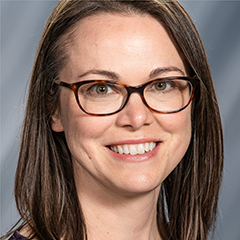 Kristin Woods, Ph.D., is currently the Senior Associate Vice President for Enrollment Management and Student Success at the University of Northern Iowa (UNI), which includes leadership of the Offices of Admissions, Financial Aid &
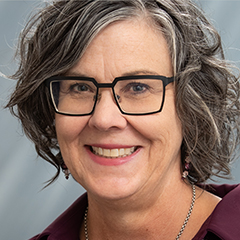 Deirdre Bucher Heistad, Ph.D., has been at the University of Northern Iowa since 2000 and serves as the Executive Director of Undergraduate Studies. The Undergraduate Studies division includes the Office of Academic Advising, Community Engagement,
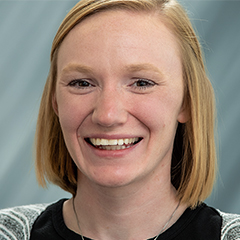 Megan Vogt-Kostner works as the Senior Research Analyst in the Office of Institutional Research & Effectiveness at UNI, as well as teaching as an adjunct instructor in the Department of Social Work. In her primary role at UNI she works
share