Welcome to the new AACRAO website. While the site is live, development is ongoing, visitors can expect updates and new features in the weeks ahead.

You must be logged in to view this content. Please login or learn more about joining AACRAO. If you have any questions or experience any issues logging in, please reach out to us atmembership@aacrao.org.

Log In Join

Enrollment practitioners can learn important lessons from first-generation students who successfully navigated the path to college, lessons that enable them to tailor outreach efforts to this important population. A study by one of the authors (Holliday 2020) explored the identity of first-generation students as the deciders, or the primary decision-makers in their college-going journey. The authors expand on those findings, providing recommendations enabling higher education institutions of all types to expand first-generation access.

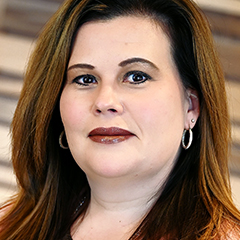
Chrissy Holliday, Ph.D., is the Senior System Liaison for Rural Education and Workforce Development Initiatives at Colorado State University Pueblo. She earned her Ph.D. in higher education leadership from Colorado State University in 2020 and
holds a master’s degree in education from Capella University and a bachelor’s degree in mass communication/print media from Campbell University. Her research interests focus on college access and affordability, college-going culture, and first-generation student challenges. Her published articles to date have focused on research related to first-generation college-going culture, which applies directly to her work as a university administrator focused on enrollment and access.
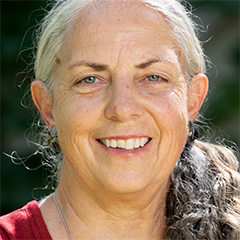
Sharon K. Anderson, Ph.D., is Professor of Counseling and Career Development at Colorado State University. In 1993, Anderson earned her Ph.D. from the University of Denver in counseling psychology. She became a licensed psychologist in 1995. Her
experience as a practitioner includes: private practice with adults and the elderly, supervision of master’s level students and those seeking licensure, and consultation regarding ethical issues in practice. Anderson has taught the master’s level
ethics course for counseling students for more than 25 years, teaching and mentoring a multitude of students. She has co-authored or co-edited other ethics books used by psychologists (Foundations of Ethical Practice, Research and Teaching in
Psychology and Counseling
) and life coaches (Law and Ethics in Coaching: How to Solve and Avoid Difficult Problems in Your Practice). She has contributed to more than 50 publications including books, book chapters, and refereed
articles, most of them looking at the practice of professional ethics, teaching ethics, and issues of privilege.

Appadurai, A. 2004. The capacity to aspire: Culture and the terms of recognition. In Culture and Public Action, edited by V. Rao and M. Walton. Palo Alto, CA: Stanford University Press.

Baker, R., D. Klasik, and S. F. Reardon. 2018. Race and stratification in college enrollment over time. AERA Open. 4(1).

Bosworth, K., C. Convertino, and J. T. Hurwitz. 2014. Common purpose and different approaches to support college-going in five Southwestern districts. American Secondary Education. 43(1): 4–24.

Cabrera, N. L., P. D. Lopez, and V. B. Saenz. 2012. Ganas: From the individual to the community, and the potential for improving college going in the land that Texas forgot. Journal of Latinos and Education. 11(4): 232–246.

Chetty, R., J. N. Friedman, E. Saez, N. Turner, and D. Yagan. 2017. Mobility Report Cards: The Role of Colleges in Intergenerational Mobility. Cambridge, MA: National Bureau of Economic Research.

College Board. 2016. Education Pays 2016: The Benefits of Higher Education for Students and Society. New York: College Board.

Colorado Department of Higher Education. 2018. District at a Glance (data file). Denver: Author.

Derden, M. W., and M. T. Miller. 2014. Predicting postsecondary attendance through cultural norming: A test of community expectancy. Critical Questions in Education. 5(2): 112–124.

Gibbons, M. M., and L. D. Borders. 2010. Prospective first-generation college students: A social-cognitive perspective. Career Development Quarterly. 58(3): 194–208.

Holliday, C. 2020. A Mixed-Methods Investigation of the College-Going Experiences of First Generation College Students. Colorado State University. Available from ProQuest Dissertations & Theses Global (2485510311).

Horng, E. L., B. J. Evans, A. L. Antonio, J. D. Foster, H. S. Kalamkarian, N. F. Hurd, and E. P. Bettinger. 2013. Lessons learned from a data-driven college access program: The National College Advising Corps. New Directions for Youth
Development
. 140: 55–75.

Kelliher, R. 2022. Common app finds more first-gen, underrepresented minority applicants. Diverse Education. March 2.

Kiyama, J. M. 2010. College aspirations and limitations: The role of educational ideologies and funds of knowledge in Mexican American families. American Educational Research Journal. 47(2): 330–356.

Kiyama, J. M. 2011. Family lessons and funds of knowledge: College-going paths in Mexican American families. Journal of Latinos and Education. 10(1): 23–42.

Langenkamp, A. G., and D. Shifrer. 2018. Family legacy or family pioneer? Social class differences in the way adolescents construct college-going. Journal of Adolescent Research. 33(1): 58–89.

McKillip, M. M., K. E. Godfrey, and A. Rawls. 2013. Rules of engagement: Building a college going culture in an urban school. Urban Education. 48(4): 529–556.

National Center for Education Statistics. 2019. Immediate College Enrollment Rate. Washington, D.C. : Author.

NCES. See National Center for Education Statistics.

Ojeda, L., and L. Y. Flores. 2008. The influence of gender, generation level, parents’ education level, and perceived barriers on the educational aspirations of Mexican American high school students. Career Development Quarterly.
57(1): 84–95.

Perna, L. W., and M. A. Titus. 2005. The relationship between parental involvement as social capital and college enrollment: An examination of racial/ethnic group differences. Journal of Higher Education. 76(5): 485–518.

Rochford, J. A., A. O’Neill, A. Gelb, and K. J. Ross. 2011. Reaching for 80%: How Post Secondary Opportunities in High Schools are Changing the College Going Culture in Stark County, Ohio. Canton, OH: Stark Education Partnership.

Serna, G. R. and R. Woulfe. 2017. Social reproduction and college access: Current evidence, context, and potential alternatives. Critical Questions in Education. 8(1): 1–16.

Trostel, P., and M. Chase Smith. 2015. It’s not just the money: The benefits of college education to individuals and society. Lumina Foundation Issues.

U.S. Census Bureau. 2017. Educational Attainment 2012–2016 American Community Survey 5-Year Estimates. Washington, D.C.: Author.

Vega, D. 2018. Navigating postsecondary pathways: The college choice experiences of first generation Latina/o transfer students. Community College Journal of Research and Practice. 42(12): 848–860.

Weinstein, L., and M. Savitz-Romer. 2009. Planning for opportunity: Applying organizational and social capital theories to promote college-going cultures. Educational Planning. 18: 1–11.

Related Posts