You must be logged in to view this content. Please login or learn more about joining AACRAO. If you have any questions or experience any issues logging in, please reach out to us atmembership@aacrao.org.
Welcome to the new AACRAO website. While the site is live, development is ongoing, visitors can expect updates and new features in the weeks ahead.
Posted on
You must be logged in to view this content. Please login or learn more about joining AACRAO. If you have any questions or experience any issues logging in, please reach out to us atmembership@aacrao.org.
Topics
Article Type
Related Issue:
This article seeks to make the case for how relationships are essential to meeting the tapestry of student needs by examining experiences and challenges of several student threads in that tapestry, using both two-year and four-year institutional perspectives. How faculty, staff, and administrators respond—or don’t—in building rapport and connections that help students feel they belong ultimately ensures institutional enrollment health, the core aim of SEM. This article also examines how the 2020 pandemic has disrupted our ability in the twin pillars of SEM—recruitment and retention—to meet student needs, not just with transactional services but with the deeper bonds of belonging.
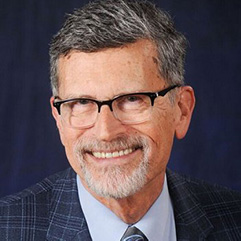
Stanley E. Henderson retired from the University of Michigan-Dearborn where he served as Vice Chancellor for Enrollment Management and Student Life from 2005–2015. In that role, he provided leadership to campus enrollment efforts that resulted in
record enrollment and championed a spirit of community to grow student engagement to new levels.
Henderson has long been a national leader in developing new models for universities to better recruit and retain students. His leadership in designing an enrollment facility at the University of Cincinnati helped to create a widely studied model
of one-stop service and integrated recruitment and retention delivery.
He served as associate provost for enrollment management at the University of Illinois-Urbana-Champaign from 2003–2005 and as associate vice president for enrollment management at the University of Cincinnati from 1995 to 2003. Previously, he was
director of enrollment management and admissions at Western Michigan University and director of admissions at Wichita State University. His roots in enrollment began as an admissions counselor at Michigan State University in 1970–1971.
He also has been deeply involved at the national level of AACRAO, where he served as the association’s first vice president for enrollment management in 1991–93 and as president in 1995–96. He was a founder of the association’s national SEM
Conference, now in its 30th year. He is a frequent contributor to AACRAO publications, including the first history of enrollment management, as well as a frequent presenter at state, regional, and national levels. He is also a recipient of the
Distinguished Service Award and the Founders Award for Leadership. In 2014, AACRAO presented Henderson a Lifetime Achievement Award for “Outstanding Leadership in the SEM Profession” and awarded him Honorary Membership in 2015. He continues to
serve the association as a senior consultant for AACRAO Consulting.
Henderson earned his bachelor’s degree in political science from Michigan State University in 1969 as a member of Phi Beta Kappa, and a master’s degree in government from Cornell University in 1971. He also completed course work in the doctoral
program at the University of Illinois-Urbana-Champaign.
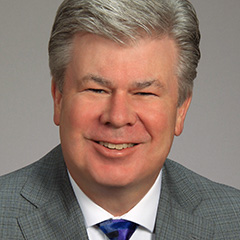
Kevin Pollock, Ph.D., is President at Central Carolina Technical College and an AACRAO Senior Consultant. Prior to these roles, he served as the fifth president of Montgomery County Community College. Dr. Pollock has more than 38 years of
education experience at four-year private and public colleges as well as community colleges. His diverse roles include college administration, strategic planning, leadership, and enrollment management. He is a national expert on student success
models, a frequent national speaker who has spoken more than 130 times at conferences and colleges, and has authored more than 20 book chapters and articles.
At Montgomery County Community College, Dr. Pollock where he oversaw the implementation of a new core curriculum and the creation of pathways for all college programs. During his tenure, the college created a new vision, mission, and strategic
plan, and updated its brand and marketing strategies. The college implemented an integrated holistic advising approach, developed through the Gates Foundation iPass grants. In addition, the college enhanced its student success models by creating
short-term enrollment goals, moving to a virtual bookstore platform, and creating a 24 x 7 tutoring model.
Before arriving at Montgomery County Community College, Dr. Pollock served as president of St. Clair County Community College in Port Huron, Michigan, from 2009–2016. During his tenure, the institution experienced record enrollment, embarked on
new student success initiatives, created early and middle college programs, increased its grant funding, became a leader in green initiatives, and strengthened its connections with the community. The institution also adopted a new vision, mission
and data informed strategic plan, that was tied to national best practices.
Prior to assuming a presidential role, he spent nine years as vice president of student services at West Shore Community College in Scottville, Michigan. He also held a number of leadership roles in admissions and recruitment, and he taught middle
and high school English early in his career.
Dr. Pollock holds a Ph.D. in Higher, Adult and Lifelong Education from Michigan State University and a Master of Arts in Education and Bachelor of Science in Education from Central Michigan University.

AACC. See American Association of Community Colleges.
American Association of Community Colleges. 2020. Fast Facts 2020. Washington, D.C.: American Association of Community Colleges. January.
Bailey, T. 2017. Community colleges and student success: Models for comprehensive reform. EDUCAUSE Review. 52(3).
Berling, V. 2013. Five most critical needs of adult students. The EvoLLLution. July 23.
Bontrager, B., and K. Pollock. 2009. Applying SEM at the Community College. Washington: D.C.: American Association of Collegiate Registrars and Admissions Officers.
Braxton, J. M., A. S. Hirschy, and S. A. McClendon. 2004. Understanding and Reducing College Student Departure. ASHE-ERIC Higher Education Report. 30(3). Hoboken, NJ: Wiley Periodicals, Inc.
Brown, M., and T. Starrett. 2017. Fostering student connectedness: Building relationships in the classroom. Faculty Focus. April 7.
Buskist, W., and B.K. Saville. 2001. Creating positive emotional contexts for enhancing teaching and learning. Social Psychology Network.
Campus Compact. 2008. How Can Engaged Campuses Improve Student Success in College? Building Engaged Campuses Research Brief #1. Boston: Author.
Cataldi, E. F., C. T. Bennett, and X. Chen. 2018. First Generation Students: College Access, Persistence, and Post-Bachelor’s Outcomes (Statistics in Brief). Washington, D.C.: National Center for Education Statistics.
Center for Community College Student Engagement. 2012. A Matter of Degrees: Promising Practices for Community College Student Success (A First Look). Austin, TX: The University of Texas at Austin, Community College Leadership Program.
College of St. Scholastica. 2017. The importance of community participation: Why college clubs and organizations matter. The Sentinel Blog. July 10.
Colorado College. n.d. The Curriculum. Colorado Springs, CO: Author.
Duberstein, A. 2009. Building student-faculty relationships. Academic Advising Today. March 1.
Erb, N. M., M. S. Sinclair, and J. M. Braxton, J. M. 2015. Fostering a sense of community in residence halls: A role for housing and residential professionals in increasing college student persistence. Strategic Enrollment Management
Quarterly. 3(2).
Fishman, T., A. Ludgate, and J. Tutak, 2017. Success by design: Improving outcomes in American higher education. Deloitte Insights. March 16.
Florida Atlantic University. n.d. First-Generation Student Success. Boca-Raton, FL: Author.
French, R. 2020. Michigan college freshman enrollment drops amid COVID. Will they return? Bridge Michigan. October 19.
Georgia State University. n.d. Student Success Programs. Atlanta, GA: Author.
Gessen, M. 2020. What do college students think of their schools’ reopening plans? The New Yorker. July 11.
Grant, J. 2016. UC Riverside wins prestigious award for student success in degree completion. Inside UCR. November 30. Riverside, CA: University of California, Riverside.
Harris, A. 2020. The truth about what happens next for colleges. The Atlantic. July 12.
Hegel, S. 2014. Reaching parity in student success. April 10. The Chronicle of Higher Education.
Henderson, S. E. 2012. The community of SEM. In Strategic Enrollment Management: Transforming Higher Education, edited by B. Bontrager, D. Ingersoll, and R. Ingersoll. Washington, D.C.: American Association of Collegiate Registrars
and Admissions Officers.
Henderson, S. E. 2016. Community Building for the Classroom (workshop for the College of Engineering, Public Urban University). Washington, D.C.: AACRAO Consulting.
Henderson, S. E. 2017. SEM and the student journey: The role of strategic enrollment management in student engagement. Strategic Enrollment Management Quarterly. 4(4).
Henderson, S. E. 2020. Interview with public regional university president, May 20.
Henderson, S. E., and A. Yale. 2008. Enrollment Management 101.Preconference workshop,AACRAO XVIII Strategic Enrollment Management Conference, Anaheim, CA.
Ideas42. n.d. Connecting & Belonging on the College Campus. New York: Author.
Jones, M. 2016. Just-in-time for success: Connecting underprepared students to college resources. Innovations Abstracts. XXXVIII(2).
Juszkiewicz, J. 2019. Trends in Community College Enrollment and Completion Data, Issue 5. Washington, D.C.: American Association of Community Colleges.
Lepley, S. 2020. Kalamazoo College: Fall Planning (video). Kalamazoo, MI: Kalamazoo College.
MacDonald, K. A 2018. A review of the literature: The needs of nontraditional students in postsecondary education. Strategic Enrollment Management Quarterly. 5(4).
Mahan, D., K. B. Wilson, J. M. Petrosko, Jr., and M. R. Luthy. 2014. Is retention enough? Learning and satisfaction of first-generation college seniors. Kentucky Journal of Higher Education Policy and Practice. 3(1): Article 1.
Miller, R., J. Blakeslee, and B. Hope. 2018. Supporting College Student Success through Connections to Mentors and Campus Champions: A Strategy Brief for Campus-Based Mentors and Other Student Support Programs. Portland, OR: Research
and Training Center for Pathways to Positive Futures, Portland State University.
Mintz, S. 2019. Strategies for improving student success. Inside Higher Ed. May 28.
Murthy, V. H. 2020. Together: The Healing Power of Human Connection in a Sometimes Lonely World. New York: Harper Collins.
Nichols, A.H. 2015. The Pell Partnership: Ensuring a Shared Responsibility. Washington, D.C.: Education Trust. September 15.
Parks, R., and A. Taylor. 2020. Utilizing Student Data to Inform Classroom Pedagogy. Presentation (virtual), AACRAO 30th Annual SEM Conference, October 29, Washington, D.C.
Pike, G. R., and G. D. Kuh. 2005. First- and second-generation college students: A comparison of their engagement and intellectual development. Journal of Higher Education. 76(3): 276–300.
Pollock, K. 2004. Undergraduate student recruitment: The role of the faculty. In The SEM Anthology, edited by M. Rodgers and H. Zimar. Washington, D.C.: American Association of Collegiate Registrars and Admissions Officers.
Redford, J., and K. M. Hoyer.2017. First-Generation and Continuing-Generation College Students: A Comparison of High School and Postsecondary Experiences. (Statistics in Brief). Washington, D.C.: National Center for Education
Statistics.
Schwartz, N. 2019. 4 ways community colleges are tackling student success with fewer resources. Education Dive. April 18.
Selby-Theut, M. n.d. The First Generation Student: Barriers and Strategies for Success (presentation).
Shapiro, D., T. Allen, T. Mitchell, and A. Parnell. 2020. A World Turned Upside Down. Opening keynote panel, AACRAO 30th Annual SEM Conference, October 28. Washington, D.C.
Simon Fraser University. 2020. Creating Well-Being in Learning Environments. Simon Fraser University.
Smith, C., and W. Kilgore. 2006. Enrollment Planning: A Workshop on the Development of a SEM Plan. Washington, D.C.: AACRAO Consulting.
Stanton, A., T. Black, R. Dhaliwal, and C. Hutchinson. 2017. Building partnerships to enhance student well-being and strategic enrollment management. Strategic Enrollment Management Quarterly. 4(4).
Thurmer, A. 2020, Oct. 29. What Our Websites Say: A Critical Analysis of Class on College. Presentation (virtual), AACRAO 30th Annual SEM Conference, October 29, Washington, D.C.
Tinto, V. 1993. Leaving College: Rethinking the Causes and Cures of Student Attrition, 2nd ed. Chicago: University of Chicago Press.
University of Michigan-Dearborn. 2020. COVID-19 Return to Campus. Dearborn, MI: Author.
Vargas, J. H. 2004. College Knowledge: Addressing Information Carriers to College. Boston: The Education Resources Institute.
Vowell, S. 2020. Joe Biden and the great leaders of 2020 are part of a club. New York Times. August 13.
Walsh, J. D. 2020. The coming disruption: Scott Galloway predicts a handful of elite cyborg universities will soon monopolize higher education. New York Magazine. May 11.
Wankel, L. 2020. The Future of Higher Education. Keynote address (virtual), AACRAO 30th Annual SEM Conference, October 29, Washington, D.C.
Western Washington University. n.d. First Generation Faculty and Staff at WWU. Bellingham, WA: Author.
Wichita State University. n.d. WSU F1RST Gen Forerunners and Supporters. Wichita, KS: Author.
Whistle, W., and T. Hiler. 2018. The Pell Divide: How Four-Year Institutions are Failing to Graduate Low- and Moderate-Income Students. Washington, D.C.: Third Way.
Wong, W. 2020. ‘They put us all in danger’: UNC-Chapel Hill students outraged after quick shift to virtual learning. NBC News. August 18.

Higher education professionals might consider adopting a collaborative, caring approach to supporting college students from low-income families as part of…

This study examines the factors influencing student retention at a community college, focusing on demographic characteristics, financial aid, and academic…

In 2023, a school within a large, public, four-year research university adopted a new framework for strategic enrollment management (SEM)…
share