Aspelmeier, J., M. Love, L. McGill, A. Elliott, and T. Pierce. 2012. Self-esteem, locus of control, college adjustment, and GPA among first- and continuing-generation students: A moderator model of generational status. Research in Higher Education. 53: 755–781.
Bastedo, M. N., and A. Flaster. 2014. Conceptual and methodological problems in research on college undermatch. Educational Researcher. 43(2): 93–99.
Butt, M. 2025. Tech-driven transitions: Investigating college students’ resource utilization in the digital age of college applications. Strategic Enrollment Management Quarterly. 13(1).
Cahalan, M., M. Addison, N. Brunt, P. Patel, T. Vaughan III, A. Genao, and L. Perna. 2022. Pell Institute for the Study of Opportunity in Higher Education. Washington, D. C.: Pell Institute for the Study of Opportunity in Higher Education.
Capannola, A., and E. Johnson. 2022. On being the first: The role of family in the experiences of first-generation college students. Journal of Adolescent Research. 37(1): 29–58.
Chapman, D. W. 1981. A model of student college choice. Journal of Higher Education. 52(5): 490–505.
Chetty, R., D. Grusky, M. Hell, N. Hendren, R. Manduca, and J. Narang. 2017. The fading american dream: Trends in absolute income mobility since 1940. Science. 356(6336): 398–406.
Coleman, A. L., and J. L. Keith. 2018. Understanding Holistic Review in Higher Education Admissions: Guiding Principles and Model Illustrations. New York: College Board.
Council for Opportunity in Education. 2025. TRIO Defines First-Generation College Student. Washington, D. C.: Author.
Cox, R. D. 2016. The College Fear Factor: How Students and Professors Misunderstand One Another. Cambridge, MA: Harvard University Press.
Cresswell-Yeager, T. 2020. Parental influences that impact first-generation college students’ college choice: A qualitative inquiry of student perceptions. Journal of Access, Retention, and Inclusion in Higher Education. 3(1).
Ding, L., S. Li, and Y. Xue. 2024. Choosing American colleges from afar: Chinese students’ college choice in the US. Journal of International Students. 14(3): 89–108.
Freeman, K. 2005. African Americans and College Choice: The Influence of Family and School. New York: State University of New York Press.
Gofen, A. 2009. Family capital: How first-generation higher education students break the intergenerational cycle. Family Relations. 58(1): 104–120.
Guiffrida, D. A. 2006. Toward a cultural advancement of Tinto’s theory. Review of Higher Education. 29(4): 451–472.
Guri-Rosenblit, S. 2014. Higher Education in the Digital Age: Technology Issues and Strategies for American Colleges and Universities. Santa Barbara, CA: Greenwood Publishing Group.
Han, P. 2014. A literature review on college choice and marketing strategies for recruitment. Family and Consumer Sciences Research Journal. 43(2): 120–130.
Holland, M. M. 2019. Framing the search: How first-generation students evaluate colleges. The Journal of Higher Education. 91(3): 378–401.
Hossler, D., and B. Bontrager. 2014. Handbook of Strategic Enrollment Management. San Francisco: Wiley.
Hossler, D., and K. S. Gallagher. 1987. Studying student college choice: A three-phase model and the implications for policymakers. College and University. 62(3): 207–221.
Hurwitz, M., and J. Howell. 2014. Estimating causal impacts of school counselors with regression discontinuity designs. Journal of Counseling & Development. 92(3): 316–327.
Jack, A. A. 2016. The Privileged Poor: How Elite Colleges Are Failing Disadvantaged Students. Boston: Harvard University Press.
Kao, G. 2004. Parental influences on the educational outcomes of immigrant youth. International Migration Review. 38(2): 427–449.
Lehmann, W. 2007. Choosing to Labour?: School-Work Transitions and Social Class. Montreal, Québec, CA: McGill-Queen’s Press-MQUP.
London, H. B. 1989. Breaking away: A study of first-generation college students and their families. American Journal of Education. 97(2): 144–170.
McDonough, P. M. 1997. Choosing Colleges: How Social Class and Schools Structure Opportunity. Albany, NY: State University of New York Press.
McKinsey & Company. 2020. How COVID-19 Has Pushed Companies Over the Technology Tipping Point—and Transformed Business Forever. New York: Author. Retrieved January 11, 2025.
Mitchall, A. M., and A. J. Jaeger. 2018. Parental influences on low-income, first-generation students’ motivation on the path to college. Journal of Higher Education. 89(4): 582–610.
Ovink, S., D. Kalogrides, M. Nanney, and P. Delaney. 2018. College match and undermatch: Assessing student preferences, college proximity, and inequality in post-college outcomes. Research in Higher Education. 59: 553–590.
Paulsen, M. B. 1990. College Choice: Understanding Student Enrollment Behavior (ASHE-ERIC Higher Education Report No. 6). Washington, D. C.: George Washington University.
Perna, L. W. 2006. Studying college access and choice: A proposed conceptual model. In Higher Education: Handbook of Theory and Research (Volume 21), edited by J. C. Smart. Dordrecht, Netherlands: Springer Nature.
Radford, A. W. 2019. Top Student, Top School? How Social Class Shapes Where Valedictorians Go to College. Chicago: University of Chicago Press.
Riggert, S. C., M. E. Boyle, J. M. Petrosko, D. Ash, and C. Rude-Parkins. 2006. The influence of significant others on high school students’ career expectations. Journal of Career Development. 32(3): 235–251.
Savitz-Romer, M. 2020. Fulfilling the Promise: Reimagining School Counseling to Advance Student Success. Cambridge, MA: Harvard Education Press.
Savitz-Romer, M., H. T. Rowan-Kenyon, T. P. Nicola, E. Alexander, and S. Carroll. 2021. When the kids are not alright: School counseling in the time of COVID-19. AERA Open. 7.
Shi, Q., and M. Brown. 2020. School counselors’ impact on school-level academic outcomes: Caseload and use of time. Professional School Counseling. 23(1).
Stephens, N., S. Fryberg, H. Markus, C. Johnson, and R. Covarrubias. 2012. Unseen disadvantage: How American universities’ focus on independence undermines the academic performance of first-generation college students. Journal of Personality and Social Psychology. 102(6): 1178–1197.
Stolzenberg, E. B., M. K. Eagan, M. C. Aragon, N. M. Cesar-Davis, S. Jacobo, V. Couch, and C. Rios-Aguilar. 2019. The American Freshman: National Norms Fall 2017. Los Angeles: Higher Education Research Institute, UCLA.
Strauss, A. 1978. A social world perspective. In Studies in Symbolic Interaction, edited by N. Denizen, 119–128. Stamford, CT: JAI Press.
Tierney, W., and K. Venegas. 2009. Finding money on the table: Information, financial aid, and access to college. The Journal of Higher Education. 80(4): 363–388.
Wilson, H. E., and J. L. Adelson. 2012. College choices of academically talented secondary students. Journal of Advanced Academics. 23(1): 32–52.
Wolniak, G. C., and M. E. Engberg. 2007. The effects of high school feeder networks on college enrollment. The Review of Higher Education. 31(1): 27–53.
Yosso, T. J. 2005. Whose culture has capital? A critical race theory discussion of community cultural wealth. Race, Ethnicity and Education. 8(1): 69–91.


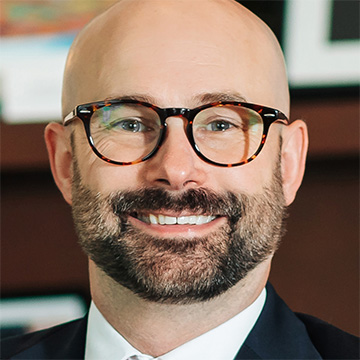 Mark E. Butt, Ed.D., is the Assistant Vice Provost and Executive Director of
share