
You must be logged in to view this content. Please login or learn more about joining AACRAO. If you have any questions or experience any issues logging in, please reach out to us at membership@aacrao.org.

/
/
Keep Running with Us: An Innovative Program at a Hispanic-Serving Institution Designed to Increase Graduate Enrollment of Hispanic/Latinx Students
Keep Running with Us: An Innovative Program at a Hispanic-Serving Institution Designed to Increase Graduate Enrollment of Hispanic/Latinx Students
Posted on
By
Article Abstract
Related Issue:
Article Type
Professional Proficiency
Author(s)
 Jeffrey Ragsdale, Ed.D., is the Assistant Vice Provost of Graduate Studies at
the University of Texas at San Antonio (UTSA). He and his team lead student
success initiatives involving DegreeWorks, Annual Review and IDP and the Bold
Doctoral Staged Orientation series. Together these three initiatives were
developed to remove barriers and demystify processes to degree completion.
Prior to this position, he served as assistant dean of the UTSA Graduate
School where he led the enrollment and recruitment strategies where, as part
of the leadership team, the Keep Running with Us program was created. He is a
three-time alum of the University of Texas with a bachelor’s degree in
humanities, master’s in educational leadership and policy studies with a
concentration in higher education administration, and received his Ed.D. in
educational leadership with a concentration in higher education.
 Maria Medrano, Ph.D., is the Director of Special Projects at the UTSA Graduate
School where she collaborates with campus partners seeking training grants
from various federal funding agencies. She also conducts research to develop
evidence-based programming for graduate students, especially as it relates to
wellbeing. Dr. Medrano obtained her Ph.D. in psychology from The University of
Texas at San Antonio (UTSA). She has been assisting prospective students from
diverse backgrounds in starting their graduate education journey in her role
at the Graduate School since August 2015, with a major focus on equitable
access to graduate education for underrepresented minority students. Her
research focuses on first-generation graduate students and their transition
from undergraduate programs from a socio-cultural perspective as well as
mental health.
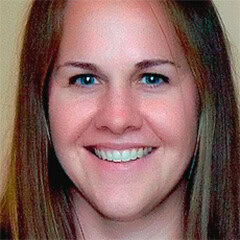 Rebecca Weston, Ph.D., is Associate Dean in The Graduate School and Associate
Professor of Psychology at the University of Texas at San Antonio (UTSA). She
received her Ph.D. in experimental psychology at the University of North
Texas, with specializations in interpersonal relationships and quantitative
methods. She has conducted research on relationships and partner violence for
more than 20 years. Her more recent research on graduate student success is an
outgrowth of her service as inaugural director of the Ph.D. program in
psychology at UTSA. After seeing firsthand what factors facilitate and impede
students’ successful degree completion and career placement, she was excited
to have the opportunity to directly impact graduate students’ success in her
role at The Graduate School working with a dedicated and passionate group on
implementing and evaluating initiatives such as Keep Running with Us, the
annual Graduate Student Well-Being Survey, and the Transdisciplinary Teams
Grand Challenge.
 Ambika Mathur, Ph.D., is Senior Vice Provost for Graduate and Postdoctoral
Studies and Graduate Dean at the University of Texas at San Antonio (UTSA).
Dr. Mathur received her doctoral degree from the University of Iowa and has
held faculty positions at the University of Minnesota and Wayne State
University. Dr. Mathur is deeply committed to the advancement of all aspects
of training for high school, undergraduate, medical, master’s, doctoral and
postdoctoral trainees. She has received more than $30 million in grant funding
by the National Institutes of Health (NIH), the National Science Foundation
(NSF), and several other agencies in support of her research and training
grants to advance diversity in graduate and postdoctoral education as well as
the workforce. Dr. Mathur has more than 400 research publications and
presentations in these areas.

share