

Commentary
I have been fortunate to participate in several technical review panels (TRPs) with the Department of Education. These engagements ask members of the higher education community to provide feedback on various topics. The materials for an upcoming TRP event entitled “Exploring Best Practices in Data Visualizations” included a link to a beta website called “College Map.” When I looked at this site, I said to myself in my best Spock voice and raised single eyebrow, “Fascinating,” and thought you would also find it interesting from a college search perspective. The site enables one to select institutional characteristics including majors, credential levels, in-state and out-of-state tuition and distance from a set location. The resulting map of the United States shows which institutions offer the degree and links to institutional web pages.
AACRAO Research Update
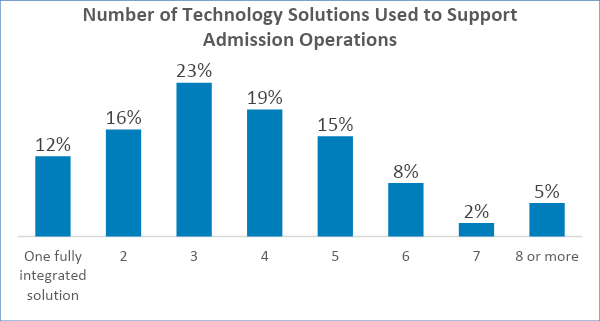
I am chugging away at the mountain of data from the admissions operations survey and have included another sneak preview of the results below. The following figure highlights that most admit decisions—whether admission to the institution or admission to a program/major—are made by a central office.
Complex technology is also a factor in admission operations. Just 12% have a single solution to support operations, and 5% have eight or more!
Current Higher Education Research and Related Topics
The Emerging Trend of Project-Based Internships
Annual Survey of Online Student Demands and Preferences
- More than 40% of students surveyed intend to have a lifelong relationship with their school
- 56% use a smartphone or tablet to complete coursework
- A growing number of online students choose institutions physically close to them, with 44% living within 25 miles of their school
- School selection is driven by reputation and the most influential sources of information
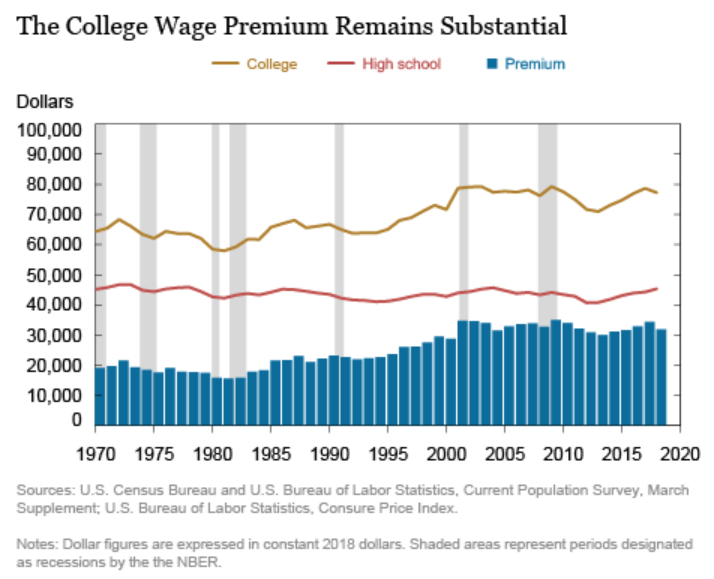
Study Shows College Education Continues to be a Sound Investment
- A typical college graduate earns a premium of more than $30,000, or nearly 75% compared to someone with only a high school diploma
- Rising college costs have made the rate of return on that investment dip in recent years, but that investment continues to perform far better than traditional financial investments
Research Offers Technology Recommendations for Community Colleges
- Access and ownership of technology
- Preferences in learning environments
- Issues related to accessible and adaptive technologies
- Online tools for student success
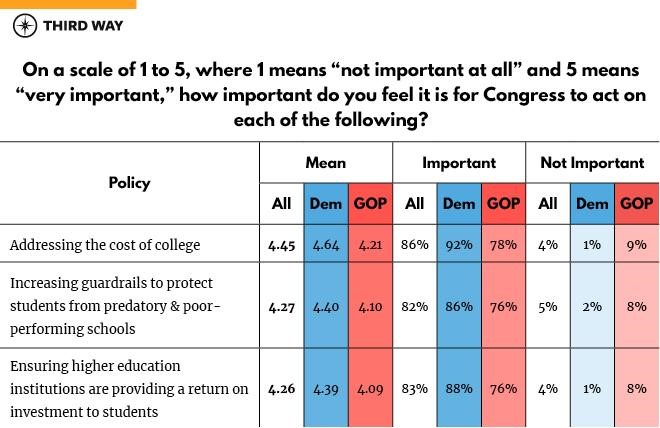
New Survey Examines Public and Political Views on Higher Education
- “College isn’t worth the costs anymore”
- “Democrats all think free college tuition is the most important thing to do”
- “Republicans want to remove Federal oversight of higher education”
- Large majorities of Americans across party lines believe that bachelor’s degrees, associate’s degrees, and career/technical training certificates are still valuable
- 93% of voters surveyed agreed that the skills required in the workplace today are changing, underscoring the value of higher education
- Significant majorities of both Democrats and Republicans believe higher education institutions have a responsibility to ensure a majority of students graduate
- Only 58% of voters surveyed said colleges are doing a “good” or “very good” job at providing students a return on their investment
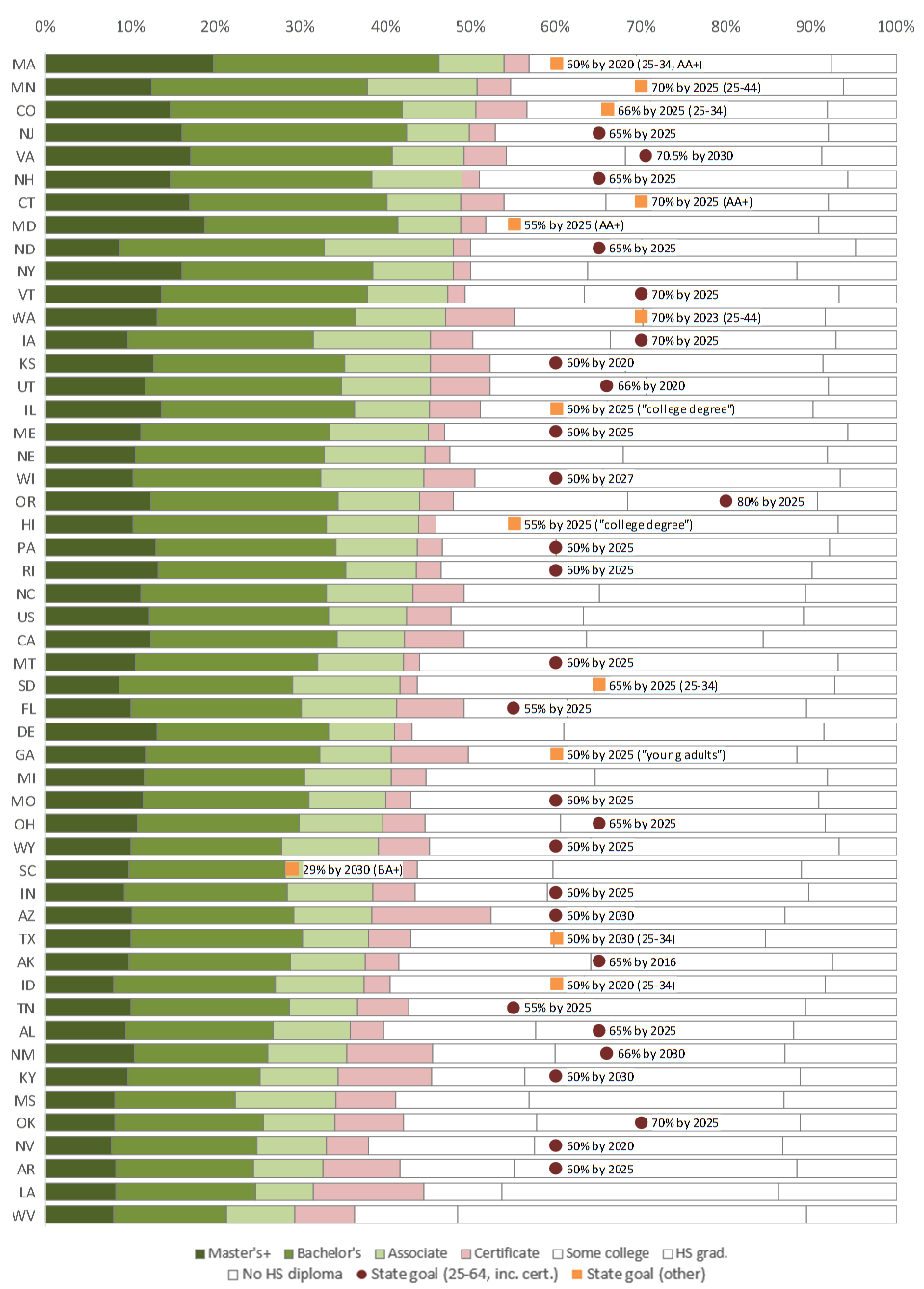
New Issue Brief discusses States’ Approaches to Achieving Attainment Goals
- While strategies vary among the states, such as focusing on K-12 or workforce certificates, the majority of emphasis is on bachelor’s degree attainment
- “Preliminary evidence suggests that many states may have difficulty meeting their goals”
- There are large attainment gaps based on race, and for these plans to be successful minority degree attainment must be enhanced
50-State Comparison on Financial Aid
- Nearly half of the 100 largest state financial aid programs are disbursed on the basis of financial need only
- 40% use merit-based criteria, or a combination of need and merit
- Among merit based programs, most policies specify a minimum GPA, with fewer using a a minimum SAT score or minimum ACT score
Cutting state appropriations for higher education reduces number of degrees awarded
- At a public research institution a 10% decrease in state appropriations leads to a 3.6% decrease in bachelor’s degrees awarded and a 7.2 percent decrease in Ph.D. degrees completed
- Cuts typically led to both a reduction in support services and instructional resources
- Non-research public universities were least able to replace lost state funding

share