Welcome to the new AACRAO website. While the site is live, development is ongoing, visitors can expect updates and new features in the weeks ahead.

You must be logged in to view this content. Please login or learn more about joining AACRAO. If you have any questions or experience any issues logging in, please reach out to us atmembership@aacrao.org.

Log In Join

Student retention in higher education is a primary indicator of institutional reputation, impacting factors such as national rankings, admissions selectivity, and alumni support (Lee, Sanford, and Lee 2014). Programs designed to support student success in the first year and beyond generally intersect with the institutional mission. Utilizing quantitative data, the University of Miami (UM) identified academically at-risk students and developed an intervention program to help them get back on track. UM positively affected retention rates for this population by eight percentage points over the past seven years. This study highlights the specific details of data analytics, program development, and both quantitative and qualitative outcomes for this student persistence initiative.

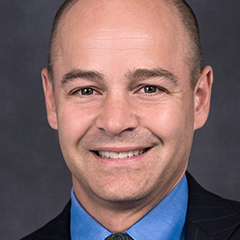
John Haller, Ed.D., is the Vice President of Enrollment
Management and New Student Strategies at the University of Miami. At Miami, he
led the movement from a largely merit-based to a hybrid merit- and need-based
financial aid strategy where 100 percent of financial need is met. Also, the
institution realized a 60 percent plus increase in applications and a 50
percent plus increase in yield. The institution realized a decrease in student
indebtedness and the highest freshman retention and six-year graduation rates
in university history. Previously, Haller served as the associate provost for
enrollment management at Saint Joseph’s University and worked in student
success at Drexel University, M.B.A. admissions at Vanderbilt University, and
undergraduate admissions at Denison University. He is an honors graduate in
economics and statistics from the University of Michigan, received master’s
degrees in business and higher education, and received is Ed.D. in higher
education from the University of Pennsylvania.

Darby Plummer began her higher education career in 2008 at
the University of Miami, dedicated to creating and managing retention and
graduation efforts for undergraduate students. Currently, as Executive
Director of Student Success and First Year Foundations, Ms. Plummer leads the
‘Cane Success Center and is responsible for a number of campus-wide retention
initiatives. Her leadership has been instrumental in helping achieve the
highest retention and graduation rate in university history.

Plummer was selected to the Golden Key International Honor Society and has
presented on best practices in student success at the College Board Forum, the
National Conference on Students in Transition, and the AACRAO Annual Meeting.

Plummer received her master’s degree in leadership from the University of
Miami Herbert Business School and her bachelor’s degree in psychology from the
University of North Carolina at Chapel Hill.

Alalwan, N., W. M. Al-Rahmi, O. Alfarraj, A. Alzahrani, N. Yahaya, and A. M. Al-Rahmi. 2019. Integrated three theories to develop a model of factors affecting students’ academic performance in higher education. IEEE Access. 7: 98725–98742.

Bloom, B. S. 1976. Human Characteristics and School Learning. McGraw-Hill.

Calvo, C. 2023. Retention Report for Fall 2022 Cohort Students. Miami: University of Miami, Institutional Research and Strategic Analytics.

Drake, J. K. 2011. The role of academic advising in student retention and persistence. About Campus. 16(3): 8–12.

Eisenberg, D., E. Golberstein, and J. B. Hunt. 2009. Mental health and academic success in college. The B .E. Journal of Economic Analysis & Policy. 9(1).

Fowler, P. R. 2010. Increasing student success and retention: A multidimensional approach. Journal of Developmental Education. 34(2): 2.

Lee, G., T. Sanford, and J. Lee. 2014. Variables that explain changes in institutional rank in U.S. News & World Report rankings. Journal of Education Policy. 11(1): 27–47.

National Center for Education Statistics. 2020. Undergraduate retention and graduation rates. Condition of Education 2020. Washington, D.C.: Author.

National Student Clearinghouse Research Center. 2022. Persistence and Retention: Fall 2020 Beginning Postsecondary Student Cohort. Herndon, VA: Author.

NCES. See National Center for Education Statistics.

NSC. See National Student Clearinghouse Research Center.

Nurdin, N., A. Askar, and A. Adawiyah. 2021. Understanding students’ psychological distress compliants through online academic advising support. Medico-legal Update. 21(3): 162–167.

Tinto, V. 1990. Principles of effective retention. Journal of The Freshman Year Experience. 2(1): 35–48.

U. S. News & World Report. 2012. U. S. News best colleges.

University of Miami. 2021. Fact Book. Coral Gables, FL: Author.

Whitley, C. T., B. Takahashi, A. Zwickle, J. C. Besley, and A. P. Lertpratchya. 2018. Sustainability behaviors among college students: An application of the VBN theory. Environmental Education Reserach. 24(2): 245–262.

Related Posts