
Welcome to the new AACRAO website. While the site is live, development is ongoing, visitors can expect updates and new features in the weeks ahead.

You must be logged in to view this content. Please login or learn more about joining AACRAO. If you have any questions or experience any issues logging in, please reach out to us atmembership@aacrao.org.

Log In Join

Eleven North Carolina community colleges took part in the Minority Male Success Initiative (MMSI), a study designed to improve minority male student outcomes. MMSI had two main components—success coaching and a technology-based retention solution from Watermark called “Student Success & Engagement.” These two components, what we refer to as “technology-enabled success coaching,” paired the individual attention of success coaches with the insights provided through automated student success and engagement tools. Designed as a longitudinal cohort study, the study compared course completion and persistence rates of minority males in participating cohorts in contrast to cohorts observed historically. Results suggest that the use of dedicated success coaches and a technology-based retention solution improves the course completion and persistence rates of minority male students, especially at those institutions that maintained consistent coaches for each student and were highly engaged with the software. These results have important implications for how all colleges can improve minority males in participating cohorts in contrast to cohorts observed historically.

bell-b--smBryan Bell, previously the Head of Data Science at Watermark Insights. He applied his skills in mathematics and
statistics toward better understanding and acting upon the characteristics and behaviors that describe student
outcomes in higher education. Bell earned his bachelor’s degree in pure mathematics from Franklin College and a
master’s degree in statistics from Miami University.
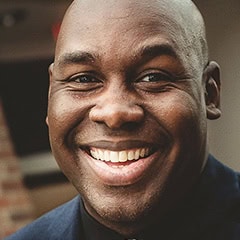
evans-j--smJohn “JJ” Evans, Ph.D., currently serves as the Associate Director of Student Life for the North Carolina Community College System. In his role, his work centers around issues of diversity, equity, inclusion, belonging, leadership, campus engagement, and student retention. He received his Ph.D. in educational research and policy analysis with a concentration in adult and community college education from North Carolina State University, a M.Ed. in counseling education with a concentration in student affairs from Clemson University, and a B.A. in elementary education from Clemson University. Dr. Evans’s research interests include leadership, student retention and completion, and transfer students.

taynor-h--smHeather Taynor currently serves as the Vice President for Customer Experience at Watermark and has been with Aviso
Retention—now Watermark Student Success & Engagement—since 2012. Taynor supports the overall customer experience
through internal cross-departmental support and external customer advocacy. She is a trusted advisor to the
Watermark customers providing subject matter expertise within higher education specializing in strategic enrollment
management and student success. Prior to Watermark, Taynor worked in higher education for fourteen years at colleges
and universities, both two-year and four-year, leading enrollment management and student success teams to help
recruit, enroll and retain students.

Bettinger, E. P., and R. B. Baker. 2014. The effects of student coaching: An evaluation of a randomized
experiment in student advising. Educational Evaluation and Policy Analysis. 36(1): 3–19.

Chen, G. 2022. As
community colleges set budgets, tough decisions must be made
. Community College Review (blog).
May 3.

Community College Research Center. 2022. Public Funding
of Community Colleges
. New York: Author.

Evans, W. N., M. S. Kearney, B. Perry, and J. X. Sullivan. 2020. Increasing community college completion rates
among low-income students: Evidence from a randomized controlled trial evaluation of a case-management
intervention. Journal of Policy Analysis and Management. 39(4): 930–965.

Kasper, L., D. Walleser, and K. Waters. 2020. Influencing the mindset of high-risk students early in the college
experience. Strategic Enrollment Management Quarterly. 8(3): 11–19.

Monaghan, D., T. Kolbe, and S. Goldrick-Rab. 2018. Experimental evidence on interventions to improve educational
attainment at community colleges. In Handbook of the Sociology of Education in the 21st Century, edited
by B. Schneider. Cham, Switzerland: Springer International Publishing.

myFutureNC. 2021. North
Carolina Postsecondary Completion Rate: 2-Year Public
. Raleigh, NC: Author.

National Center for Education Statistics. 2021. Table 6: Unduplicated headcount enrollment and
percentage distribution at Title IV institutions, by control of institution, student level, level of
institution, gender, and other selected characteristics: United States, 2020–21
. InIPEDS Data Explorer. Washington, D.C.: Author.

National Center for Education Statistic. 2022. Table 1. Graduation rates within 150 percent of
normal program completion time at Title IV institutions among students who started as full-time, first-time
degree/certificate-seeking undergraduate students, by race/ethnicity, level and control of institution, and
gender: United States, cohort years 2015 and 2018
. In IPEDS Data Explorer. Washington, D.C.:
Author.

NCES. See National Center for Education Statistics.

Price, D. V., J. L. Valentine, and A. Leader. 2021. Success coaching impact on retention for community college
students. Strategic Enrollment Management Quarterly. 9(3): 3–10.

Scrivener, S., and M. J. Weiss. 2009. Opening
Doors: More Guidance, Better Results? Three-Year Effects of an Enhanced Student Services Program at Two
Community Colleges
. New York: MDRC.

Yuen, V. 2020. The $78
Billion Community College Funding Shortfall
. Washington, D.C.: The Center for American
Progress.

  1. Alamance Community College, Carteret Community
    College, James Sprunt Community College, Lenoir Community College, Montgomery Community College, Nash
    Community College, Piedmont Community College, Roanoke Chowan Community College, Robeson Community
    College, Sampson Community College, Western Piedmont Community College

Related Posts