Welcome to the new AACRAO website. While the site is live, development is ongoing, visitors can expect updates and new features in the weeks ahead.

You must be logged in to view this content. Please login or learn more about joining AACRAO. If you have any questions or experience any issues logging in, please reach out to us atmembership@aacrao.org.

Log In Join

The Saint Mary’s University first-year student success program was developed by its strategic enrollment management (SEM) group to enhance support for first-year students. As an integrated program that implements student success modules into the first-year core curriculum, this initiative has proven to be effective in enhancing student engagement through the introduction of topics such as time management and effective study strategies (Tabvuma, et al. 2021). This article aims to raise awareness to both prospective social learning participants and higher education SEM-related leadership on the value that social learning approaches had in supporting the curriculum development and delivery of this unique campus-wide first-year program initiative. As an ontological backdrop, the group utilized Wenger-Trayner and Wenger-Trayner’s (2014) “Learning in a Landscape of Practice” framework as a reflective lens to offer unique perspectives on how members navigated three modes of identity (engagement, imagination, and alignment) throughout their shared practice, including strategies and challenges in such areas as student engagement, interdisciplinary meetings, and shared group activities. A discussion on achieving intended outcomes and challenges moving forward is offered as part of an evaluative self-analysis for this learning community and its implications on this first-year student success program initiative.

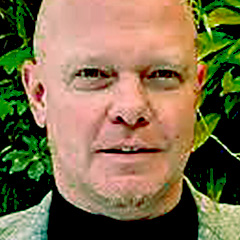
kay-d-w--smD. William Kay manages academic program development and review at Saint Mary’s
University. He received his B.A. (1994) from the University of Toronto and his
M.A. (2010) from Macquarie University, Sydney Australia, and his Ed.D. (2018)
from the University of Calgary. Kay has more than 20 years of teaching
experience in adult education, and his current research interests are focused
on educational leadership and social learning theories.
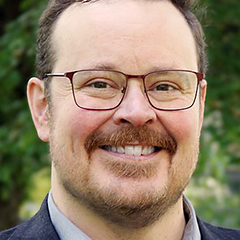
Steven Smith is a Professor of Psychology and the former associate
vice-president academic & enrollment management at SMU and former dean of
science. Smith received his B.A. (1995) from Bishop’s University and his M.A.
(1997) and Ph.D. (2000) from Queen’s University. As AVP, Smith led the
strategic enrollment management program at SMU. He has published in journals
such as Journal of Personality and Social Psychology,
Law and Human Behavior,
Vaccine, Personality and Social Psychology Bulletin, and
Journal of Applied Psychology.
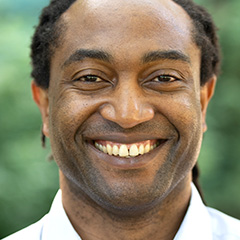
tabvuma-v--smVurain Tabvuma is the Sobey Professor in Management and an Associate Professor
in the Sobey School of Business at Saint Mary’s University. Tabvuma’s research
focuses on intrinsic motivation, employee and student onboarding, job
satisfaction, organizational change, adaptation, student success, public
service motivation, and pro-social motivation. His research has been funded by
the Social Sciences and Humanities Research Council of Canada, the British
Academy, The Research Fund for International Young Scientists under the
National Natural Science Foundation of China, and the David Sobey Centre for
Innovation in Retailing and Services.
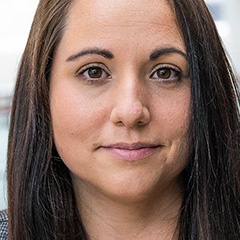
carter-rogers-k--smKatelynn Carter-Rogers is an Assistant Professor at St. Francis Xavier
University in the Gerald Schwartz School of Business, in Indigenous Business.
Carter-Rogers is a highly skilled social science researcher and consultant
with a decade of experience in advanced statistics, research design,
transition intervention and success, and attitudes measurement. For a decade,
she has been involved in research focused on barriers to success, criminal
records and hiring decisions, interventions leading to successful transitions,
and creating and evaluating inclusive practices within organizations for
individuals who are from marginalized populations. Carter-Rogers is Red River
Métis and has spent the last several decades reconnecting and learning what it
means for her and her family to be Indigenous. She has multiple publications
on student success, with a particular focus on supporting at-risk populations.
She is actively working on several project topics including Merit in Higher
Education, EDIA interventions within organizations, hiring and selection of
minorities with criminal records, as well as reconnecting and learning
Indigenous Methodologies applicable to social sciences and business education.

Arthur, L. 2016. Communities of practice in higher education: Professional
learning in an academic career.
International Journal for Academic Development. 21(3): 230–241.

Cox, M. D. 2004. Introduction to faculty learning communities.
New Directions for Teaching and Learning. 2004(97): 5–23.

Cuevas, M., K. Campbell, R. D. Lowery-Hart, J. Mallard, and A. Andersen.
2013. Using faculty learning communities to link FYE and high-risk core
courses: A pilot study.
Learning Communities: Research & Practice. 1(1): 8.

Daly, C. J. 2011. Faculty learning communities: Addressing the professional
development needs of faculty and the learning needs of students.
Currents in Teaching & Learning. 4(1).

Feldman, R. S., and D. Lavoie. 2011.
POWER Learning and Your Life: Essentials of Student Success (3rd
edition). New York: McGraw-Hill.

Gauthier, L. 2016. Redesigning for student success: Cultivating communities
of practice in a higher education classroom.
Journal of the Scholarship of Teaching and Learning. 16(2): 1–13.

Gordon, L., and T. Foutz. 2015. Navigating the first-year program: Exploring
new waters in a faculty learning community.
International Journal of Teaching and Learning in Higher Education.
27(1): 81–93.

Heath, M., and T. Leiman. 2017. Choosing change: Using a community of
practice model to support curriculum reform and improve teaching quality in
the first year. In
Implementing Communities of Practice in Higher Education: Dreamers and
Schemers
, edited by J. McDonald and A. Cater-Steel. Springer Singapore.

Hezemans, M., and M. Ritzen. 2005. Communities of practice in higher
education. In
Information and Communication Technologies and Real-Life Learning: New
Education for the Knowledge Society
, edited by T. Weert and A. Tatnall. New York: Springer.

Hodson, N. 2020. Landscapes of practice in medical education.
Medical Education. 54(6): 504–509.

Hooper, D. 2023. Becoming the paths we tread: Negotiating identity through
an ideological landscape of practice. In
Discourses of Identity: Language Learning, Teaching, and Reclamation
Perspectives in Japan
, edited by M. Mielick, R. Kubota, and L. Lawrence. Cham, Switzerland:
Palgrave Macmillan.

Kensington-Miller, B., A. Webb, A. Gansemer-Topf, H. Lewis, J. Luu, G.
Maheux-Pelletier, and A. Hofmann. 2021. Brokering boundary crossings through
the SoTL landscape of practice. Teaching and Learning Inquiry.
9(1): 365–379.

McDonald, J., and A. Cater-Steel. 2016.
Implementing Communities of Practice in Higher Education: Dreamers and
Schemers
. New York: Springer.

Macleans. 2022.
Canada’s Best Primarily Undergraduate Universities: Rankings 2023.

Mohammadi-Aragh, M. J., and R.L. Kajfez. 2015.
Comparing Common and Discipline-Specific First-Year Engineering Programs:
Examining the Need and Explaining the Study
. 2015 IEEE Frontiers in Education Conference, El Paso, TX.

Pharo, E., A. Davison, H. McGregor, K. Warr, and P. Brown. 2014. Using
communities of practice to enhance interdisciplinary teaching: Lessons from
four Australian institutions.
Higher Education Research & Development. 33(2): 341–354.

Sadiq, K. 2021. Communities of practice as a multidisciplinary response in
times of crisis: Adapting to successful online learning practices.
Accounting Research Journal. 34(2): 134–145.

Sanches, T., C. Duarte, M. Batista, and J. P. Miranda. 2022.
Lessons, Discoveries, Challenges, and Results in an Interdisciplinary
Learning Community of Higher Education Teachers
. 14th International Conference on Education and New Learning Technologies,
Palma, Spain.

Sherer, P. D., T. P. Shea, and E. Kristensen. 2003. Online communities of
practice: A catalyst for faculty development.
Innovative Higher Education. 27: 183–194.

Stevenson, C. B., R. L. Duran, K. A. Barrett, and G. C. Colarulli. 2005.
Fostering faculty collaboration in learning communities: A developmental
approach. Innovative Higher Education. 30: 23–36.

Tabvuma, V., K. Carter-Rogers, T. Brophy, S. M. Smith, S. Sutherland, S.,
and W. Kay. 2023. An experimental study of the impact of co-curricular
first-year experience programming.
Journal of College Orientation Transition and Retention. 30(1).

Tabvuma, V., K. Carter-Rogers, T. Brophy, S. M. Smith, and S. Sutherland.
2021. Transitioning from in person to online learning during a pandemic: An experimental study of the impact of time management training. Higher Education Research & Development. 41(7): 2441–2457.

Terry, L., M. Zafonte, and S. Elliott. 2018. Interdisciplinary professional
learning communities: Support for faculty teaching blended learning.
International Journal of Teaching and Learning in Higher Education.
30(3): 402–411.

Warr Pedersen, K. 2017. Supporting collaborative and continuing professional
development in education for sustainability through a communities of
practice approach.
International Journal of Sustainability in Higher Education. 18(5):
681–696.

Wenger, E., B. Trayner, and M. De Laat. 2011.
Promoting and Assessing Value Creation in Communities and Networks: A
Conceptual Framework
. The Netherlands: Ruud de Moor Centrum

Wenger-Trayner, E., and B. Wenger-Trayner. 2014. Learning in a landscape of
practice: A framework. In Learning in Landscapes of Practice,
edited by E. Wenger-Trayner, M. Fenton-O’Creevy, S. Hutchinson, C. Kubiak,
and B. Wenger-Trayner. London: Routledge.

Related Posts