
Welcome to the new AACRAO website. While the site is live, development is ongoing, visitors can expect updates and new features in the weeks ahead.

You must be logged in to view this content. Please login or learn more about joining AACRAO. If you have any questions or experience any issues logging in, please reach out to us atmembership@aacrao.org.

Log In Join

This quantitative study investigates the relationship between academic advising frequency, free college scholarships (FCS), and student persistence in a statewide community college system. Using data from more than 34,000 students, the study examines how frequent advising and FCS participation influence persistence, with particular attention to race and enrollment status. Results show that students who attended multiple advising sessions were 3.68 times more likely to persist than those without advising. Additionally, FCS recipients were 2.59 times more likely to persist than non-recipients. The combined effect of frequent advising and FCS acceptance resulted in the highest persistence rates. Race-based analysis revealed disparities, with Black and Hispanic/Latino students starting with lower persistence rates but showing significant gains from increased advising. The study highlights the importance of proactive advising and financial aid programs in supporting student success, particularly for underrecognized populations, and provides evidence-based recommendations for improving equity in community colleges.

Michael Goemans, Ed.D., Director of Student Success Technology at Connecticut
State Community College, leads initiatives to enhance student advising,
enrollment management, and persistence through data-informed strategies. He
earned his Doctorate in Educational Leadership for Social Justice from the
University of Hartford, where his dissertation examined the impact of academic
advising frequency on student success in community colleges. His research
interests include persistence, retention, holistic student support, and the
role of technology in advancing equitable outcomes. Dr. Goemans has
contributed to scholarship on community college student success and serves as
a reviewer for the Journal of Applied Research in Community Colleges and
NACADA’s Academic Advising Today. He brings over a decade of experience in
higher education, including teaching, research, and administrative leadership.

Brian Kapinos, Ed.D., Interim Executive Director of Advising Strategy and
Outcomes at Connecticut State Community College, is a higher education
researcher and administrator specializing in student success initiatives and
institutional effectiveness. His work focuses on data-driven decision-making
to improve student persistence, advising practices, and holistic support
services. Dr. Kapinos has collaborated on research examining the impact of
advising frequency on student outcomes and advising systems, middle
management, and the coordination of advising services within community
colleges, contributing to the development of scalable student support models
at Connecticut State Community College.
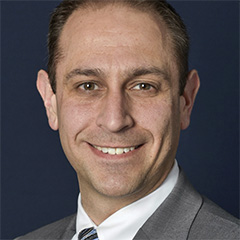
Steven McDowell, FAAC®, Associate Vice President for Financial Aid Services
& Title IV Compliance at Connecticut State Community College, is a higher
education leader specializing in financial aid policy, strategic enrollment
management, and student success. He has more than 20 years of experience in
financial aid, working across enrollment management teams and serving on
numerous state and local boards dedicated to college access and affordability.
McDowell is the author of multiple publications related to financial aid
compliance and its role in enrollment strategy, including
Basic Guide to Financial Aid. His research and strategic planning
work focus on advancing enrollment, retention, and persistence goals across
community colleges.

Bahr, P. R. 2008. Cooling out in the community college: What is the effect of academic advising on students’ chances of success? Research in Higher Education. 49: 704–732.

Bettinger, E. P., and R. B. Baker. 2014. The effects of student coaching: An evaluation of a randomized experiment in student advising. Educational Evaluation and Policy Analysis. 36(1): 3–19.

Buchanan, L. E., and K. B. Wilson. 2017. Free community college and merit scholarships. New Directions for Community Colleges. 180: 67–74.

Chen, J., and D. Hossler. 2017. The effects of financial aid on college success of two-year beginning nontraditional students. Research in Higher Education. 58(1): 40–76.

Chiteng Kot, F. 2014. The impact of centralized advising on first-year academic performance and second-year enrollment behavior. Research in Higher Education. 55(6): 527–563.

Davidson, C. T., D. T. Ashby-King, and L. J. Sciulli. 2018. The higher education funding revolution: An exploration of statewide community college ‘free tuition’ programs. Community College Journal of Research and Practice. 44(2): 117–132.

Denning, J. T. 2017. College on the cheap: Consequences of community college tuition reductions. American Economic Journal: Economic Policy. 9(2): 155–188.

Donaldson, P., L. McKinney, M. Lee, and D. Pino. 2016. First-year community college students’ perceptions of and attitudes toward intrusive academic advising. NACADA Journal. 36(1): 30–42.

Fosnacht, K., A. C. McCormick, J. N. Nailos, and A. K. Ribera. 2017. Frequency of first-year student interactions with advisors. NACADA Journal. 37(1): 74–86.

Goemans, M., and B. Kapinos. 2024. A quantitative study of community college student-advisor appointments and student success metrics. NACADA Journal. 44(1): 38–54.

Hawthorne, M. J., A. Zhang, and A. Cooper. 2022. Advising undergraduate students: An exploration of how academic advising impacts student success. Research in Higher Education Journal. 41: 1–10.

Karp, M., S. Ackerson, I. Cheng, E. Cocatre-Zilgien, S. Costelloe, B. Freeman, S. Lemire, D. Linderman, B. McFarlane, S. Moulton, J. O’Shea, A. Porowski, and L. Richburg-Hayes. 2021. Effective Advising for Postsecondary Students: A Practice Guide for Educators (WWC 2022003). Washington, D. C.: National Center for Education Evaluation and Regional Assistance (NCEE), Institute of Education Sciences, U. S. Department of Education.

Klepfer, K., and J. Hull. 2012. High School Rigor and Good Advice: Setting Up Students to Succeed. Alexandria, VA: Center for Public Education, National School Boards Association.

Luna-Torres, M., L. McKinney, A. Burridge, C. Horn, and S. J. Jones. 2019. Financial aid packaging at community colleges: Which types of awards packages increase student persistence? Journal of Student Financial Aid. 49(1).

McKinney, L., and A. B. Burridge. 2015. Helping or hindering? The effects of loans on community college student persistence. Research in Higher Education. 56(4): 299–324.

Mendoza, P., J. P. Mendez, and Z. Malcolm. 2009. Financial aid and persistence in community colleges: Assessing the effectiveness of federal and state financial aid programs in Oklahoma. Community College Review. 37(2): 112–135.

Museus, S. D. 2021. Revisiting the role of academic advising in equitably serving diverse college students. NACADA Journal. 41(1): 26–32.

National Association of State Student Grant & Aid Programs. 2025. NASSGAP Annual Survey: Grant Aid 1974 to 2023.

Swecker, H. K., M. Fifolt, and L. Searby. 2013. Academic advising and first-generation college students: A quantitative study on student retention. NACADA Journal. 33(1): 46–53.

Troxel, W. G., S. Bridgen, C. Hutt, and K. A. Sullivan-Vance. 2021. Transformations in academic advising as a profession. New Directions for Higher Education. 2021(195–196): 23–33.

U. S. Department of Education. 2025. Community College Facts at a Glance. Washington, D. C.: Author.

Related Posts