Achieve. 2015. Integrating Earning College Credit in High School into Accountability Systems. Washington, D.C.: Author.
Allen, D., and M. Dadgar. 2012. Does dual enrollment increase students’ success in college? Evidence from a quasi-experimental analysis of dual enrollment in New York City. New Directions for Higher Education. 158: 11–19.
Allison, K. 2015. Dual enrollment participation from the student perspective. Community College Journal of Research and Practice. 39(1): 59–70.
Astin, A.W. 1985. Achieving Educational Excellence. San Francisco: Jossey-Bass.
Baumeister, R. F., and M. R. Leary. 1995. The need to belong: desire for interpersonal attachments as a fundamental human motivation. Psychological Bulletin. 117(3): 497–529.
Bean, J., and S. Eaton. 2000. A psychological model of college student retention. In Rethinking the Departure Puzzle: New Theory and Research on College Student Retention, edited by J. Braxton. Nashville: Vanderbilt University Press.
Boysen, G., D. Vogel, M. Cope, and A. Hubbard. 2009. Incidents of bias in college classrooms: Instructor and student perceptions. Journal of Diversity in Higher Education. 2(4): 219–231.
Brazzell, J. C. 2001. A sense of belonging. About Campus. January-February.
CCRC. See Community College Research Center.
College in High School Alliance. n.d.a. Evidence of Success. Washington, D.C.: Author.
College in High School Alliance. n.d.b. Recommendations for the Biden-Harris Administration to Support Dual Enrollment, Concurrent Enrollment & Early College High Schools. Washington, D.C.: Author.
College of Southern Idaho. n.d. Common Data Set 2020–2021. Twin Falls, ID: Author.
Community College Research Center. n.d. Community College Enrollment and Completion. How Many Students are Enrolled in Community Colleges? New York: Author.
Community College Research Center. 2012. What We Know About Dual Enrollment: Research Overview. New York: Author.
Creswell, J. W. 2014. Research Design: Qualitative, Quantitative, and Mixed Methods Approaches (4th edition). Thousand Oaks, CA: SAGE Publications.
Creswell, J. W., and C. N. Poth. 2018. Qualitative Inquiry and Research Design: Choosing Among Five Approaches (4th edition). Thousand Oaks, CA: SAGE Publications.
Drury, R. L. 2003. Community colleges in America: A historical perspective. Inquiry. 8(1).
Eden, M. 2020. Advanced Opportunities: How Idaho is Reshaping High Schools by Empowering Students. New York: Manhattan Institute.
Field, K. 2021. The benefits of dual enrollment programs for high school students. Journal of Higher Education. 92(3): 345–362.
Freeman, T., L. Anderman, and J. Jensen. 2007. Sense of belonging in college freshman at the classroom and campus levels. The Journal of Experimental Education. 75(3): 203–220.
Giorgi, A. 2009. The Descriptive Phenomenological Method in Psychology: A Modified Husserlian Approach. Pittsburgh: Duquesne University Press.
Gopalan, M., and S. Brady. 2020. College students’ sense of belonging: A national perspective. Educational Researcher. 49(2): 134–137.
Grant, K. 2019. The Development of Concurrent Enrollment at the University of Connecticut. Storrs, CT: University of Connecticut.
Hurtado, S., and D. F. Carter. 1997. Effects of college transition and perceptions of the campus racial climate on Latino college students’ sense of belonging. Sociology of Education. 70(4): 324–345.
Idaho Education News. 2012. Program aims to accelerate students’ academic progress.
Idaho State Board of Education. 2019. Fact Book 2019. Boise, ID: Author.
Idaho State Board of Education. 2020. Dual Credit in Idaho’s Public Postsecondary Institutions: 2019. Boise, ID: Author.
Idaho State Board of Education. 2021. Annual Report on Idaho’s High School Graduates: 2021 Data. Boise, ID: Author.
Idaho State Board of Education. 2022a. Decreases in Enrollment after COVID-19. Boise, ID: Author.
Idaho State Board of Education. 2022b. Special Report. 2022 College-Going Behavior Series. Part 1: Postsecondary Enrollment by Educational Region. Boise, ID: Author.
Idaho State Department of Education. n.d. Student Opportunities Assistance Program. Boise, ID: Author.
Idaho State Department of Education. 2021a. Idaho District and Charter School Regional Map. Boise, ID: Author.
Idaho State Department of Education. 2021b. Advanced Opportunities Annual Totals FY 2021. Boise, ID: Author.
Idaho State Department of Education. 2024. Advanced Opportunities Public School Student Handbook. Boise, ID: Author.
Idaho State Legislature. 1998. ID Code § 33–5109: Postsecondary Enrollment Options. Boise, ID: Author.
Idaho State Legislature. 2016. ID Code § 33–4602: Advanced Opportunities. Boise, ID: Author.
Idaho Statutes. 2014. § 33–1628. 2013. “8 in 6 program.” Mountain View, CA: Justia.
Joyner, R. L., W. A. Rouse, and A. A. Glatthorn. 2018. Writing the Winning Thesis or Dissertation: A Step-by-Step Guide. Thousand Oaks, CA: Corwin Press.
Kisker, C. B., A. M. Cohen, and F. B. Brawer. 2023. The American Community College (7th edition). Hoboken, NJ: Wiley.
Laude, B. 2018. Idaho Dual Credit Evaluation. Boise, ID: Idaho State Board of Education.
Lewis, M., S. Sharp, J. Remnant, and M. Redmond. 2016. Belonging and Inclusion in Higher Education: A Practical Guide for Staff and Students. New York: Routledge.
Maslow, A. 1954. Motivation and Personality. New York: Harper & Row.
McMillan, D. W., and D.M. Chavis. 1986. Sense of community: A definition and theory. Journal of Community Psychology. 14: 6–23.
Merriam, S. B., and E. J. Tisdell. 2016. Qualitative Research: A Guide to Design and Implementation. Hoboken, NJ: Wiley.
Moustakas, C. 1994. Phenomenological Research Methods. Thousand Oaks, CA: Sage.
Museus, S. D. 2014. The culturally engaging campus environments (CECE) model: A new theory of college success among racially diverse student populations. In Higher Education: Handbook of Theory and Research (volume 29), edited by M. B. Paulsen7. New York: Springer.
NACEP. See National Alliance of Concurrent Enrollment Partnerships.
Nakajima, S., M. Ito, D. Fujisawa, M. Miyashita, Y. Kim, M. K. Shear, A. Ghesquiere, and M. M. Wall. 2012. Brief measure for screening complicated grief: Reliability and discriminant validity. PLoS ONE. 7(2): Article e31209.
National Alliance of Concurrent Enrollment Partnerships. n.d. Who We Are. Chapel Hill, NC: Author.
National Alliance of Concurrent Enrollment Partnerships. 2013. Fast Facts: Dual and Concurrent Enrollment Programs. Chapel Hill, NC: Author.
National Center for Education Statistics. 2024. The Total Number of Higher Education Institutions Decreases by 2 Percent. Washington, D.C.: Author.
NCES. See National Center for Education Statistics.
Patton, M. Q. 2002. Qualitative Evaluation and Research Methods (3rd edition). Thousand Oaks, CA: Sage Publications.
Ravitch, S., and N. M. Carl. 2016. Qualitative Research: Bridging the Conceptual, Theoretical, and Methodological. Thousand Oaks, CA: Sage Publications.
Richert. K. 2020. Analysis: Dual credit — and a point of diminishing returns. Idaho Education News. January 30.
Rosenberg, M., and B. C. McCullough. 1981. Mattering: Inferred significance and mental health among adolescents. Research in Community & Mental Health. 2: 163–182.
Roughton, D. M. 2016. The relationship between course delivery mode and location with student outcomes in dual enrollment programs. Journal of College Student Retention: Research, Theory & Practice. 18(2): 123–145.
Roy, M. J. 2016. How the little college in Storrs became a state university. UConn Today. July 1.
Schlossberg, N. K. 1989. Marginality and mattering: Key issues in building community. New Directions for Student Services. 1989(48): 5–15.
Shivji, A., and S. Wilson. 2019. Data Point: Dual Enrollment: Participation and Characteristics (NCES Publication No. 2019–176). Washington, D.C.: National Center for Education Statistics.
Strayhorn, T. L. 2012. College Students’ Sense of Belonging: A Key to Educational Success for All Students. New York: Routledge.
Strayhorn, T. L.. 2019. College Students’ Sense of Belonging: A Key to Educational Success for All Students (2nd edition). New York: Routledge.
Tinto, V. 1993. Leaving College: Rethinking the Causes and Cures of Student Attrition (2nd edition). Chicago: University of Chicago Press.
Tinto, V. 1997. Classrooms as communities: Exploring the educational character of student persistence. The Journal of Higher Education. 68(6): 599–623.
Tinto, V. 2017. Through the eyes of students. Journal of College Student Retention: Research, Theory & Practice. 19(3): 254–269.
Tinto, V., and A. Goodsell. 1993. A Longitudinal Study of Freshman Interest Groups at the University of Washington. University Park, PA: National Center for Postsecondary Teaching, Learning and Assessment.
U.S. Department of Education. n.d. HSI. Washington, D.C.: Author.
van Manen, M. 2016. Phenomenology of Practice: Meaning-Giving Methods in Phenomenological Research and Writing. New York: Routledge.
Walton, G. M., and G. L. Cohen. 2007. A question of belonging: Race, social fit, and achievement. Journal of Personality and Social Psychology. 92(1): 82.
Western Interstate Commission for Higher Education. 2021. Evaluation of Idaho’s Dual Credit Funding Through Advanced Opportunities. Boulder, CO: Author.
WGU Labs. 2022. Building belonging with InScribe at Rio Salado College: CIN Evaluation and Impact Report. Salt Lake City, UT: Author.
What Works Clearinghouse. 2017. Transition to College Intervention Report: Dual Enrollment Programs. Washington, D.C.: Institute of Education Sciences, U.S. Department of Education.
WICHE. See Western Interstate Commission for Higher Education.
WWC. See What Works Clearinghouse.
Young, R. D., Jr., J. R. Slate, G. W. Moore, and W. Barnes. 2014. Dual credit programs: A conceptual analysis of the literature. Urban Education. 49(3): 282–311.


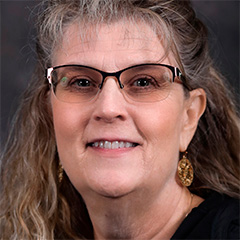 Polly Hulsey, Ed.D., has served as a Grant Administrator and is currently the
share