Welcome to the new AACRAO website. While the site is live, development is ongoing, visitors can expect updates and new features in the weeks ahead.

You must be logged in to view this content. Please login or learn more about joining AACRAO. If you have any questions or experience any issues logging in, please reach out to us atmembership@aacrao.org.

Log In Join

This article explores the intersection of diversity, equity, inclusion, and belonging (DEIB) work and strategic enrollment management (SEM), provides an overview of Central Oregon Community College’s college preparation programs and data on their success, and offers guidance for those wanting to engage in this critical work.

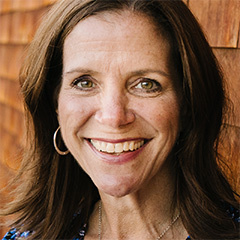
Alicia Moore is the Vice President of Student Affairs for Central Oregon
Community College, with oversight for Enrollment Services, Student Life,
Diversity and Inclusion, Student Technologies, and Institutional Efficiency,
among other areas. She has more than 25 years of experience in higher
education, including admissions, marketing, advertising, publication design
and writing. In addition, Moore serves as an AACRAO senior consultant, helping
institutions develop strategic plans, to include vision, mission, values and
goals, as well as student success plans focused on student recruitment,
persistence, and completion strategies. Alicia earned her Ph.D. in education
from Oregon State University, has her master’s degree in student personnel
administration from Colorado State University, and a bachelor’s degree in
communications and Spanish from Willamette University.

Christy Walker is the Dean of Equity & Well-Being at Central Oregon
Community College. Her professional background includes administrative and
leadership positions within the office of diversity and inclusion and student
affairs. Walker earned a bachelor’s degree in tourism and outdoor leadership
with a focus on experiential education from Oregon State University-Cascades
and a master’s in curriculum and instruction from Portland State University.
She facilitates various trainings on equity, diversity, and inclusion for COCC
and the Central Oregon community.

Baber, L. D., E. M. Zamani-Gallaher, T. N. Stevenson, and J. Porter. 2019. From access to equity: Community colleges and the social justice imperative. In Higher Education: Handbook of Theory and Research, edited by M. B. Paulsen and L. W. Perna. Champaigne, IL: Springer.

Bontrager, B. 2004. Enrollment management: An introduction to concepts and structures. College and University. 79(3): 11–16.

Duncan, L., G. Taasoobshiraz, A. Vaudreuil, J. Kota, and S. Sneha. 2023. An evaluation of iposter phenomenon in data science students. Internal Journal of Environmental Research and Public Health. 20(5): 4115.

Edge, S. 2024. Oregon’s college-going rates have fall, risking equity, the state economy. The Oregonian/Oregon Live. June 12.

Egalite, A. J., B. Kisida, and M. A. Winters. 2015. Representation in the classroom: The effect of own-race teachers on student achievement. Economics of Education Review. 45: 44–52.

Ford Foundation. 2024. Creating a Culture of Excellence. New York: Author.

Gorski, P. C. 2018. Reaching and Teaching Students in Poverty: Strategies for Erasing the Opportunity Gap. New York: Teachers College Press.

Hausmann, L., J. Schofield, and R. Woods, R. 2007. Sense of belonging as a predictor of intentions to persist among African American and White first-year college students. Research in Higher Education. 48(7): 127–144.

Hossler, D. 2011. From admissions to enrollment management. In Student Affairs Practice in Higher Education, 4th edition, edited by F. M. Associates. Springfield, IL: Charles C. Thomas.

Kerlin, C. 2008. A community college roadmap for the enrollment management journey. College and University. 83(4): 11.

LaCelle-Peterson, M., and C. Rivera. 1994. Is it real for all kids? A framework for equitable assessment policies for English language learners. Harvard Educational Review. 64(1): 55–75.

Maestas, R., G. S. Vaquera, and L. M. Zehr. 2007. Factors impacting sense of belonging at a Hispanic-serving institution. Journal of Hispanic Higher Education. 6(3): 237–256.

National Center for Education Statistics. 2023. Common Core of Data America’s Public Schools. Washington, D.C.: Author.

Rhee, B. 2008. Institutional climate and student departure: A multinomial multilevel modeling approach. Review of Higher Education. 31(2): 161–183.

Vue, R., S. Haslerig, and W. Allen. 2017. Affirming race, diversity, and equity through black and Latinx students’ lived experiences. American Educational Research Journal. 54(5): 868–903.

  1. Reflecting the college’s commitment to centering
    these programs on equity, COCC chose culturally relevant names for each of the courses. Avanza
    and Ganas loosely translate to ‘moving forward.’ The Good Road is a concept in many
    Native American cultures that represents a healthy and safe journey or taking the right path in life.
    Ubuntu is an African word that translates to either ‘I am because we are’ or ‘humanity towards
    others.’

  2. Imposter Syndrome is defined as people
    believing that they are undeserving of their achievement or do not belong in a specific societal
    setting. It includes deep and regular feelings of self-doubt and being a fraud, despite one’s education
    and accomplishments (Duncan, et al. 2023).

Related Posts