AACRAO. See American Association of Collegiate Registrars and Admissions Officers.
American Association of Collegiate Registrars and Admissions Officers. 2020. 2020
Chief Enrollment Management
Officer Career Profile. Washington, D.C.: Author.
Anderson, J. E., F. Guido-DiBrito, and J. S. Morrell. 2000. Factors
that influence satisfaction for student affairs administrators. New Directions for Institutional
Research. 2000(105): 99–110.
Benge, E. J., and J. Hickey. 1984. Morale and
Motivation. New York: F. Watts.
Bichsel, J., and J. McChesney. 2017. The Gender Pay Gap and
the Representation of Women in Higher Education
Administrative Positions: The Century So Far. Knoxville, TN: CUPA-HR.
Bowles, D., and C. L. Cooper. 2009. Employee Morale: Driving Performance in Challenging Times.
Basingstoke, Hampshire, U.K.: Palgrave Macmillan.
Bruns, J. W. 2018. Presidential job satisfaction: Variables that impact satisfaction in public and private higher
education institutions. Planning for Higher Education Journal. 46(2): 81–96.
Burns, T., J. Huang, A. Krivkovich, I. Rambachan, T. Trkulja, T., and L. Yee. 2021. Women in the
Workplace
2021. McKinsey & Company.
Chen, S., C. Yang, J. Shiau, and H. Wang. 2006. The
development of an employee satisfaction model for higher
education. TQM Magazine. 18(5): 484–500.
Clance, P. R., and S. A. Imes. 1978. The imposter
phenomenon in high achieving women: Dynamics and therapeutic
intervention. Psychotherapy: Theory, Research & Practice. 15(3): 241–247.
Collins, P. H. 2000. Black Feminist Thought : Knowledge, Consciousness, and the Politics of Empowerment
(10th anniversary edition). New York: Routledge.
Crutchfield, A. 2018. Chief
Enrollment Officers in an Era of Great Expectations. Oak Brook, Il:
WittKieffer.
Donaldson, J. F., and V. J. Rosser. 2007. Midlevel
leaders of continuing higher education: Exploring their
satisfaction, morale, and intentions to stay in or leave their positions. The Journal of Continuing
Higher
Education. 55(1): 2–15.
Ehrenberg, R., and R. Smith. 1997. Modern Labor Economics: Theory and Public Policy (6th edition).
Boston: Addison-Wesley.
Evans, L. 1997. Understanding teacher morale and job
satisfaction. Teaching and Teacher Education.
13(8): 831–845.
Field, K. 2021. The missing men. The Chronicle of
Higher Education. July 1.
Friedan, B. 1963. The Feminine Mystique. New York: W. W. Norton & Company.
Gaval, K. D. 2009. Presidential
Transitions: Presidents’ Perspectives on Building the Senior Leadership
Team (doctoral dissertation). University of Pennsylvania, Philadelphia, PA. Ann Arbor, MI:
ProQuest.
Gilligan, C. 1993. In a Different Voice: Psychological Theory and Women’s Development. Cambridge, MA:
Harvard University Press.
Grady, C. 2018. The waves of
feminism, and why people keep fighting over them, explained. Vox. March 20.
Higher Education Publications, Inc. 2021. College
Administrator Data/Turnover Rates: 2018–Present. Falls
Church, VA: Author.
Hill, C., K. Miller, K. Benson, and G. Handley. 2016. Barriers and Bias: The Status of Women in
Leadership. Washington, D.C.: American Association of University Women.
Holloway, M. H. 2003. A Profile
of Senior Student Affairs Officers in Community Colleges: Personal
Characteristics, Career Patterns, and Job Satisfaction (doctoral dissertation). University of
South
Carolina, Columbia, SC. Ann Arbor, MI: ProQuest.
Hooks, B. 2000. Feminist Theory: From Margin to Center. London: Pluto Press.
Hoover. 2021. Test-free
in Texas: Inside one college’s decision to cut out the ACT and SAT. The Chronicle of
Higher Education. May 20.
Hossler, D., and D. Kalsbeek. 2008. Enrollment management and managing enrollment: Setting the context for
dialog. College and University. 83(4): 3–9.
Ibarra, H, N. Carter, and C. Silva. 2010. Why men still get more promotions than women. Harvard Business
Review. 88(September): 80–85, 126.
Johnsrud, L. K., R. H. Heck, and V. J. Rosser. 2000. Morale matters:
Midlevel administrators and their intent to
leave. The Journal of Higher Education 71(1): 34.
Kanter, R. M. 1977. Men and Women of the Corporation. New York: Basic Books.
Kline, R. B. 2005. Principles and Practice of Structural Equation Modeling (2nd edition). New York:
Guilford Press.
Kolomitz, K. 2016. The New
College President: A Study of Leadership in Challenging Times (docotoral
dissertation). Johnson & Wales University, Providence, RI. Ann Arbor, MI: Proquest.
Larrabee, M. J. 1993. An Ethic of Care : Feminist and Interdisciplinary Perspectives. New York:
Routledge.
Reynolds-Dobbs, W., K. M. Thomas, and M.S. Harrison. 2008. From
mammy to superwoman: Images that hinder black
women’s career development. Journal of Career Development. 35(2): 129–150.
Rosser, V. J., and J. M. Javinar. 2003. Midlevel student affairs
leaders’ intentions to leave: Examining the
quality of their professional and institutional work life. Journal of College Student
Development.
44(6): 813–830.
Sandberg, S. 2013. Lean in: Women, Work, and the Will to Lead. New York: Knopf.
Sedmak, T. 2020. Fall
2020 undergraduate enrollment down 4% compared to same time last year. National Student
Clearinghouse Blog. October 15.
Shields, C. M. 2017. Transformative Leadership in Education:
Equitable and Socially Just Change in an
Uncertain and Complex World. Abingdon-on-Thames, U.K.: Routledge.
Shields, C. M. 2020. Becoming a Transformative Leader: A Guide to Creating Equitable Schools.
Abingdon-on-Thames U.K.: Routledge.
Simola, S. K, J. Barling, and N. Turner. 2010. Transformational leadership and leader moral orientation:
Contrasting an ethic of justice and an ethic of care. The Leadership Quarterly. 21(1): 179–188.


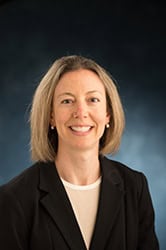 Lisa Emery, Ph.D., serves as the Senior Associate Registrar at the University of Michigan-Ann Arbor.
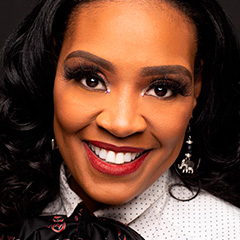 Rema Reynolds Vassar, Ph.D., is a Professor in the College of Education at Wayne State University. Dr. Vassar earned
share