
You must be logged in to view this content. Please login or learn more about joining AACRAO. If you have any questions or experience any issues logging in, please reach out to us at membership@aacrao.org.

/
/
An Exploration of Admissions-Related Practices from Institutions’ Admissions Web Pages and Implications for Equity
An Exploration of Admissions-Related Practices from Institutions’ Admissions Web Pages and Implications for Equity
Posted on
By
Article Abstract
Related Issue:
Article Type
Author(s)
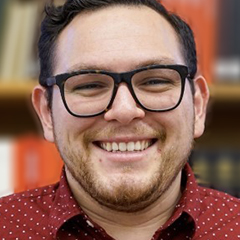 Jose Sotelo is a Graduate Fellow at ETS where his work centers around the holistic admissions
process in secondary education. His work at ETS tries to triangulate and define the holistic admissions process by
investigating ideas that different stakeholders have about admissions. He is also currently a Ph.D. student at
Northwestern University where he studies cognitive psychology. His work at Northwestern focuses on how individuals
represent and navigate space, as well as how they use those representations to problem solve.
 Reginald M. Gooch is a Research Associate at ETS. He holds an M.A. in second language education from
McGill University and a B.A. in international studies from the University of Washington. His research interests
include equity in higher education admissions, culturally responsive assessment, and English language teaching and
learning. Prior to his time at ETS, he worked as a test developer and English language teacher in South Korea.
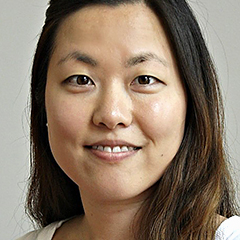 Sugene Cho-Baker, Ph.D., is an Associate Research Scientist in the Center for Education and Career
Development at ETS. Her research centers on exploring faculty and student perceptions on graduate school admission
processes, ongoing changes in the admissions processes in higher education, and the association between GRE tests
scores and graduate student performance outcomes. Another major strand of her research is on exploring young adults’
perceptions regarding career and technical education and the alignment between labor market demands and individuals’
personal interests in technical careers. Across all topics of her research, emphasis is placed on how the findings
vary by gender, race/ethnicity, and socioeconomic status. She earned her Ph.D. in 2020 in human development and
family science from the Ohio State University.
 Sara Haviland, Ph.D., is a Research Scientist in the Center for Education and Career Development
(CECD) at Educational Testing Service in Princeton, NJ. She studies the social contexts of education and careers,
with a focus on access and equity. She has worked on a variety of grant-funded research and evaluation projects
related to career pathways, adult learning, workforce development, and employer engagement. Dr. Haviland holds a
M.A. and Ph.D. in sociology from The University of North Carolina at Chapel Hill, and a B.A. in social theory and
ethics from Oglethorpe University.
 Harrison Kell, Ph.D., is a Senior Research Scientist in the Center for Education and Career
Development at Educational Testing Service (ETS) in Princeton, New Jersey. Dr. Kell’s expertise lies in the
assessment of cognitive (e.g., verbal and mathematical reasoning) and noncognitive skills (e.g.,
intercultural
relations, personality traits). He has developed assessments relevant to student admissions and personnel selection
(e.g., situational judgment tests [SJTs]), performance evaluation (e.g., behaviorally anchored
rating
scales [BARS]), and performance improvement (e.g., feedback interventions). He serves as a content expert
for the
Graduate Record Exam (GRE) program. Dr. Kell has published articles in peer-reviewed journals such as Psychological Science, Journal of Applied Psychology, Perspectives on Psychological
Science, Journal of Organizational Behavior, and chapters in multiple edited volumes
(e.g., APA Handbook of Career Intervention, The Science of Expertise). His
practical research interests concern the relationship between relatively stable human attributes (e.g.,
personality traits, cognitive skills) and human performance, broadly construed (e.g., career success,
creativity, job tenure and retention). Dr. Kell’s theoretical research interests lie in strengthening the soundness
of interpretations of those
attributes, in order to improve the validity and fairness of decisions based upon them (e.g., admissions,
development, selection). Dr. Kell received his Ph.D. in industrial/organizational psychology in 2011 from Rice
University and was a postdoctoral fellow in the quantitative methods program at Peabody College, Vanderbilt
University from 2011 to 2014.
 Guangming Ling, Ph.D., is Director
of the Center for Education and Career Development at ETS, Research and Measurement Science area. His research focuses on the assessment and training of critical competencies in higher ed and the workforce, as well as a broad range of topics in applied
measurements, such as test validity and fairness issues, higher education learning outcomes assessment, rating issues with constructed responses, test mode effects, computerized adaptive testing, an application of latent variable models. Dr. Ling’s
research has appeared in more than 40 peer-reviewed journal papers, book chapters, research reports, and more than 80 conference presentations. Dr. Ling holds a Ph.D. in psychometrics/quantitative psychology from Fordham University.
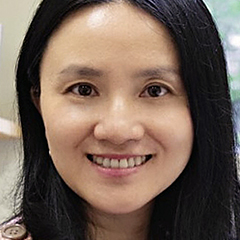 Lydia Liu, Ph.D., is Principal
Research Director in charge of three ETS research centers: Center for Education and Career Development, Center for Language Education and Assessment Research, and Center for K12 Teaching, Learning, and Assessment. Dr. Liu is an expert in assessment
and research of critical competencies in higher education. She has also managed several grants awarded by the National Science Foundation and other funding agencies in the United States, India, China, and Korea. Dr. Liu has authored and coauthored
more than 90 peer-reviewed journal articles, research reports, and book chapters in the fields of applied measurement, higher education, and science assessment. Dr. Liu received the 2019 Robert Linn Memorial Lecture Award and 2011 National Council
on Measurement in Education Jason Millman Promising Measurement Scholar Award in recognition of her original and extensive research in learning outcomes assessment in higher education and K–12 science assessment. Dr. Liu holds a doctorate
in quantitative methods and evaluation from the University of California, Berkeley.

share