
You must be logged in to view this content. Please login or learn more about joining AACRAO. If you have any questions or experience any issues logging in, please reach out to us at membership@aacrao.org.

/
/
A Faculty Perspective on Enrollment and Retention Success During the Pandemic: A Subsequent Study To The Perspective Of Administration
A Faculty Perspective on Enrollment and Retention Success During the Pandemic: A Subsequent Study To The Perspective Of Administration
Posted on
By
Article Abstract
Related Issue:
Topics
Article Type
Professional Proficiency
Competency
Author(s)
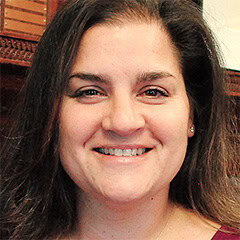 Jennifer Passenti, Ed.D., is the Senior Center Director for the Norther-Tier,
and she oversees the operation at the Lake Region, Towanda, and Tunkhannock
Centers of Lackawanna College. Her home base is out of the Lake Region Center
of Lackawanna College, located in Hawley, Pennsylvania. Lackawanna College has
eight locations across Northeast and Southern Pennsylvania, with the main
campus located in Scranton. Passenti has worked at Lackawanna College for the
past fifteen years, first serving as an Adjunct Professor, followed by
Enrollment Specialist, then as the Director of the Lake Region Center, and now
as the Senior Center Director for the Northern-Tier.
As the Senior Center Director for the Northern-Tier, she is responsible for
performance management and hiring of all faculty and staff positions at the
Lake Region Center, as well as overseeing and administering all programs,
services, and activities for the Northern-Tier locations; new program
development and developing and implementing the center’s marketing plan;
evaluating program offerings to ensure their fiscal viability and meet the
needs of the community; and ensuring the centers are compliant with all
federal, state, institutional and accreditation guidelines and regulations.
Passenti is a community advocate and serves on 20-plus boards, committees, and
advisory councils, including serving as the President of the Pike County
Chamber of Commerce. She has been published, serves as a public speaker and
presenter focusing on enrollment, retention, higher education, community
service, and impacts on sustainability within the community and workforce.
Prior to coming to Lackawanna College, Passenti worked for the New York City
Board of Education where she taught in the Bronx for many years. She earned
her master’s degree in elementary education at Mercy College, and a bachelor’s
degree in speech communications and public relations from Kutztown University.
Passenti also holds professional certifications in both Six Sigma Green Belt
and Lean Six Sigma through Villanova University and completed her doctorate in
higher education at Fairleigh Dickinson University.
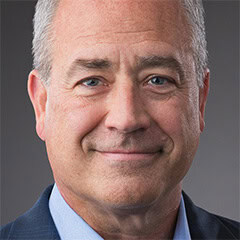 Luke D. Schultheis, Ph.D., teaches in the higher education doctoral program at
Virginia Commonwealth University and assists universities through interim
leadership roles. His initial career was in hospitality management in New York
City, from which he transitioned into a faculty member, chair, and founding
dean before devoting his career to enrollment management. His passion is
improving access as well as completion, having incorporated non-cognitive
assessments at many institutions as a means to improve outcomes. These
assessments were developed alongside William Sedlacek.
Dr. Schultheis has extensive experience bringing his business acumen to higher
education with a keen focus on identifying metrics aligned with strategic plan
goals and assessing the ability of the institution to meet those goals. He has
participated in the development and implementation of campus-wide strategic
plans at each institution he has served. Through his leadership, colleges and
universities attained significant improvements in national rankings as well as
net tuition revenue contributions and a reduction in equity disparities with
degree attainment.
He has served as the inaugural vice president for enrollment, strategic
planning and effectiveness at Fairleigh Dickinson University, after leading
the Neighborhoods and retention work at Michigan State University–the national
model for combined living-learning — and as liaison to the University
Innovation Alliance. Previous work experience included overseeing 22 units as
the inaugural vice provost of strategic enrollment management at Virginia
Commonwealth University and leading the enrollment management and student
services portfolio at the University of Nevada, Las Vegas.
Additional leadership roles included serving as the founding dean of the
School of Hospitality Management and Culinary Arts at Monroe College. He was
selected to mentor three universities on financial aid and student retention
work through the APLU, and served as elected vice president for admissions and
enrollment management on the AACRAO Board of Directors for three years.
He has authored book chapters and journal articles on higher education and has
made more than 80 presentations at national conferences and served on several
prominent journal editorial review boards.
Dr. Schultheis received his Ph.D. in Education Studies – Higher Education
Administration from the University of Nebraska, an Ed.M. and M.A. in Higher
Education Administration from Columbia University, an M.S. in Hospitality
Industry Studies: Asset Management from New York University, a B.S. in
English: Poetry from the City University of New York Baccalaureate Program and
an A.S. from Johnson & Wales University.

share