Welcome to the new AACRAO website. While the site is live, development is ongoing, visitors can expect updates and new features in the weeks ahead.

You must be logged in to view this content. Please login or learn more about joining AACRAO. If you have any questions or experience any issues logging in, please reach out to us atmembership@aacrao.org.

Log In Join

This article describes the strategies employed to make a university-wide commitment to student success, persistence, and graduation rates. The shift in culture has made student success everybody’s business, and there has been a high level of buy-in to the enterprise. The predictive tools that have been developed have given focus to serving those students who may need extra support to succeed, allowing the efficient use of human and financial resources.

miller-t--sm

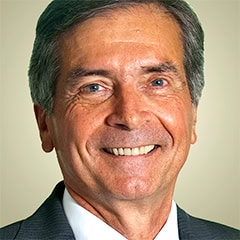
Thomas E. Miller is the Executive Advisor for Student Success at the Tampa Campus of the University of South Florida. He is also an associate professor in the College of Education at the Tampa campus of the
University of South Florida.

Miller holds a bachelor’s degree from Muhlenberg College and master and doctoral degrees from Indiana University. He received the Scott Goodnight Award for Outstanding Performance as a Dean from NASPA in
2002, was chosen as a Pillar of the Profession in 2004, and received the Robert H. Shaffer Award for Academic Excellence as a Graduate Faculty Member in 2015.

Bombaugh, M., and T. E. Miller. 2019. Improving student success rates: Eliminating performance gaps. Strategic Enrollment Quarterly. 7(1): 49–59.

Bombaugh, M., and M. McNulty. 2019. Identification and intervention: Using predictive data and peer coaching to support first-year student persistence. In Proceedings of the 15th National Symposium on Student Retention, edited by S. Whalen and T. Bennett. Norman, OK: The University of Oklahoma.

Bombaugh, M., L. Tod, L. and K. Williams. 2018. Giving first-year students a second chance. In Proceedings of the 14th National Symposium on Student Retention, edited by S. Whalen and T. Bennett. Norman, OK: The University of Oklahoma.

Bombaugh, M., and J. Cole. 2019. Leveraging Survey Data and Predictive Analytics to Support First-Year Students. Presented at the 38th Annual Conference on the First-Year Experience, Las Vegas, NV, February 17.

Bombaugh, M., L. Tod, Z. Ramirez and K. Williams. 2018. Case Management and Predictive Analytics: Powerful Persistence Partners. Presented at the 2018 NASPA Assessment and Persistence Conference, Baltimore, MD, June 14.

Dosal, P. 2019. Culture, care, and predictive analytics at the University of South Florida. Educause Review. December 9.

Glynn, J. G., P. L. Sauer, and T. E. Miller. 2002. A logistic regression model for the enhancement of student retention: The identification of at-risk freshmen. International Business & Economics Research Journal. 1(8): 79–86.

Glynn, J. G., P. L. Sauer, and T. E. Miller. 2003. Signaling student retention with prematriculation data. NASPA Journal. 41(1): 41–67.

Herreid, C. H., and T. E. Miller. 2009. Analysis of variables to predict first-year persistence using logistic regression analysis at the University of South Florida: Model v2.0. College and University. 84(4): 12–21.

Miller, T., and M. Irvin. 2019. Using artificial intelligence with human intelligence for student success. Educause Review. December 9.

Related Posts