

By Autumn Walden, Editor, AACRAO Connect, Content Strategy Manager, AACRAO
Publications contain multitudes—they can document what a profession knows, become part of the record of how that profession understands itself, preserve the questions and convictions that guided its pioneers, and challenge future generations to reconsider what is possible.
As AACRAO celebrates five decades of enrollment management, October 2026 brings the 50th anniversary edition of Strategic Enrollment Management Quarterly (Volume 14, Issue 3), which collects 14 manuscripts from presidents, registrars, community college and tribal college leaders, and scholars and practitioners examining trends across industries and borders. This SEMQ edition captures stories of those who brought enrollment management into practice and gives future generations of practitioners something to build upon and surpass.
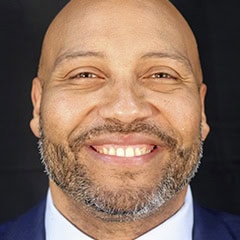
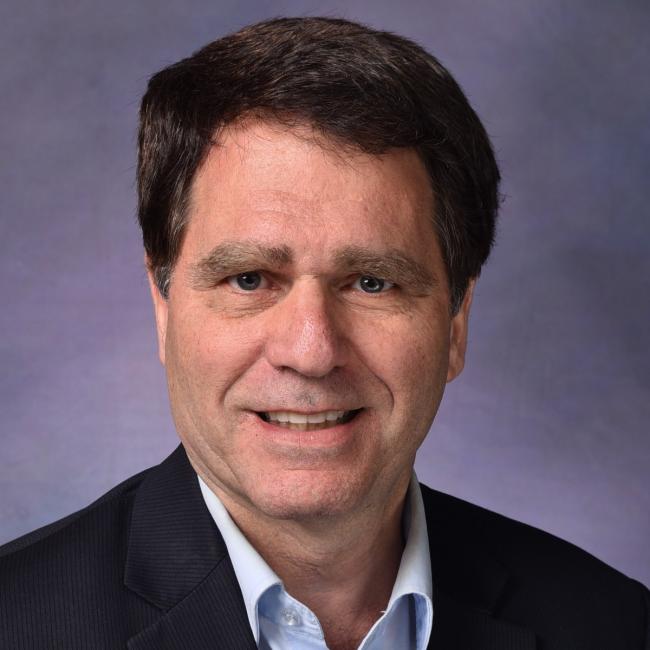
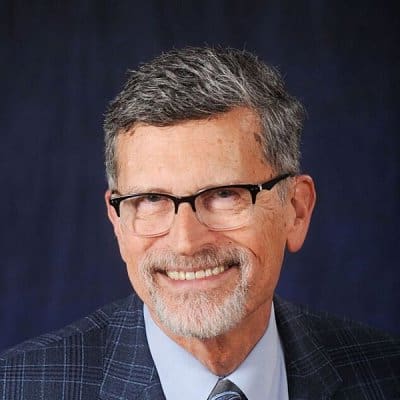
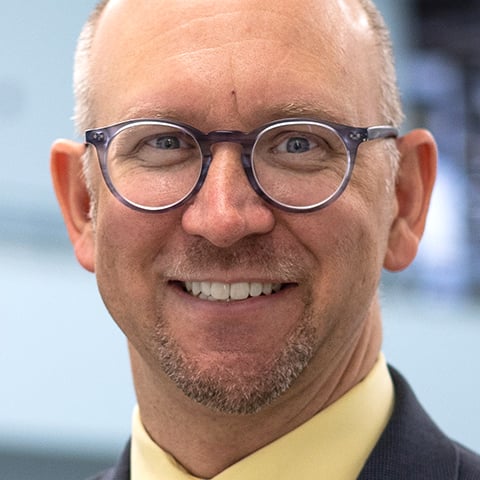
To explore the significance of this landmark collection, we share thoughts from five contributors whose perspectives span the profession’s past, present, and future: Clayton Smith, SEMQ Editor-in-Chief; Jairo McMican, Guest Editor; Stanley Henderson, SEM Conference Co-founder and AACRAO Senior Consultant Emeritus; Christopher Tremblay, Director of the AACRAO SEM Endorsement Program and Henderson’s co-author on the issue’s historical retrospective; and Brian Gann, Contributing Author and Incoming SEM Conference Director.
Henderson recalls his memories of “the room(s) where it happened,” while Smith describes this milestone as “the rare privilege to reflect and dream.”
But celebration also invites examination, as McMican asks, “Have we become better at enrolling students or better at creating institutions where students can actually succeed?”
Together, their reflections offer a glimpse behind the pages of this commemorative edition—revealing the people, enduring tensions, and ambitions that brought the collection to life, and inviting readers to discover the stories and scholarship within. These conversations are far from finished.
What does 50 years of ‘enrollment management’ represent?
Stanley Henderson: I’m a history nerd, and I rejoice at our celebrating this 50-year milestone. It is a way to recognize the people who contributed to the development of enrollment management and SEM, to show what I call the “DNA of SEM”—the evolution of concepts, practice, and principles—and to position us for the next 50 years. This issue gave Christopher and me the opportunity to trace the development with an emphasis on the origins and their relationship to what we are practicing today. Almost all of the components of today’s SEM trace back to Jack Maguire’s “Grand Design,” which shows how prescient he was. It also celebrates our SEM Scholar, Don Hossler. His scholarship and his close relationship with AACRAO have been seminal to where SEM is today and a reflection of the AACRAO commitment to this profession.
Christopher Tremblay: This milestone represents the grounding of EM in the DNA of colleges and universities. EM follows the changes in higher education and responds accordingly. I feel like going into 2027 feels similar to 1974 when EM was born: concerns about the demographic declines, closures/mergers, and systems thinking.
Jairo McMican: For me, reaching 50 years is an opportunity to reflect on what the profession has built while also being candid and transparent about what still needs to be done. I also hope we don’t only consider the history of enrollment strategies. We also need to focus our efforts on preserving the contributions of those doing this work: admissions, advising, financial aid, faculty, and communities.
Brian Gann: Perhaps most importantly, recognizing 50 years allows us to recognize SEM as a profession with a body of knowledge, a history of scholarship, and a community of practitioners whose contributions deserve to be preserved.
Treasures within this anniversary edition
Clayton Smith: The 50th anniversary issue allowed us a moment in time to say how and why we developed SEM, and provided us an opportunity to reflect on both the challenges and opportunities that await SEM in the next 50 years. So, rather than merely documenting SEM scholarship and practice like we do in our regular SEM editions, it allowed us the rare privilege to reflect and dream. Wonderful!
Stanley Henderson: I also feel that the depth and breadth of the articles in this edition is further confirmation that SEM has come from the “Brink of a Profession” that I wrote about in 2001 to a profession where research informs practice and practice informs research. That is one of the most rewarding things to see. I am inspired by this SEMQ edition to redouble my efforts to encourage rising young professionals to publish. That is, to me, one of the greatest contributions of SEM: the nurturing of research through the reach of SEM work. We all benefit. I also admit to the great pleasure of being around long enough to share my memories of many of “the room(s) where it happened.” I hope Christopher and I have done justice to the memory and contributions of so many who are no longer with us.
Jairo McMican: The collection allows presidential perspectives from California Community Colleges alongside an example from a Harrisburg Area Community College of putting shared ownership into practice via data literacy. These two pieces together allow us to reflect and ask: When we say everyone owns enrollment, have we clarified what people are responsible for and given them the resources, support, and authority to act on that?
Brian Gann: I appreciate that the collection does not simply celebrate 50 years of progress. It invites us to examine the assumptions that have guided our work and consider whether our traditional approaches remain sufficient.
More manuscripts to explore …
Christopher Tremblay: Having worked for 30 of the last 50 years in EM, Tom Green’s retrospective piece on the transformation of data was mind-blowing and a great trip down memory lane. Technology has been the primary driver of how more data is available and faster. The tools we now have for embedding data into EM are incredible.
Jairo McMican: I also hope readers spend time with “Culture First: An Indigenous Rooted SEM Framework.” The intentionality on relationships, reciprocity, respect, and responsibility challenges the assumption that enrollment is primarily an institutional transaction. It asks us to consider our obligations to students, their families, and their communities across generations. That should not be treated as a perspective relevant only to Tribal Colleges and Universities. It raises questions our entire profession should be asking. The larger tension is whether we are asking students to navigate our institutions more effectively or asking our institutions to improve their responsiveness to students. We need to be willing to examine both sides of the equation. It should not be an either/or but a both/and.
Brian Gann: I was struck by the relationship between institutional systems and the individual student experience. We have become increasingly sophisticated in our ability to collect data, forecast enrollment, identify patterns, and develop predictive models. But these articles remind us that students’ decisions to enroll, persist, and complete are influenced by relationships, institutional responsiveness, and whether students feel that they belong.
2026: What should we know today?
Christopher Tremblay: The core concepts and practices of SEM are still relevant, but we are further refining them as part of change management, which Brian Gann emphasizes in his article.
Jairo McMican: My desire is that readers identify at least one institutional practice they are willing to examine differently. That might mean reviewing a policy that assumes every student can attend full time, asking whether a dashboard captures the barriers students describe, or creating space for frontline employees and students to help shape strategy. I would also like to encourage SEM leaders to ask three questions when they get back to their respective campuses: Who is benefiting from our current approach? Who is still encountering barriers? What are we willing to modify about our own practices?
Brian Gann: My hope is that readers will come away with a renewed appreciation for the breadth of the profession and a willingness to challenge their own assumptions about how SEM should be practiced. The collection demonstrates that there is no universal formula for enrollment success.
2076: What should we remember 50 years from now?
Stanley Henderson: My hope for those reading this edition in 2076 is that learners’ success is still at the core of what SEM works for, and that the profession has continued to evolve and make a difference in higher education.
Brian Gann: The next 50 years will undoubtedly bring challenges we cannot yet anticipate. The profession’s greatest strength will continue to be its ability to learn, adapt, collaborate, and remain focused on the relationship between institutional success and student opportunity.
Explore the 50th anniversary edition of Strategic Enrollment Management Quarterly.




share