

By Autumn Walden, Editor, AACRAO Connect, Content Strategy Manager, AACRAO
As International Education Week approaches, a global conversation about maps offers a fresh perspective on recognizing learning across borders.
What if something you’ve accepted as fact your entire life turned out to be a distortion?
In a September 2026 University World News commentary, “The map lied for 450 years. The world finally agrees,” Navin Vasudev, a member of The Association for International Credential Evaluation Professionals, known as TAICEP, draws a connection between distorted geographic representations and the systems used to recognize educational qualifications, particularly those from the Global South.
For generations, the Mercator world map has made Africa appear dramatically smaller relative to other landmasses. Although developed in 1569 for maritime navigation, the projection became a familiar feature of classrooms, textbooks, and digital platforms, shaping how people visualize the world.
On Sept. 4, the United Nations General Assembly voted 164-1, with six abstentions, to adopt a resolution encouraging more geographically proportionate representations, including the Equal Earth projection.
But the debate raises a question extending well beyond geography: What happens when the standards we take for granted shape how we value knowledge, learning, and qualifications?
Vasudev challenges higher education professionals to examine the assumptions built into familiar frameworks, including institutional rankings, academic standards, and credential recognition.
Vasudev’s argument continues to resonate as we prepare for International Education Week, November 16-20, 2026, and the Institute of International Education’s annual Open Doors report is scheduled for release on November 16.
Recent enrollment data underscore the importance of understanding international learning mobility. According to the National Student Clearinghouse Research Center’s June 2026 Final Spring Enrollment Trends report, international graduate student enrollment declined 4.3% compared with spring 2025, following a 5.9% year-over-year decline in fall 2025.
As institutions consider changing patterns of international learning mobility, here are five considerations worth exploring and ways the AACRAO Electronic Database for Global Education, or EDGE, can help.
1. Are we questioning our assumptions?
Vasudev describes how qualifications earned in cities such as Lagos or Lusaka can receive different treatment from those earned in London or Toronto because of perceptions rather than academic rigor.
For credential evaluators, this raises an important distinction: Unfamiliarity does not necessarily indicate lesser quality.
Examining a qualification within its educational context helps professionals distinguish documented differences in academic preparation from assumptions about where learning occurred.
2. Do we understand the system behind the credential?
Like a map, a transcript provides a representation, not the complete picture.
AACRAO EDGE helps professionals examine that broader picture through country-specific education profiles, educational ladders, grading scales, credential advice, and verification resources.
Developed through research using primary sources, EDGE’s grading scale translations and placement recommendations are vetted by the AACRAO International Education Standards Council.
AACRAO resources such as EDGE and the IESC provide a consistent, research-informed foundation for institutional decisions while supporting professional judgment.
3. When did we last update our reference points?
Educational systems evolve: qualifications change, institutions reorganize, and new policies affect how learning is documented and recognized.
Within the redesigned AACRAO website, subscribers can access the EDGE Country Database alongside Country Updates and Emergent News, which highlight changes in credential guidance, educational reforms, and international education developments.
The ability to revisit information matters when established practices must account for new evidence.
4. Can we help correct an incomplete picture?
Vasudev warns that replacing a map alone cannot change the institutional systems surrounding it. Meaningful improvement requires continued scrutiny and action.
Similarly, EDGE remains an evolving resource. The members of the IESC have driven complete reviews and overhauls of credentials from given countries, or, indeed, significant portions of a continent, as is true of a project involving the whole of Francophone Africa in which it is currently engaged.
Users who identify omissions or potential errors can submit suggestions, provide supporting rationale, and share redacted documentation for further research.
Through these contributions and the IESC review process, practitioners can help strengthen the shared body of knowledge that informs evaluation practices.
5. Who else should be part of the conversation?
Reliable guidance depends on more than access to information. It also requires opportunities to discuss how that information is developed and applied.
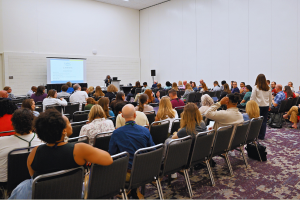
The AACRAO monthly EDGE User Group webinars connect credential evaluators, admissions professionals, and others interested in international education. Participants can learn about ongoing IESC research, explore credential and grading advice, ask questions, and engage with colleagues working through similar challenges.
The next EDGE User Group webinar takes place Thursday, November 19, during International Education Week.
Beyond the map
As Open Doors 2026 brings new insights into international student mobility, Vasudev’s commentary offers a useful challenge: Examining who crosses borders is only part of the conversation. Institutions must also consider how they understand and recognize the education learners bring with them.
A corrected map won’t automatically change credential recognition practices. But asking better questions, examining the evidence, and sharing expertise can make a difference.
Explore AACRAO EDGE and subscribe to the EDGE User Group to help keep the conversation and the research moving forward.
share