Welcome to the new AACRAO website. While the site is live, development is ongoing, visitors can expect updates and new features in the weeks ahead.

You must be logged in to view this content. Please login or learn more about joining AACRAO. If you have any questions or experience any issues logging in, please reach out to us atmembership@aacrao.org.

Log In Join

Health impacts individuals from birth and throughout life. When health is compromised, shame, fear, and denial often arise. The hidden majority of chronically ill individuals face challenges in higher education and career progression, including disclosure, resource availability, and navigating career expectations. Current disability efforts in higher education primarily focus on students, leaving a gap in inclusion for faculty and staff. Failure to consider these individuals hinders disability inclusion and belonging in universities. The importance of including faculty and staff in disability-related processes cannot be understated. Disability must be a part of diversity to keep true to the goals of higher education.

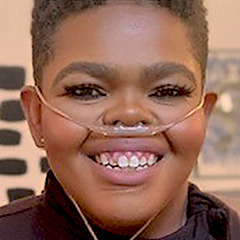
west-w--smWhitney N. West, Ed.D., has been in higher education for more than fifteen
years and is currently Director of Student Records at LSU Law. She has worked
at universities in D.C., Maryland, and Louisiana. Whitney is a two-time
graduate of The George Washington University and has a graduate certificate
from University of Maryland Baltimore County. In July 2023, she completed her
doctorate of education from the University of Southern Mississippi. Her
doctoral studies focus on the intersection of race, gender, and disability. In
addition, she currently serves as Co-Chair for the American Association of
Collegiate Registrars and Admissions Officers (AACRAO) Accessibility Task
Force.

She is also a DEI/Disability awareness advocate and speaker who was diagnosed
with a chronic illness in 2014 that almost took her life. From there, Whitney
set out to make the most out of life and live her best and most authentic
life. She uses her platform and her position in higher education to help
people appreciate their lives and advocate for themselves even when unexpected
and uncomfortable things happen. She is also on a mission to educate the world
on ableism and has spoken at National Co-op of Grocers, Aquent, AACRAO’s
Annual Meeting and Strategic Enrollment Management Conference, and Texas
Women’s University.
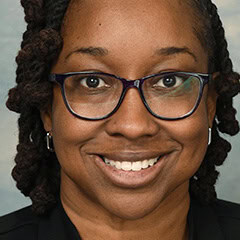
riddick-i--smIman Riddick serves as Registrar and Assistant Dean of Students at The
Institute of World Politics in Washington, D.C. She is passionate about access
and equity for all student populations. Having worked as registrar for Kennedy
King College, one college part of the City Colleges of Chicago, assistant
registrar at the University of Maryland, Baltimore County, and associate
director of enrollment services at the Johns Hopkins University, Center for
Talented Youth., Riddick has contributed to policy creation supporting student
success for students K–12 to graduate level. She has earned a Bachelor of
Science from Chicago State University and previously served the Chesapeake and
Potomac Association of Collegiate Registrars and Admissions Officers
(CAPACRAO) Committee. She currently serves as a committee member for the
American Association of Collegiate Registrars and Admissions Officers (AACRAO)
Accessibility Task Force.

Abram, S. 2003. The Americans with Disabilities Act in higher education: The
plight of disabled faculty. Journal of Law & Education. 32(1):
1

Bell, C. M. 2011.
Blackness and Disability: Critical Examinations and Cultural
Interventions
.

Münster, Germany: LIT Verlag.

Brown, N. 2020. Disclosure in Academia a sensitive issue. In
Ableism in Academia:
Theorising Experiences of Disabilities and Chronic Illnesses in Higher
Education
, edited by N. Brown and J. Leigh. London, England: UCL Press.

Cory, R. C. 2011.
Disability services offices for students with disabilities: A campus
resource
. New Directions for Higher Education. 154: 27–36.

Dolmage, J. T. 2017.
Academic Ableism: Disability and Higher Education. Ann Arbor:
University of Michigan Press.

Ehlinger, E., and R. Ropers. 2020. “It’s all about learning as a community”:
Facilitating the learning of students with disabilities in higher education
classrooms. Journal of College Student Development. 61(3): 333–349.

Finesilver, C., J. Leigh, and N. Brown. 2020. Invisible disability,
unacknowledged diversity. In Ableism in Academia:
Theorising Experiences of Disabilities and Chronic Illnesses in Higher
Education
, edited by N. Brown and J. Leigh. London, England: UCL.

Franke, A., M. Berube, R. O’Neil, and J. Kurland. 2012.
Accommodating Faculty Members who have Disabilities. Washington, D.C.: American Association of University Professors.

Gierdowski, D. C. 2020.
Accessible technology support for faculty with disabilities: Challenges
and barriers to inclusivity
. EDUCAUSE Review. March 30.

Gotthiel, S. 2018. Reflections on achievement, hitting the glass ceiling and
breaking the mold. Strategic Enrollment Management Quarterly. 6(1):
1–4.

Grigely, J. 2017.
The neglected demographic: Faculty members with disabilities. The Chronicle of Higher Education. June 27.

Harvey-Smith, A. B. 2022.
Higher Education on the Brink: Reimagining Strategic Enrollment
Management in Colleges and Universities
. Lanham, MD: Rowman & Littlefield Publishers

Hutcheon, E. J., and G. Wolbring. 2012. Voices of “disabled” post secondary
students: Examining higher education “disability” policy using an ableism
lens. Journal of Diversity in Higher Education. 5(1): 39–49

King, C. 2020.
Building an inclusive community for faculty and staff.
Rutgers University Division of Diversity, Inclusion, and Community
Engagement
(News). October 1.

Lewis, T. 2021.
January 2021 working definition of ableism. (Personal Blog). January 1. Author.

Peters, A. L. 2011. Black women faculty in educational leadership: Unpacking
their silence in research. In
Women of Color in Higher Education: Turbulent Past, Promising Future (Diversity in Higher Education Volume 9), edited by G. Jean-Marie and B.
Lloyd-Jones. Leeds, England U.K.: Emerald Publishing Limited

Pickens, T. A. 2017.
Blue blackness, black blueness: Making sense of blackness and
disability
. African American Review. 50(2): 93–103.

Ramirez-Stapleton, L. D., L. E. Torres, A. Acha, and A. McHenry. 2020.
Disability justice, race, and education.
Journal Committed to Social Change on Race and Ethnicity (JCSCORE).
6(1): 29–39.

Rothstein, L. 2015 The Americans with Disabilities Act and higher education
25 years later: An update on the history and current disability
discrimination issues for higher education.
Journal of College and University Law. 41(3): 531.

Shallish, L. 2015.
Just how much diversity will the law permit? The Americans with
Disabilities Act, diversity and disability in higher education
. Disability Studies Quarterly. 35(3).

Shigaki, C. L., K. M. Anderson, C. L. Howald, L. Henson, and B. E. Gregg.
2012.
Disability on campus: A perspective from faculty and staff. Work. 42(4): 559–571.

West, W. N. 2023.
Ready Player One: The Impacts of Segmenting Identity for Black Women with
Chronic Illnesses in Higher Education
(doctoral project). University of Southern Mississippi, Hattiesburg, MS.

Related Posts